
Browse using the new Vinous website now. Launch →
Printed by, and for the sole use of . All rights reserved © 2015 Vinous Media
Australia’s Limestone Coast: The Limestone Effect
BY ANGUS HUGHSON | SEPTEMBER 8, 2026
Limestone soils are responsible for some of the world’s best wines, as can be seen in Burgundy, Champagne and Jerez, to name just a few examples. Limestone’s alkalinity helps to imbue wines with vibrant acidity, while its sponge-like texture drains excess water and keeps vines adequately hydrated even in hot seasons. In a warming climate, limestone soils are likely to become even more coveted viticulturally.
Long before soil science had confirmed the benefits of limestone for viticulture, a small corner of South Australia between Adelaide and the Victorian border had already been christened the Limestone Coast. Millions of years under shallow oceans left the area with a broad swathe of limestone. Only 5,000 years ago, volcanic activity added to the geologic complexity. The Limestone Coast juts out into the Southern Ocean, which allows for a temperate climate and dependable, relatively significant rainfall. On a recent trip, I observed that generous winter precipitation had left vast bodies of water pooling on vineyard surfaces for weeks on end, but then drained away well before the start of the growing season. This is rarely seen on the Australian continent and points to unique conditions for grape-growing in South Australia.
Though largely under the radar, the Limestone Coast is home to one of Australia’s most historic wine regions, Coonawarra. For well over a century, Coonawarra has been a source of long-lived Shiraz and Cabernet Sauvignon. Coonawarra Cabernet has succeeded both individually and as a blending component, most prominently with Shiraz from the Barossa for producers like Penfolds and Yalumba. Cabernet helps rein in the natural generosity of Barossa Shiraz to deliver impressive structure, power and focus.
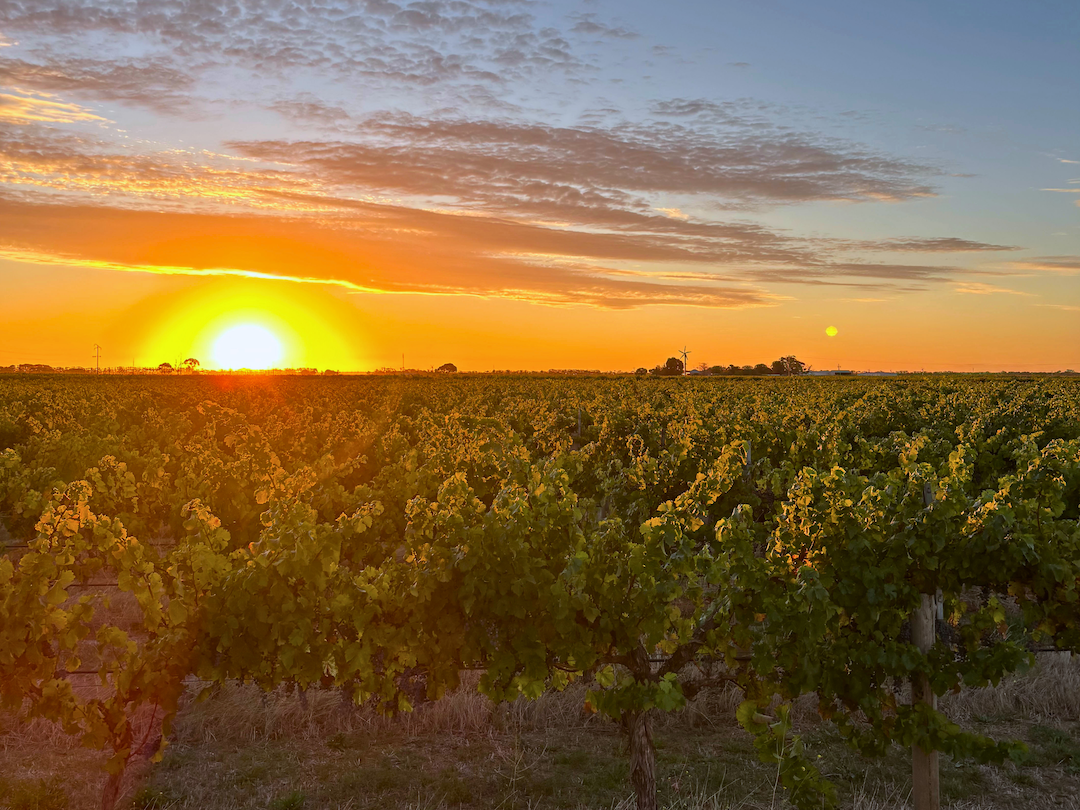
Dusk on the Coonawarra plain.
The challenge for Coonawarra has always been its geographical isolation, almost midway between Melbourne and Adelaide, coupled with wines that tend toward finesse more than the upfront fruit that can be found elsewhere in Australia. Though regularly under-appreciated, Coonawarra remains a beacon of quality.
While the strong maritime influence of the Southern Ocean offers Coonawarra some protection from global warming, there has still been a gradual increase in growing season temperatures over the last 70 years, slowly bringing the climate closer in line with areas like the Médoc. But the iron-rich terra rossa soils over limestone consistently deliver vibrant wines with excellent purity and focus. For consumers who prize elegance over decadence in Cabernet Sauvignon, Coonawarra is well positioned to build a greater following.
Though from the surface, there is little to discern one Coonawarra vineyard from another, the hidden terroir subtleties paint a more complex picture. The area appears remarkably flat; elevations slowly rise to only 76 metres across the length of the region, with a base not far above sea level. However, temperatures here change by 0.8°C for every 10 metres of elevation, which is significantly higher than normal. In addition, the proximity of limestone to the surface and the depth of both the terra rossa soils and that limestone differ markedly from site to site. This delivers considerable variation in wine styles. Light, leafy Cabernet Sauvignons emerge from sites with deeper terra rossa bases, while much more structured, denser expressions appear where limestone is closer to the surface. There is also some natural insurance against vintage variation, with cooler vineyards performing well in hot, dry seasons and vice versa.
Coonawarra has been a leading light for the Limestone Coast, while other subregions have historically been sources for higher-volume blends. Padthaway, Wrattonbully, Mount Benson, Robe and Mount Gambier have all at different times shown themselves to be capable of producing high-quality wines. Wrattonbully and Robe provide fruit for Penfolds Grange, while Michel Chapoutier began a venture in Mount Benson for its fine, detailed Syrah. In recent years, there has been increasing interest in white wines from Padthaway, Robe and Mount Gambier. These subregions are very much in a state of experimentation, broadening their base from Cabernet Sauvignon and Shiraz into varieties such as Riesling, Chardonnay, Pinot Gris and Sauvignon Blanc. Perhaps the most exciting innovations are occurring with less mainstream white grapes. At the forefront is Anita Goode of Wangolina, who has now planted 15 grape varieties on her estate, including Melon, Aligoté, Malvasia Istriana, Verdicchio, Garganega, Parellada, Pecorino, Moscato Giallo and Ribolla Gialla. It is still early days, but this project and others show much promise.
Wrattonbully is Coonawarra’s key local competition, with a similar mix of terra rossa over limestone and a slightly warmer, significantly more continental climate. Bordeaux varieties thrive here, including Sauvignon Blanc, Merlot, Cabernet Franc and, of course, Cabernet Sauvignon. Coonawarra’s leafy and chocolate-mint tones are here replaced by deeply savoury, structured reds such as those from Tapanappa and Terre à Terre. Across the Limestone Coast, a tapestry of unique terroirs offers numerous opportunities for quality-focused winemakers.
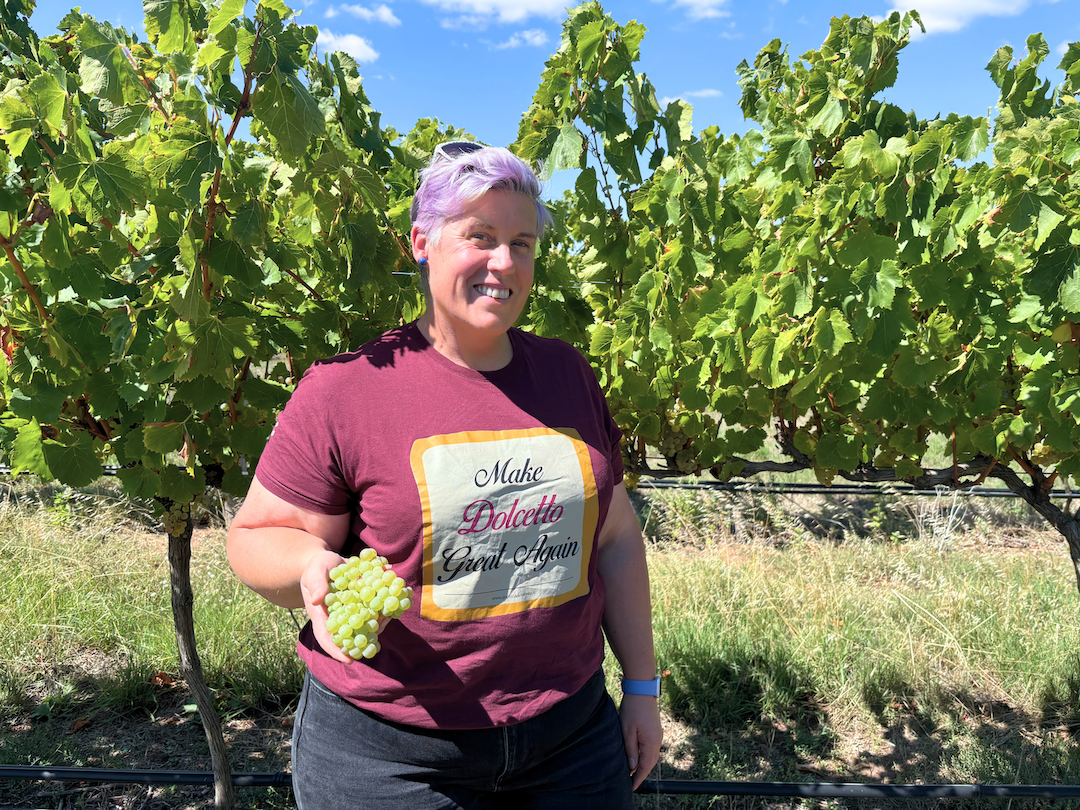
Anita Goode in the Wangolina estate vineyard, where there is an increasing focus on less common Italian varieties.
Graceful Aging
The wines I tasted for this report illustrated once again that Coonawarra remains one of Australia’s leading regions for ageworthy Cabernet Sauvignon. There is a natural tension, balance and tannic backbone to local expressions of Cabernet Sauvignon, which are similar to traditional claret. The wines are refined, harmonious, often a little reserved in youth and generally best with a decade or more under their belt. Cabernet Sauvignon can be challenging to ripen in cooler years in this temperate region, so key decisions around yield and canopy management are essential to crafting the very best wines that can go the distance.
While Redman, Parker Estate, Yalumba and Balnaves are all leading producers of long-lived wines, Wynns Coonawarra Estate is the region’s benchmark. With a history going back to the 1890s, Wynns controls the Limestone Coast’s largest acreage under vine, all on classic terra rossa soils. In a region of small, family-owned estates, Wynns’ corporate ownership has enabled major advancements, such as significantly improved trellising and the addition of a full-time researcher, Dr. Catherine Kidman, to the team. The positive effects of these investments are evident in evenly ripening fruit and wines of outstanding purity. In an effort to identify the best genetic material, Dr. Kidman’s team is currently conducting clonal trials in which they test cuttings from select Cabernet Sauvignon vines for drought and disease resistance, with the goal of preparing for the effects of global warming.
Regional blends have long been Wynns' flagship wines, but the past two decades have seen a growing emphasis on single-vineyard bottlings, beginning in 2001 with an annual release from whichever vineyard shone brightest that season. So far, nine of these vineyards have spun out into separate bottlings. These vineyards vary widely in age, with plantings dating back to 1925. During my visit to Coonawarra, I tasted a complete vertical of these wines, some over 20 years old. Many are at peak yet still have plenty of life ahead of them. Typically a single plot would emerge as the standout over time, but here no clear winner exists. That speaks to how these varied sites excel under different vintage conditions.
The Limestone Coast is a fascinating region. While dry red wines from Coonawarra and Wrattonbully will likely always be the region’s torchbearers, I am particularly excited to track the area’s innovative streak over the coming years.
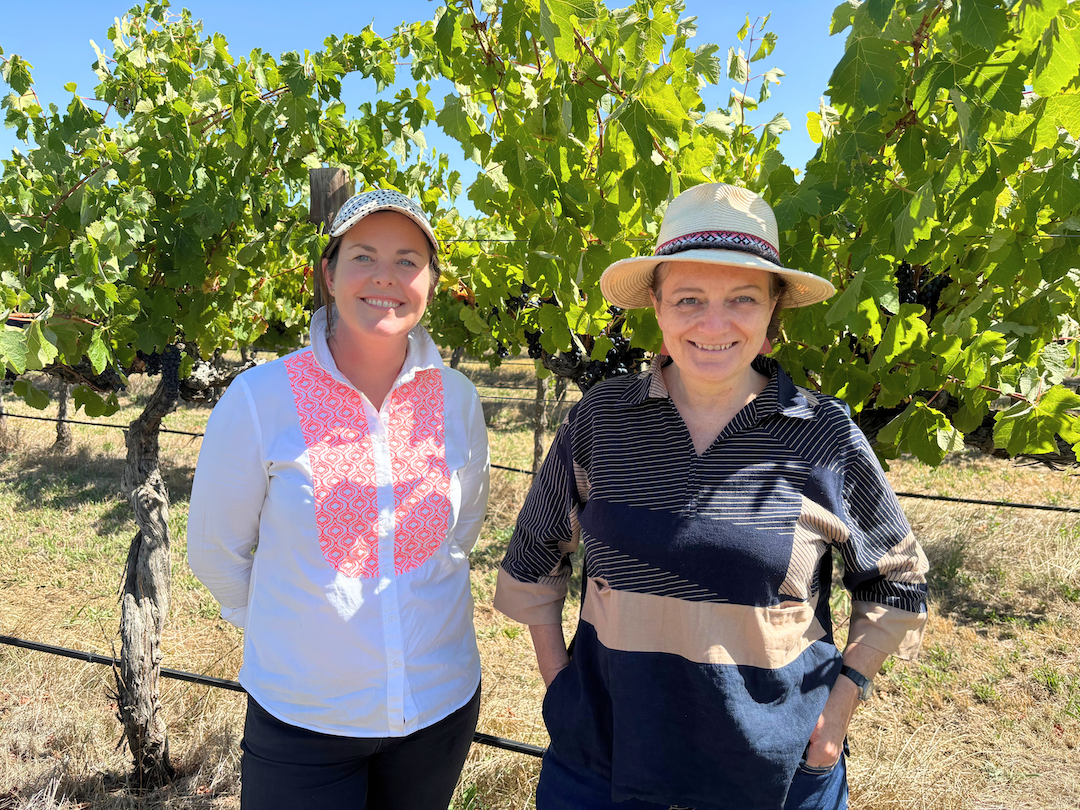
Dr. Catherine Kidman and Sarah Pidgeon of Wynns Coonawarra Estate in their research block.
Recent Vintages
2022
After the exceptional 2021 vintage, 2022 provided a strong follow-up under somewhat similar, albeit slightly warmer and drier conditions. The season started with above-average temperatures and stable weather at flowering, which saw a very even fruit set. High temperatures then dropped to average in January and stayed there for the remainder of the season. Dry weather fostered the development of thick grape skins and concentrated flavours. Cool nights before harvest helped the wines retain relatively high acidity, and harvest took place in the second half of May. This is a classic vintage of focused, ageworthy wines.
2023
Two thousand twenty-three was a more challenging vintage, with cool temperatures reminiscent of 30 or 40 years ago. It was one of the three wettest growing seasons in the last 50 years thanks to a strong La Niña event. The cool and wet start to the season saw some downy mildew pressure. Warmer and drier conditions fortuitously arrived around flowering, but cooler and wetter conditions returned from February until harvest, bringing some botrytis. Early crop thinning, regimented spray regimes and rigorous vineyard work allowed top producers to salvage the vintage and deliver fresher, more elegant wines than usual.
2024
After the challenges of 2023, 2024 saw a return to drier and warmer, if slightly unusual, conditions. A warm, dry winter saw an early budburst before the emergence of cool and wet conditions during flowering. This continued into early summer, reducing yields to below the long-term average. Warm weather emerged toward the end of the season, with short bursts of strong but not excessive heat and a particularly dry conclusion. This led to an early harvest in March and April. While most of the region’s leading wines are yet to be released, my initial impression is that this should turn out to be an exceptional vintage with powerful, well-structured wines.
I tasted the wines for this report in Coonawarra in March 2026, with follow-up tasting in my office in Sydney.
© 2026, Vinous. No portion of this article may be copied, shared or redistributed without prior consent from Vinous. Doing so is not only a violation of our copyright but also threatens the survival of independent wine criticism.
You Might Also Enjoy
Island Paradise: Wines of Tasmania, Angus Hughson, July 2026
A Landmark Vintage: 2023 Margaret River Cabernet Sauvignon, Angus Hughson, January 2026
Australian Syrah: The Quest for Refinement, Angus Hughson, January 2026
Barossa and Clare Valley: The Champion and the Contender, Angus Hughson, August 2025
The Second Coming of Australian Chardonnay, Angus Hughson, June 2025
Show all the wines (sorted by score)
- Balnaves of Coonawarra
- Bellwether
- Bowen Estate
- Brand's Laira
- Brand & Sons Wines
- Cape Jaffa Wines
- Caroline Hills
- DiGiorgio Family Wines
- Eight at the Gate
- Grey-Smith Wines
- Herbert Vineyard
- Karatta Wines
- Leconfield Wines
- Lindemans
- Maekawa Wines
- Majella
- Mérite Wines
- Mount Benson Estate
- Norfolk Rise
- Ottelia
- Padthaway Estate
- Parker Estate
- Patrick of Coonawarra
- Penley Estate
- Petaluma
- Redman
- Tapanappa
- Terre à Terre
- The Hidden Sea
- The Last Emperor
- Wangolina
- Whistle Post Estate
- Wynns Coonawarra Estate
- Yalumba
- Zema Estate