
Browse using the new Vinous website now. Launch →
Printed by, and for the sole use of . All rights reserved © 2015 Vinous Media
In a State of Flux: Oregon Beyond the Willamette Valley
BY ERIC GUIDO | JULY 21, 2026
Welcome to the inaugural Greater Oregon report. First, let me get two questions out of the way: Why have we decided to create a second article on Oregon distinct from my report on the Willamette Valley? And why have I chosen to include The Rocks District of Milton-Freewater here instead of in my annual Washington State report?
The answers go back to four years ago, when I first visited Oregon as a wine critic instead of as a wine buyer. As I planned that trip, the organization that assists me with arranging large tastings and collecting samples asked a simple question: “Do you want to accept wines from around Oregon, or just the Willamette Valley?”
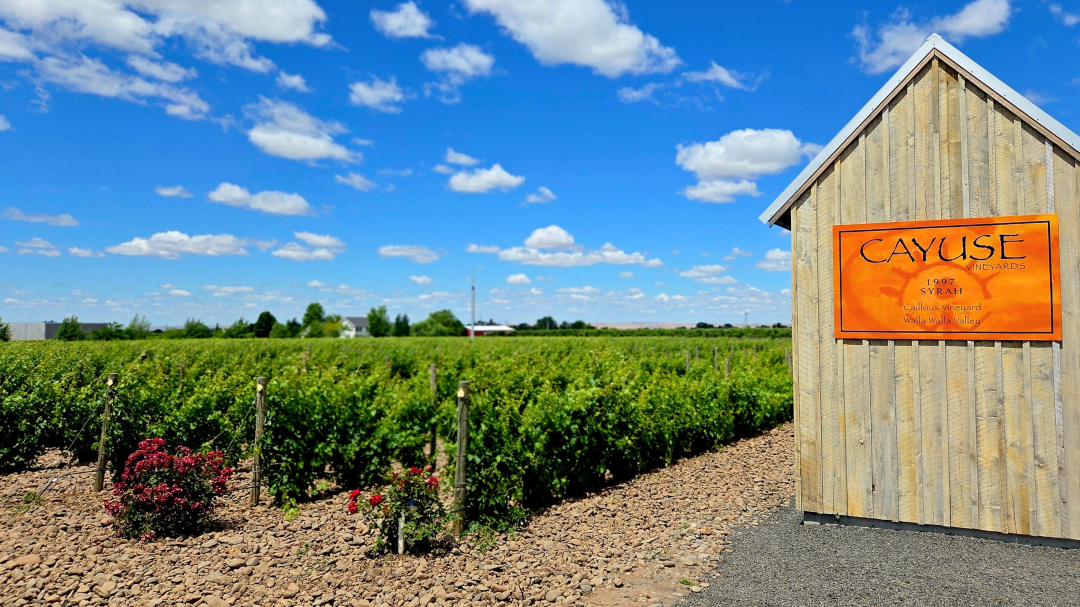
Cayuse’s Cailloux Vineyard in The Rocks District of Milton-Freewater.
The answer seemed obvious. Why would I exclude Oregon’s other AVAs? The call for samples went out, and I got to tasting. That first year, the wines collected from appellations like the Rogue or Umpqua Valleys didn’t add up to much. While the wines were good, not many truly stood out, so I wrote my broader Oregon report and moved on. The Willamette Valley took the spotlight.
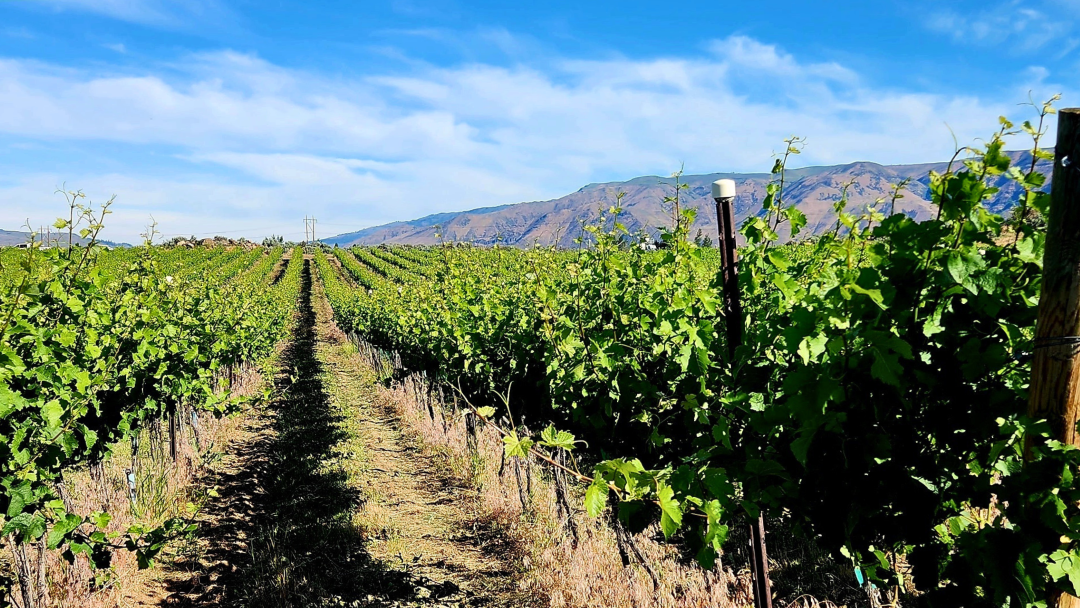
The Strand Vineyard in the Columbia Valley, source of Gamine Due North Syrah.
Then something unexpected happened. Like many, I presumed that The Rocks District of Milton-Freewater, which is located in the greater Walla Walla Valley, should be included in my Washington State report. It made sense on paper, as the common belief was that the vast majority of the producers championing this emerging region were based on the Washington side of the border. Slowly, the area started gaining recognition. Around this time, we began working on the official Vinous map of the AVA (more on that later). Two realities quickly became apparent: Not only is The Rocks District located entirely within Oregon's borders, but many of the finest producers making wine from the area are as well.
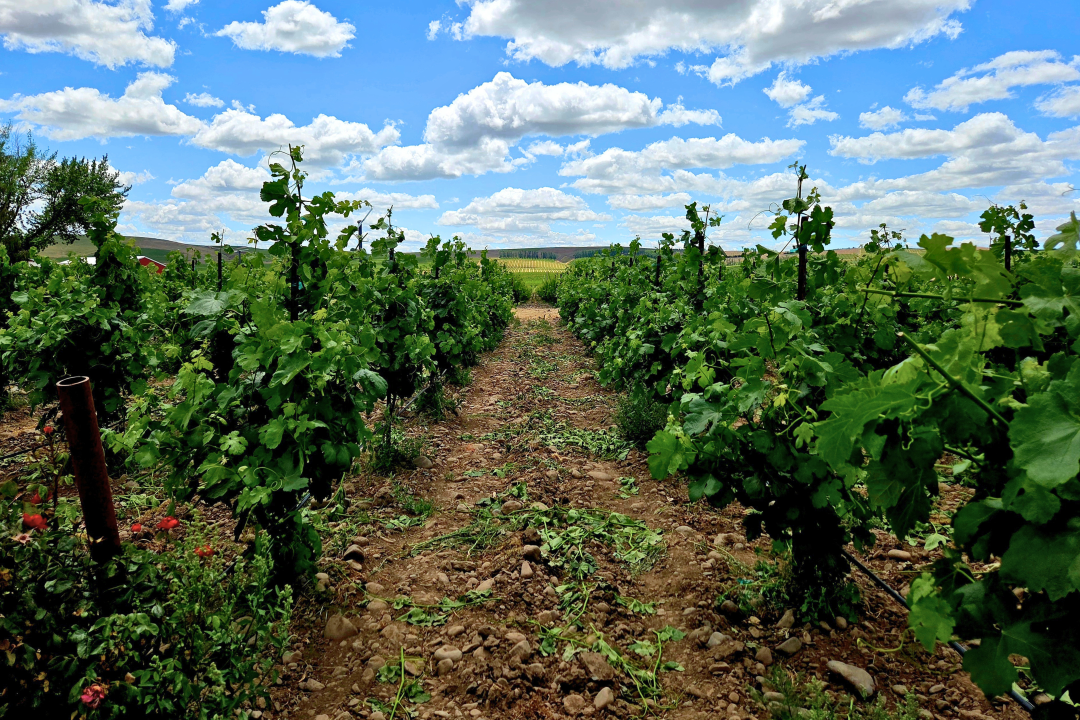
The Orselli Vineyard in the south-central section of the Rocks District.
Coincidentally, as I continued to taste in Oregon year after year, the tides started to shift. More estates from southern AVAs and from areas like the Columbia Gorge began submitting samples for my tastings. The momentum was undeniable. Today, Oregon is about much more than just the Willamette Valley. It is a state that contains not only the United States’ “New World Burgundy,” but also its “New World Rhône Valley.” Oregon is an expansive viticultural ecosystem defined by drastically different terroirs and dramatically different vintages from place to place. This standalone report focuses on Oregon’s breadth of producers outside the Willamette Valley, where, in the past, they may have been lost in the shuffle of my large annual Oregon report, while also correctly placing wines from The Rocks within the context of Oregon rather than Washington State. This is, plain and simple, an editorial evolution to highlight the growers and winemakers at the cutting edge, and to speak about regional borders exactly as they should be.
Southwest Oregon
While the modern history of the Willamette Valley began in the mid-1960s, further south, German settlers planted vines as early as the 1850s. Started in 1873 by Peter Britt, Valley View Winery was Oregon’s first official winery in what is today known as the Rogue Valley AVA. However, like much of the West Coast, winemaking was nearly abolished through the enforcement of Prohibition, and it wasn’t until 1968 that grapegrowing and winemaking returned to the region in any meaningful way.
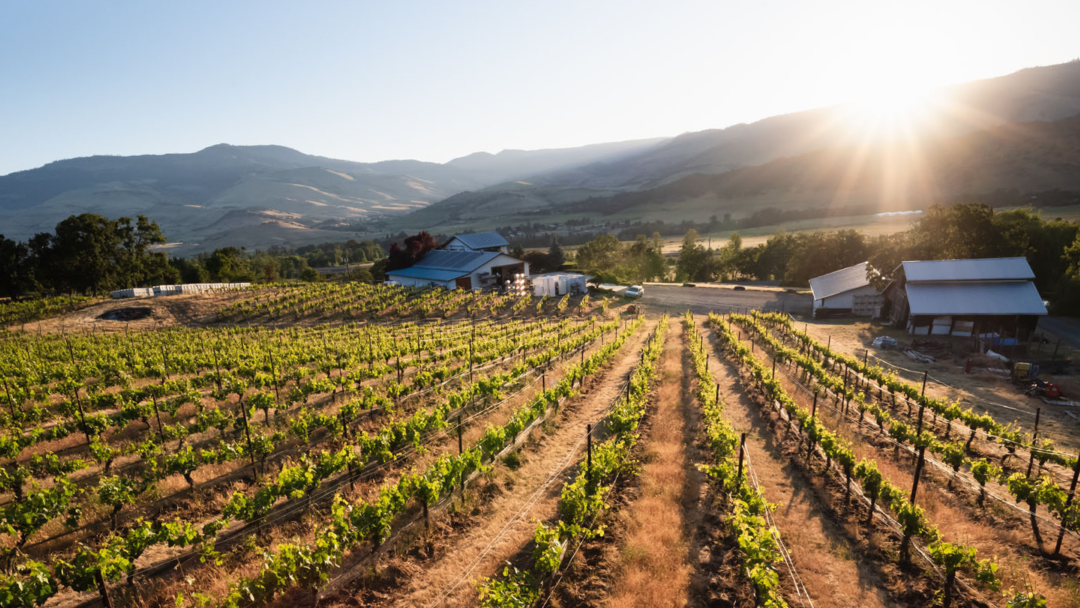
Tempranillo block of the Weisinger Estate Vineyard planted in 2005 in soils of sandstone and decomposed granite.
Southwest Oregon is defined by three mountain ranges: the Coastal Range to the west, the Cascade Range to the east, and the Klamath Mountains to the south. These formations create a highly diverse array of terroirs and a multitude of distinct valleys throughout the Southern Oregon AVA, a macroregion spanning 125 miles in length and 60 miles at its widest point. Within this larger footprint sit the Umpqua Valley AVA (established in 1984), the Rogue Valley AVA (established in 1991) and the nested Applegate Valley sub-AVA (established in 2000).
The Umpqua Valley acts as a transitional zone. The northern section enjoys a cool, marine-influenced climate that sees an average of 50 inches of rain annually. As you travel south, however, the climate becomes warmer and drier, shifting closer to the conditions of the Rogue Valley, where 25 inches of rain per year is normal.
Where the Rogue and Applegate Valleys extend toward the California border, the Coastal Range blocks damp marine air, casting a rain shadow that creates the warmest growing conditions in the state. The savior here is pure elevation. Vineyards are typically planted in high mountain valleys between 1,000 and 2,000 feet. On the eastern border along the Cascade Range, the Rogue Valley claims some of the highest-elevation vineyards in Oregon. These sites thrive due to massive day-to-night temperature swings that help to lock in aromatics and natural acidity. Soils also vary widely throughout the area. The region boasts more than 150 soil types, rooted in sedimentary and volcanic rock. Lower valley floors consist of deep alluvium or heavy clay, while the hillsides and benches are granitic, with mixed alluvium, silt or gravelly loams.
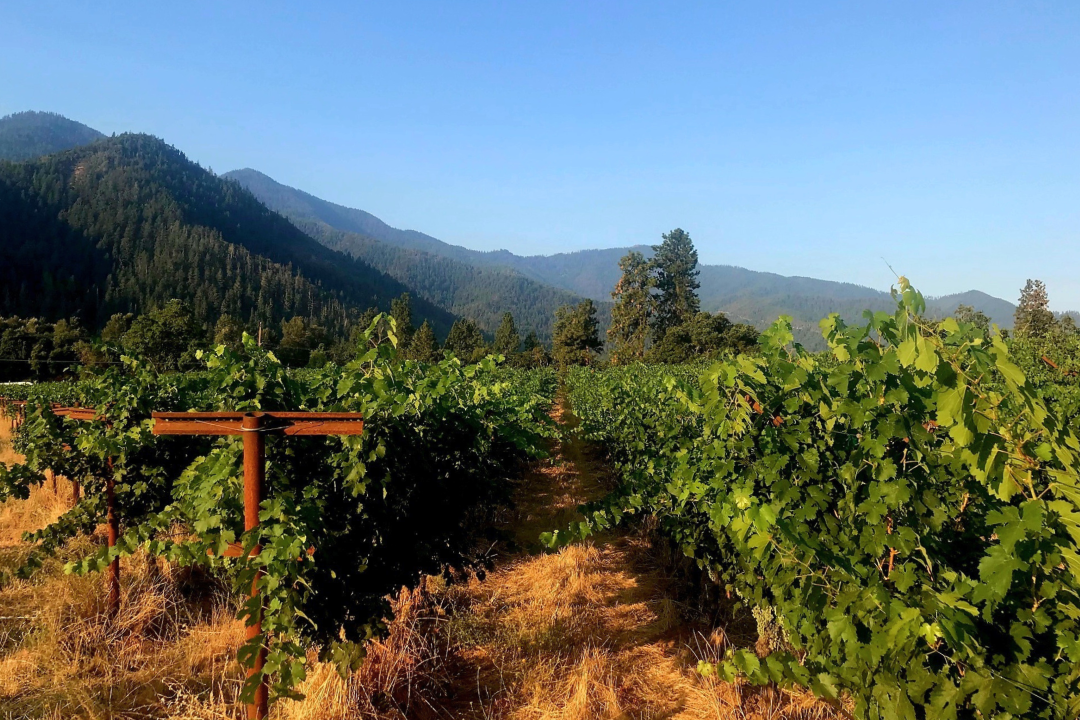
Mae's Vineyard in the Applegate Valley AVA, courtesy of Division Winemaking Co.
Consequently, from the cooler northern reaches of the Umpqua to the warm, arid parts of the Rogue, Southern Oregon can excel with an exceptionally large cast of grape varieties. With the right viticultural focus, varieties from Bordeaux, the Rhône, Iberia, Burgundy and Germany can all find a distinct terroir in which to thrive.
I believe we’re at the very tip of the iceberg with regards to the potential in Southern Oregon. I expect quality to explode as more producers realize that potential.
For easy reference within the notes, look to the producers below, grouped by their respective AVAs:
Umpqua Valley AVA: Abacela Winery, Paul O'Brien Winery
Applegate Valley AVA: Division Winemaking Co., Iterum, La Randonnée, Quady North, Troon Vineyard & Farm, Valley View Winery
Rogue Valley AVA: Irvine & Roberts Vineyards, Weisinger Family Winery, DANCIN Vineyards, Peter William, Agathodaemon Wine, Del Rio Vineyard Estate, Mendivia Wines, Violet Vines
Eastern Oregon – Walla Walla Valley
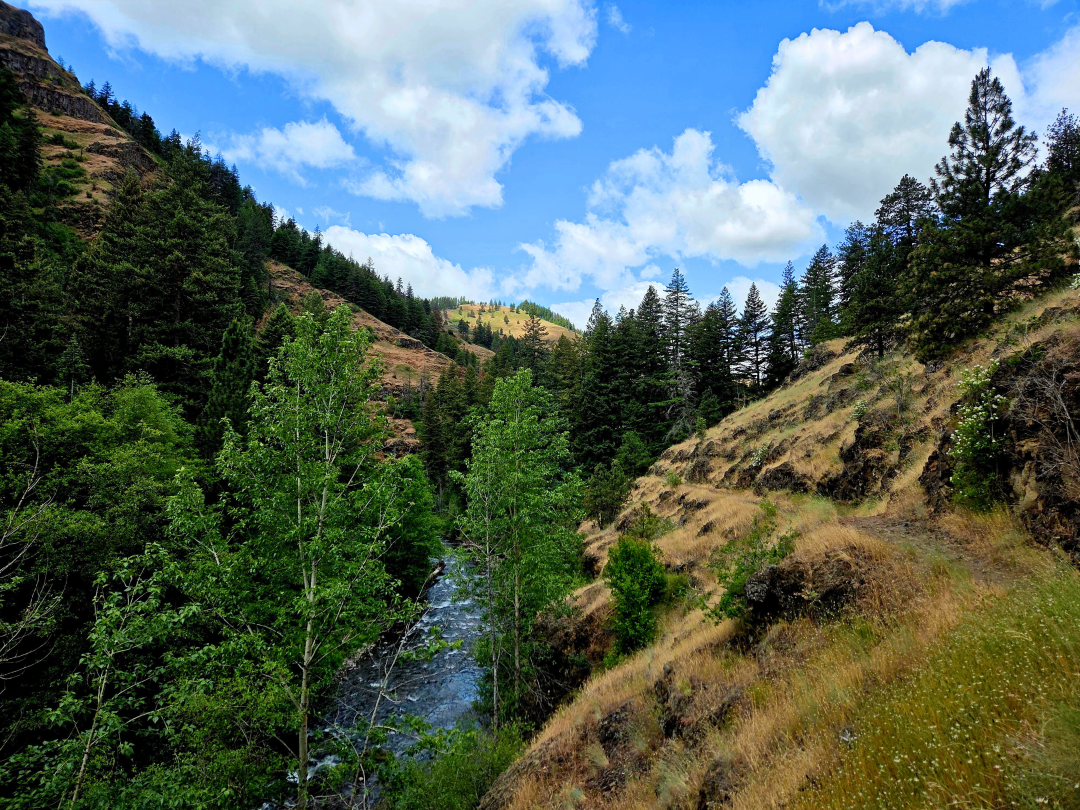
The dramatic landscape of Eastern Oregon following the Walla Walla River.
There’s no better time to write about the Southern Walla Walla Valley and its sub-appellation, The Rocks District of Milton-Freewater (which I will refer to as “The Rocks District” going forward). Firstly, when most wine drinkers hear Walla Walla, they automatically think of Washington State, which famously shares the AVA with Oregon. However, roughly 43% of the planted vineyard acreage in the Walla Walla Valley lies on the Oregon side of the border. Many of those vineyards — even when you completely exclude The Rocks District — are among the most highly regarded sites to which winemakers from both states turn for their top-tier wines.
Long before The Rocks District entered the limelight, vineyards like Seven Hills supplied fruit for some of Washington’s greatest and most historic bottlings. Today, progressive producers continue to look to this zone and to the foothills of the Blue Mountains to the east for the region's future development.
The Walla Walla Valley’s terroir was deeply impacted by the Missoula Floods, which occurred between 13,000 and 15,000 years ago. As prehistoric ice sheets melted, Glacial Lake Missoula formed in western Montana, held back by a massive glacial ice dam in Northern Idaho. When that dam ruptured, it sent a wall of water up to 400 feet high racing at 65 miles per hour across Idaho, Washington and Oregon. This cycle repeated itself over and over again through the end of the last ice age, radically reshaping the topography and leaving a permanent mark on any landform below 1,250 feet in elevation within the Walla Walla Valley. Over the following millennia, windblown loess (fine-grained, silty sediment) covered the thick layers of alluvium deposited by the floods. A brief tour through the modern valley floors reveals roads dug directly between these towering walls of loess.
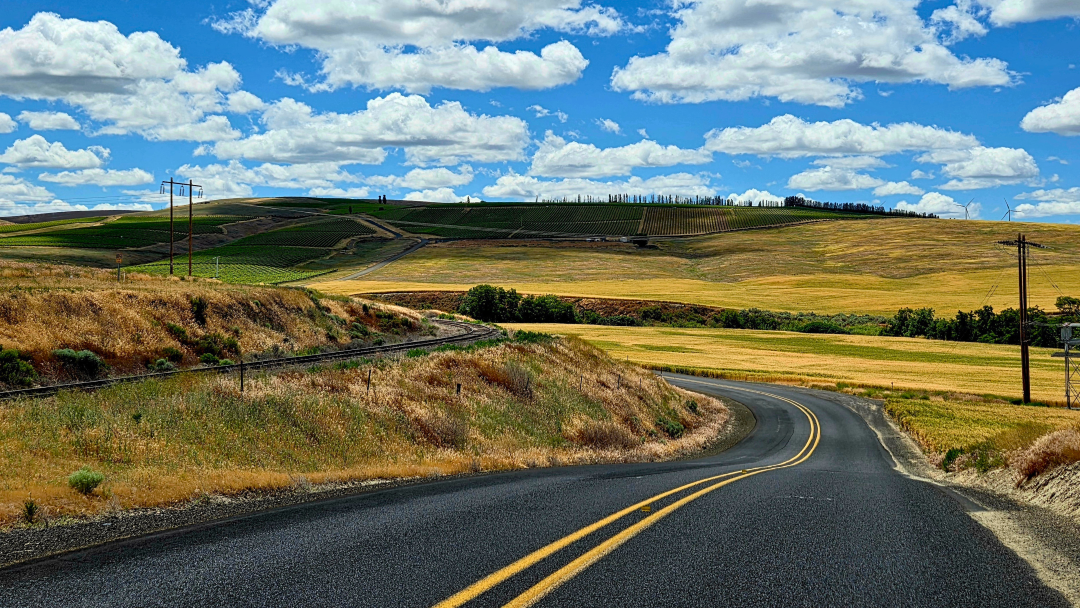
Wind-blown loess lines the roads of the southern Walla Walla AVA.
Safely above this prehistoric flood line, the terroir shifts dramatically. At higher elevations, such as the Ferguson Vineyard at 1,350 to 1,500 feet (planted in 2008 by L'Ecole No. 41), the soils consist of windblown loess overlying ancient fractured basalt. Another excellent example is Christophe Baron’s Hors Catégorie vineyard, where he grows fruit for the namesake Syrah. This site possesses a brutal 60% incline on shallow, fractured basalt at an elevation of 1,450 feet, where vines must be hand-farmed with single stakes and mechanical winches. (For more detail on this dramatic vineyard, readers should check out my recent article, Beyond Category: Twelve Vintages of Hors Catégorie.) Both basalt- and loess-based terroirs give rise to some of the top Bordeaux- and Rhône-variety wines in the United States, but they yield completely different results.
Eastern Oregon – The Rocks District of Milton-Freewater
The Rocks District of Milton-Freewater is a tiny, 5.9-square-mile geological anomaly, as it’s the only AVA in the United States defined strictly by a single landform (the Milton-Freewater alluvial fan) and a lone soil series (Freewater Very Cobbly Loam). This composition was created by the Walla Walla River, which flowed down from the Blue Mountains over the course of millennia. As currents shifted and slowed, the river littered the area with rounded basalt cobblestones. Generally speaking, the terroir here is remarkably uniform, characterized by layers of stones that extend from the surface to deep in the subsoil. These stones act as thermodynamic conductors, soaking up the intense daytime sun and radiating heat back up to the vines at night.
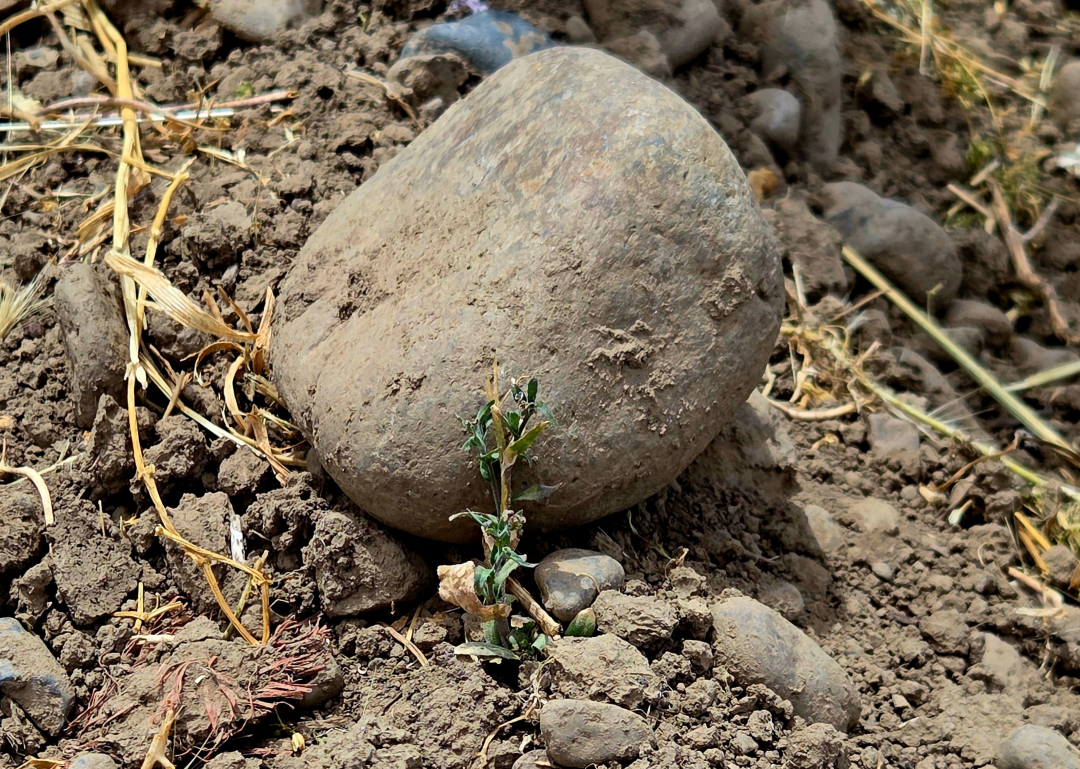
Rounded basalt cobblestones of all sizes litter the soils of The Rocks District.
Despite this relative uniformity, subtle shifts across the alluvial fan create distinct micro-zones that correspond directly to two key soil classifications. As you move into the southern sector of the AVA, the geological profile changes, as there is less stone on the immediate surface and a higher concentration of Freewater Gravelly Silt Loam. Approaching the town limits of Milton-Freewater, closer to the Walla Walla River, the ground gives way to classic Freewater Very Cobbly Loam. Here, the soils become significantly deeper and more skeletal — among the rockiest in the entire AVA. Because of the mass of exposed cobblestones, both daytime and nighttime temperatures tend to be warmer here, which is ideal for bringing late-ripening Bordeaux varieties to full physiological ripeness. Situated at elevations ranging from 800 to 1,000 feet, The Rocks District presents a singular terroir that, while cohesive, yields myriad variations across the vineyard sites.
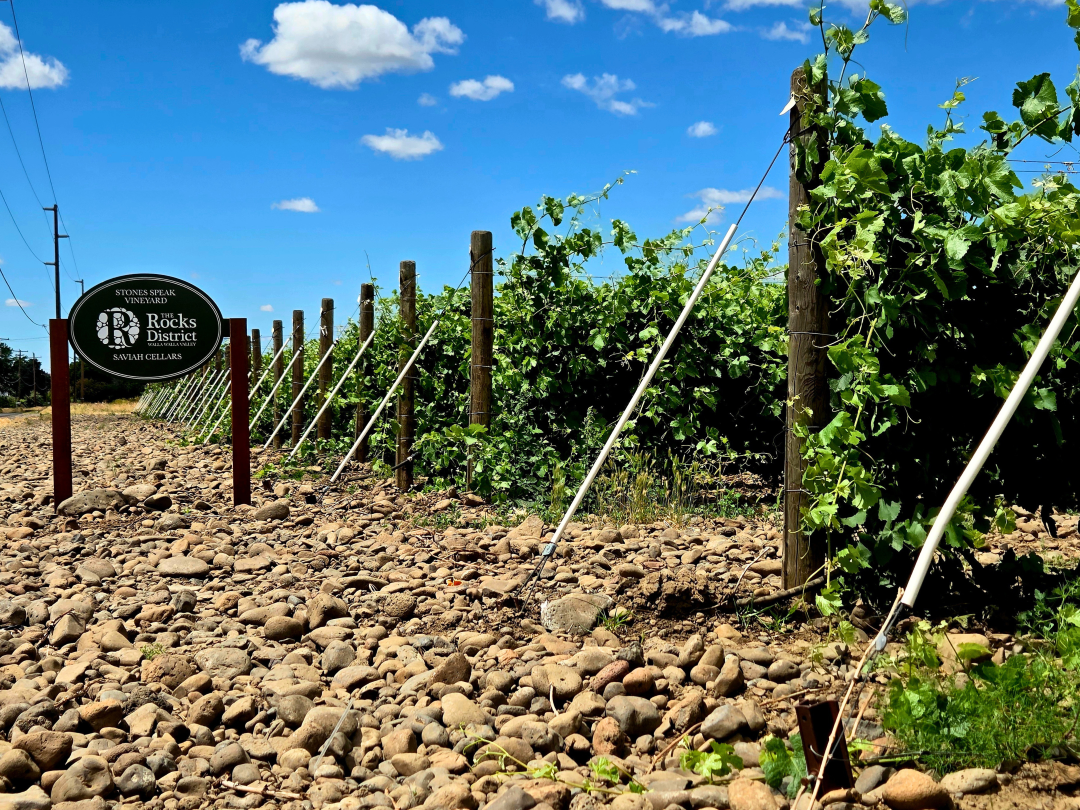
Saviah's Stones Speak Vineyard in The Rocks District.
The sight of these cobblestones inspired a young Christophe Baron to begin planting vineyards here in the mid-nineties and ultimately to the creation of Cayuse. At Baron’s original tasting room in downtown Walla Walla, he introduced visitors to a selection of Syrahs and Grenaches unlike anything they had ever tasted before. The “Rocks Funk” came through in spades, delivering a distinctly Old World, savory bouquet contrasted by New World fruit. On the palate, the soils’ unique mineral composition and high pH lent the wines a remarkably soft, plush, seamless feel. Because that tasting room was located on the Washington side of the border, it likely played a major role in how wine writers at the time positioned these wines in their respective Washington reports. This cross-border dynamic remains a complex issue for labeling to this day. Because the AVA sits entirely within Oregon, TTB regulations dictate that a winery can only use “The Rocks District” designation on the label if the wine is fully vinified and bottled within Oregon state lines. Washington producers sourcing fruit from The Rocks District are legally restricted to using the broader Walla Walla Valley AVA on their labels. By 2005, however, Baron moved his production facility to a spot right across from his Armada Vineyard.

The Holy Roller is made entirely from The Rocks District fruit but is labeled Walla Walla Valley due to labeling restrictions.
It was during this same period that Steve Robertson, another foundational figure, arrived from Napa Valley. Seeking an ideal location to plant, and following a few frustrating failed starts, Robertson established the SJR Vineyard in 2007 at the southwestern corner of the alluvial fan. The site sits below a bench, with the historic Seven Hills Vineyard looming just above. Inspired by the area's unique terroir, Robertson eventually teamed up with geologist Dr. Kevin Pogue to map the precise boundaries of a new American Viticultural Area (AVA). Despite facing years of resistance from the valley's established power-holders, their boundary line, drawn around the cobblestone soil series, won official federal approval in 2015.
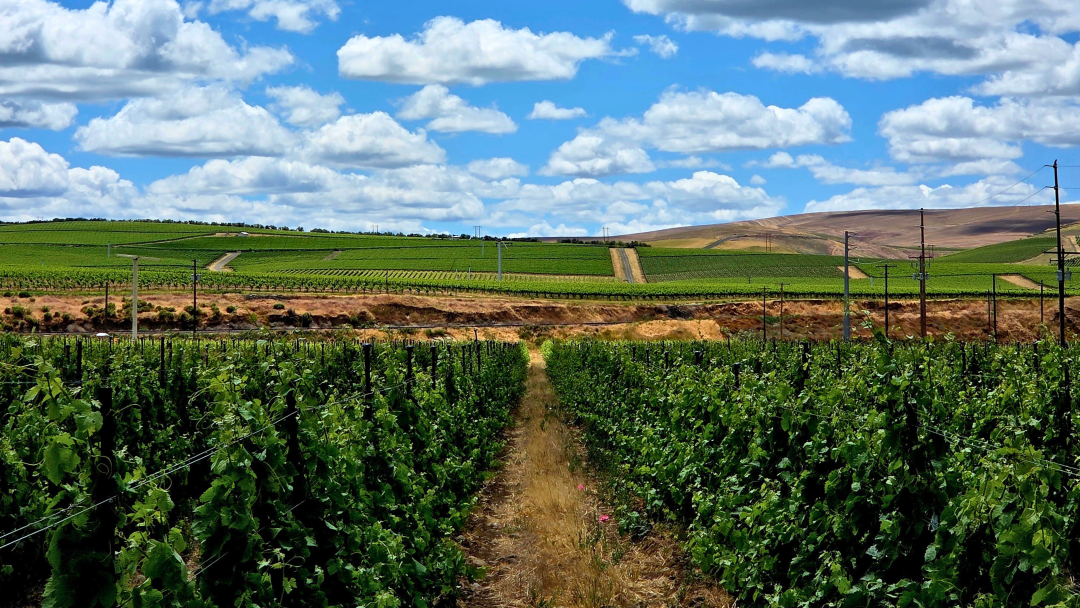
Looking out across the SJR vineyard with the Seven Hills Vineyard in the distance.
Perhaps the most remarkable attribute of The Rocks District today is its uncanny ability to blend an instantly recognizable sense of place with varietal typicity across a wide spectrum of grapes. While the initial success stories were anchored entirely in red Rhône varieties, Bordeaux grapes have steadily gained notoriety. Even white Rhône varieties are finding their footing here. Regardless of variety, The Rocks District delivers an undeniable stamp of terroir like no other, which continues to draw winemakers from around the world to plant stakes in the area.
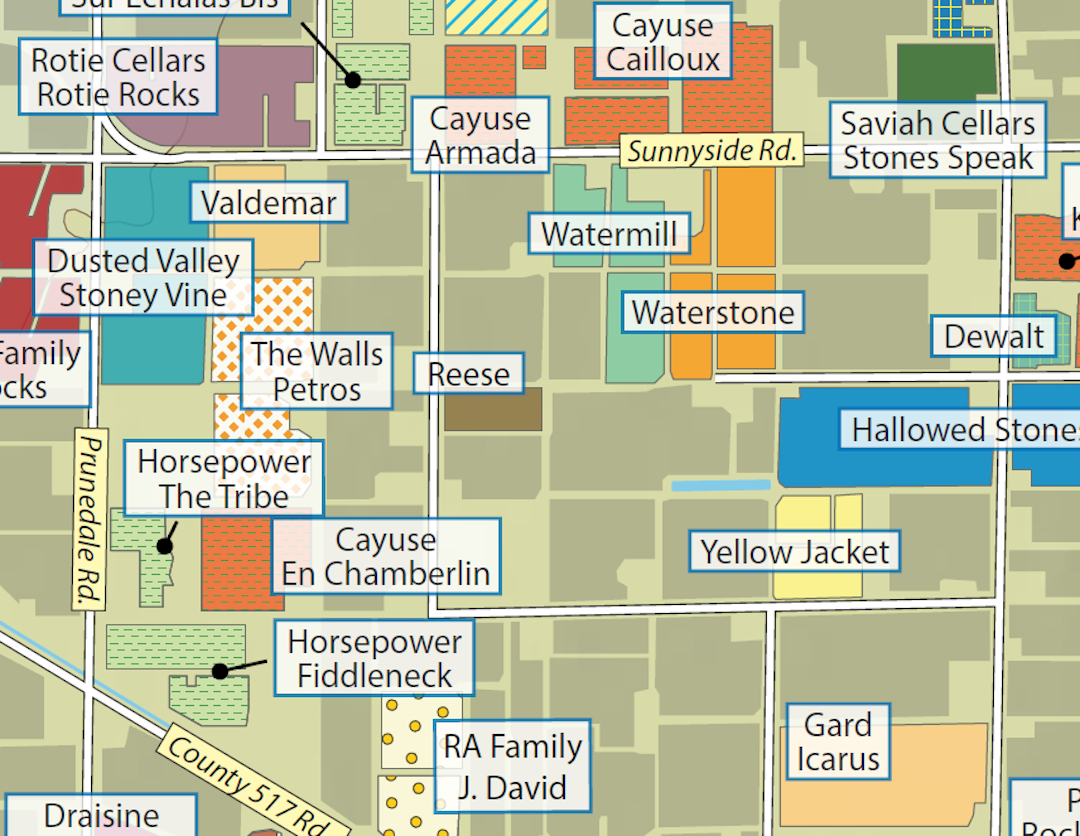
One small piece of the greater map, detailing The Rocks District of Milton-Freewater AVA.
This leads me to the next big chapter in The Rocks District's history: the creation of a Vinous AVA map detailing the region’s vineyards, soils and topography. The Rocks’ ability to communicate a sense of place, as well as distinct differences between parcels within its borders, has ignited a real desire among both winemakers and consumers to gain a deeper understanding of this place. As a lover of Barolo, I think fondly of the years I spent tasting wines from that region while studying the same MGA maps that inspired Antonio Galloni to bring this level of detail to California's vineyards. Now, The Rocks District will soon stand as the first AVA in the Pacific Northwest with a companion map for the industry and wine lovers to study these vineyards and locations in granular detail. Beyond terroir, the story, the history and the people who made The Rocks District what it is today will all be featured. The official release of the AVA map is scheduled for the second half of 2026.
What’s Next?
This report is just the beginning of our broader coverage. I have yet to receive samples from the Snake River Valley AVA along the far eastern border with Idaho, but as our focus on these outlying regions gains traction, I expect that to change. There are also wines to explore from the 40-mile-long Columbia Gorge AVA just 60 miles east of Portland, as well as the massive, cross-border Columbia Valley AVA. Ultimately, there is an immense amount of territory to survey beyond the Willamette Valley. Looking at the sheer diversity of these frontier landscapes, it begs the question: Is there anything Oregon can’t do?
I tasted the wines for this report in Oregon and Washington in May and June 2026.
© 2026, Vinous. No portion of this article may be copied, shared or redistributed without prior consent from Vinous. Doing so is not only a violation of our copyright but also threatens the survival of independent wine criticism.
You Might Also Enjoy
Willamette Valley Returns to Classicism: The 2024 Vintage, Eric Guido, July 2026
Unpacking Oregon's Multi-Faceted 2023 Vintage, Eric Guido, July 2025
Oregon 2022: The Rollercoaster Vintage, Eric Guido, August 2024
Sitting Pretty: Oregon's New Release Pinot Noir, Chardonnay and Beyond, Eric Guido, January 2024
Oregon’s 2019 Pinot Noirs - A Return to Classicism, Josh Raynolds, February 2022
Show all the wines (sorted by score)
- Abacela Winery
- Agathodaemon Wine
- A to Z Wineworks
- Benza Vineyards
- Big Table Farm
- Bledsoe Family Winery
- Bledsoe|McDaniels
- Cayuse Vineyards
- Cimento
- Cowhorn Vineyard & Garden
- DANCIN Vineyards
- Delmas
- Del Rio Vineyard Estate
- Devison Vintners
- Division Winemaking Co
- Domaine St Laurent
- Dominio IV
- Dusted Valley
- Echolands Winery
- Erath Winery
- Force Majeure Vineyards
- Founders
- Gard
- Horsepower Vineyards
- Hundred Suns Wine
- Irvine & Roberts Vineyards
- Iterum Wines
- J. Christopher
- Karta Wines
- King Estate Winery
- K & M Wines
- La Randonnée
- Leonetti Cellar
- Maison Bleue
- Martin Woods
- Matzinger Davies
- Mendivia Wines
- No Girls Wines
- Pambrun Wines
- Paul O'Brien Winery
- Peter William
- Phelps Creek Vineyards
- Quady North
- Rasa Vineyards
- R|A Wines
- Redolent Wine Company
- Reynvaan
- Rotie Cellars
- Saviah Cellars
- Sleight of Hand Cellars
- The Walls
- Troon Vineyard & Farm
- Underwood
- Valley View Winery
- Violet Vines
- Weisinger Family Winery
- White Rose Estate
- WiLD CHiLD WiNERY
- WillaJory Wines
- Winter's Hill