
Browse using the new Vinous website now. Launch →
Printed by, and for the sole use of . All rights reserved © 2015 Vinous Media
The Delights of Southern France
BY NICOLAS GREINACHER | MAY 26, 2026
The wines of Southern France are among the easiest in the world to overlook, yet they are also some of the most rewarding to discover. At a time when other French wine regions rightfully receive regular attention, the wider French South can seem almost too large and diffuse to grasp in one sweep. Yet that very scale is part of its intrigue. Beneath the broad commercial image of Mediterranean wine lies a landscape of serious ambition, historic vineyards, exacting growers and wines that range from everyday value to unmistakable pedigree. Some have already earned iconic standing, whereas others remain hidden in plain sight.
The South of France has lived in my imagination for as long as I can remember. One of my early childhood memories is of summers spent in Opio, on the outskirts of Cannes, where my parents rented a small house framed by pine trees and Mediterranean light. There are still photographs of my brother and me playing in the garden, surrounded by the scent of lavender, wild thyme and warm garrigue carried through the air. The beauty of Southern France, inseparable from its food culture and relaxed way of life, left a lasting impression long before I understood anything about wine.
Later, as the wines of Châteauneuf-du-Pape drew increasing global attention, many enthusiasts, me included, began looking further south toward Languedoc, Roussillon and Provence, where the same varieties offered different expressions. It was there that I discovered wines of immense charm and gastronomic appeal, and it is precisely that excitement and diversity that I aim to share here.
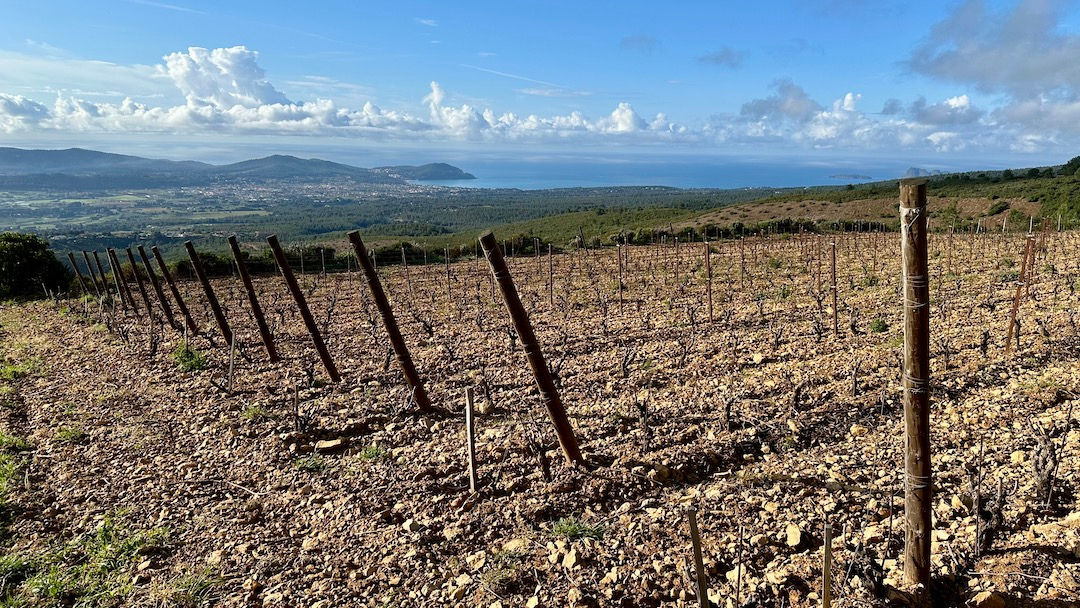
Domaine de la Bégude’s high-altitude vineyards overlook the Bay of Bandol.
To define Southern France for this report, I included the Southern Rhône appellations outside Châteauneuf-du-Pape and Gigondas, which already receive annual in-depth coverage. This selection therefore extends into appellations such as Rasteau, Luberon, Ventoux, Vacqueyras, Cairanne and Vinsobres, along with the wider arc of Provence, Languedoc and Roussillon. Taken together, this is an enormous territory that stretches across a striking diversity of soils, elevations, exposures and grape varieties. Languedoc and Roussillon alone account for more than 200,000 hectares of vineyards, a scale greater than the entire planted vineyard area of countries such as Australia, Chile or South Africa. To offer comprehensive coverage of Southern France in a single report is not realistic. That is why this new report is conceived as a selection. Its purpose is not to list everything that exists, but to start identifying wines that deserve to be assessed regularly. Many of them are priced at modest, accessible levels and show just how much value the South of France offers. The strongest examples do not ask for indulgence or special pleading because they come from overlooked appellations. They earn their place on merit.
Annual coverage makes particular sense here because Southern France is changing rapidly. Viticulture is becoming more precise. Farming choices are sharpening. Growers are learning to use elevation, exposure and canopy work more strategically in an era of warmer seasons. Appellations once associated with volume now contain a meaningful critical mass of producers making wines of nuance and identity. These wines are not compelling merely because they come from beautiful places. They are compelling because these sites offer a rare convergence of sun, light, geology and variety, yet the growing conditions still allow for freshness. This is often misunderstood. The wines of Southern France are routinely reduced to warmth and opulence. Certainly, the region has no shortage of sunshine, and even the best wines do not deny their climate—they possess fruit depth, texture and generosity. But the strongest examples also show balance, and balance in the South is achieved through many routes.
Elevation plays a role in appellations perched inland or higher up on slopes. Proximity to the sea helps moderate extremes, while nighttime cooling can preserve acidity even in hot years. Wind can reset a vineyard after periods of disease pressure. Limestone and rocky soils can aid in regulating vigour while also shaping the impression of tension in the glass. These factors allow for ripeness to come without sacrificing definition.
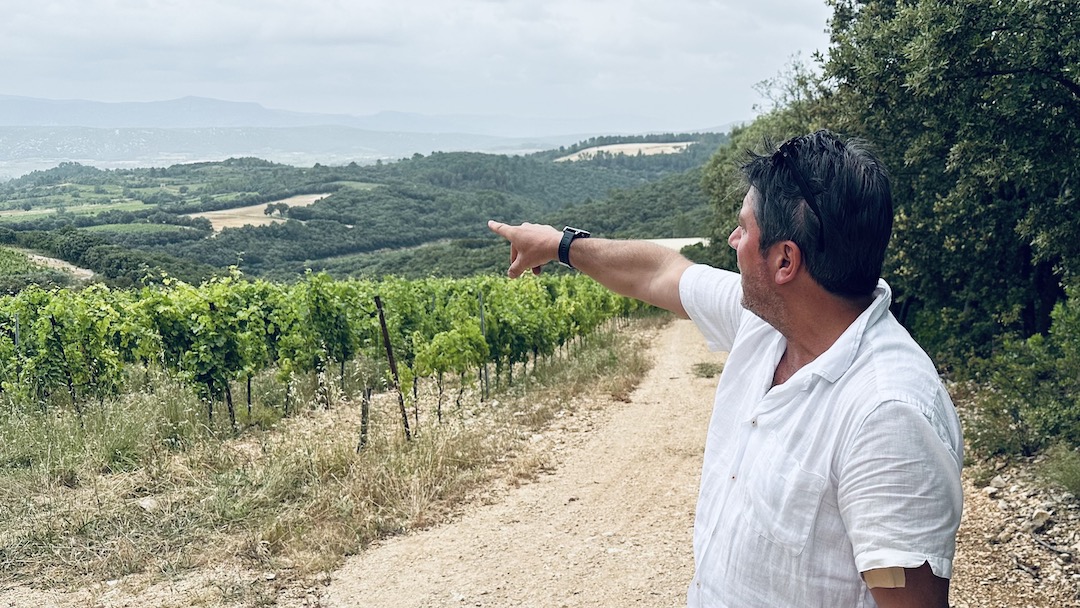
Samuel Guibert of Mas de Daumas Gassac, one of Languedoc’s finest estates.
The region’s diversity of grape material is equally important. In the Languedoc in particular, one finds an almost dizzying range of varieties. On the white side, Grenache Blanc, Grenache Gris, Clairette, Roussanne, Rolle, Viognier, Muscat and Marsanne all play their part, and the cast can extend further still. Chardonnay, Petit Manseng and Chenin Blanc all appear. Blends can be traditional or exploratory.
Turning to reds, Grenache, Syrah and Mourvèdre—often referred to as GSM—dominate many serious wines, but Carignan remains essential to the identity of the South. There is room as well for Cabernet Sauvignon, Cinsaut, Pinot Noir, Merlot and many other varieties, depending on place and ambition. In a global wine culture that increasingly values singularity, Southern France displays a more elusive kind of attraction, offering multiplicity without chaos.
Price is another part of the story, with many of the region’s finest wines remaining refreshingly affordable by international fine wine standards. Some of the most successful examples in this report deliver genuine excitement at two-digit prices. That alone would make the South of France worthy of closer attention. Yet the larger point is that the region produces wines of pleasure, character and increasingly serious terroir expression across a broad range of price points.
Bandol: A Hidden Gem
Bandol remains under the radar despite producing some of the most distinctive wines in the entire Mediterranean orbit. After two days of extensive visits and tastings in the region, I quickly concluded that Bandol deserves far more praise than it currently receives.
With its AOC established in 1941, Bandol is one of Provence’s historic names, yet it often remains trapped between reputation and misunderstanding. Rosé is the dominant category; the appellation produces roughly 75% Rosé, 20% red wine and 5% white wine. But Bandol’s deepest identity rests on Mourvèdre-driven reds capable of genuine development in bottle.
Bandol’s vineyards lie largely on south-facing slopes, often terraced, with rocky limestone and clay soils of low fertility. Working these sites is expensive and labour-intensive. The steepness of the terrain raises costs, and the pressure of competing land use has reduced the total vineyard area. Even so, thanks to its warm microclimate and the regulating influence of the sea, Bandol remains singular in its ability to ripen Mourvèdre consistently.
The AOC rules dictate that red Bandol must contain 50 to 95% Mourvèdre and undergo a minimum of 18 months of aging in oak. Yields are legally capped at 40 hectolitres/hectare (hl/ha), though many growers fall well below this limit. For example, Domaine Tempier reports average yields of around 24 hl/ha. Establishing a vineyard for Bandol red is itself a serious commitment, with no fewer than eight years passing before the first harvest can qualify for the appellation.
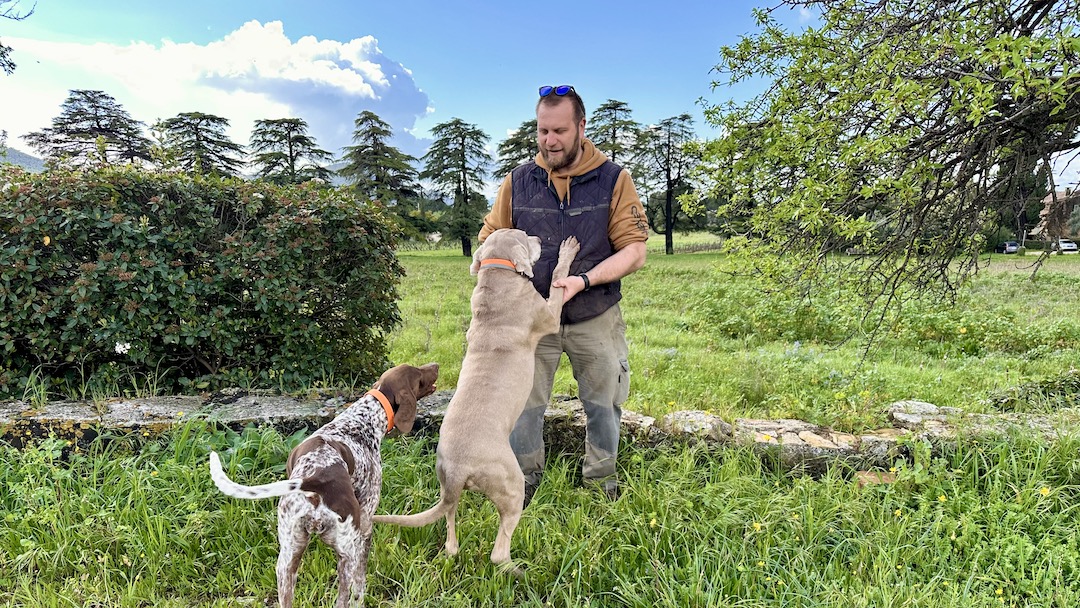
Étienne Portalis is the ninth-generation steward of Château Pradeaux, one of Bandol’s leading estates, and a firm believer in 100% whole cluster fermentation.
A lingering assumption persists that Bandol reds are inevitably rustic, but the reality is far more nuanced and considerably more exciting. The best producers have become highly adept at gentle extraction, working with infusion instead of force, and shaping Mourvèdre into wines of precision without stripping away character. Tannins remain central to these wines’ character but are increasingly fine-grained instead of fierce.
Another misconception is that the region’s warmth automatically means heavy, unstable wines. In fact, one of the striking features across the finest Bandol reds is their excellent natural acidity and sense of freshness. These are not clumsy wines; they are structured Mediterranean reds with line, lift and longevity. Lastly, and importantly, none of the Bandol reds I tasted for this report showed any signs of Brettanomyces.
What emerges from the latest vintages is a portrait of Bandol as an appellation of substance and class. Even in challenging growing seasons, Bandol retains identity. The reds are unquestionably ageworthy, but what impresses most is their ability to combine structure with clarity, savour with freshness and seriousness with drinkability. These are not museum wines requiring reverence at the expense of pleasure. At their best, Bandol reds are deeply satisfying to drink, even young, while clearly built for decades of development.
Recent Bandol Vintages
2025
The 2025 vintage is solar in profile, with many producers beginning harvest exceptionally early, around August 20, due to various heatwaves. Mid-September brought heavy rainfall, but for most estates this came after the bulk of the fruit had already been picked. Producers who harvested after the rain often obtained somewhat higher yields and lower potential alcohol levels than those who picked before it. At this early stage, 2025 appears likely to divide stylistically along harvest timing.
2024
The 2024 growing season was cooler and wetter than most recent Bandol years. The wines show a more classical register, with elegance and restraint taking precedence. Summer was without any major weather shocks, and the heat remained moderate. For readers accustomed to the richer side of Bandol, 2024 may come as a reminder that this appellation can also speak in a more finessed voice.
2023
Two thousand twenty-three was the third consecutive drought year. Whenever dry periods were interrupted by heavy rainfall, mildew treatments proved challenging because many vineyards were difficult to access during wet periods. Certain growers dealt with this through strict sorting. Others also had to contend with serious losses to hail. Harvest generally began toward the end of August, and the reds often show slightly firmer than usual tannins that will need time to resolve in bottle.
2022
The 2022 vintage was marked by drought and heat. A badly needed 60 millimetres (mm) of rainfall on August 16-17 saved the harvest, though in some places this was also accompanied by hail. Picking started shortly afterwards, and while yields were low and the tannic structures are not as imposing as in some surrounding years, the wines repeatedly show more freshness than expected. A pleasant surprise.
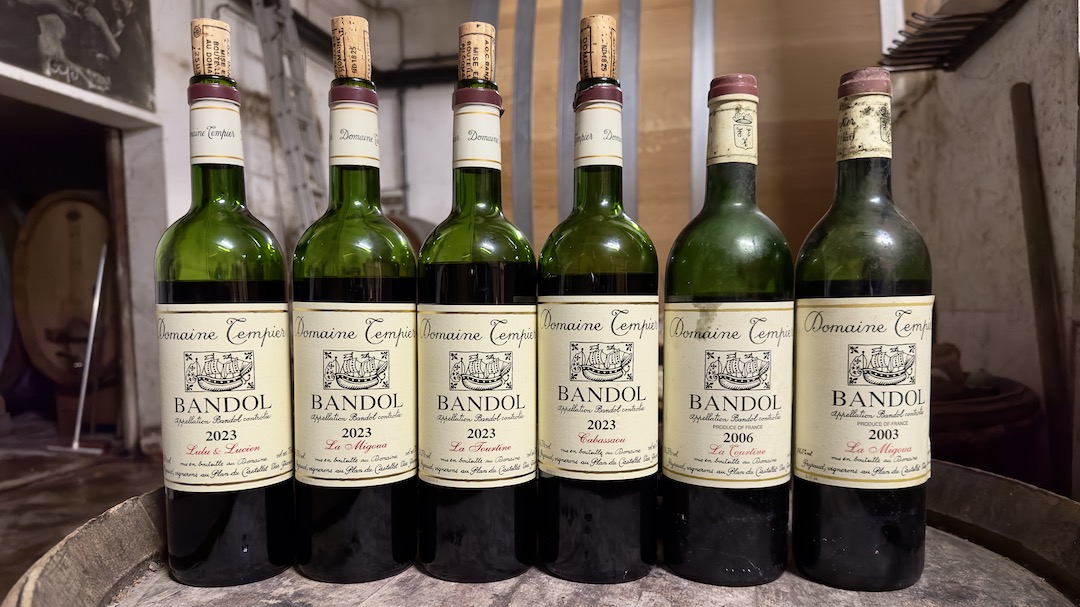
A stellar lineup at Domaine Tempier, with their ageworthiness highlighted by the magnificent 2006 and 2003 vintages. The delightful 2011 Rosé missed the shot but not the report.
2021
Contrary to many other French wine regions, Bandol’s 2021 vintage was defined by drought, with only around 250 mm of rainfall from October 2020 through September 2021. Frost struck some plots in April. Water reserves were insufficient and berry size was reduced, leading to low juice yields and a small crop. However, the absence of major summer heat spikes and the persistence of cool nights preserved freshness. The reds show a restrained, austere style.
2020
Vintage 2020 is a benchmark year for Bandol reds. Again and again, the wines show a delightful sense of completeness. Mediterranean ripeness is present, but it is matched by lifting freshness, integrated tannic depth and a striking overall harmony. For many producers, 2020 has the potential to reset consumer expectations and establish a contemporary quality reference point.
Final Thoughts
One must not mistake a lack of visibility for a lack of importance. Some of the most exciting French wines are not the ones that announce themselves the loudest. Instead, they derive from old vines planted a little off the beaten path, in terraced vineyards above the sea, on windy plateaus inland or in old mixed plantings rooted in poor soils that know how to hold just enough water and just enough struggle.
Southern France is far too interesting to ignore. Readers should treat this report as an introductory map to navigate the region’s dense jungle of wines and to rediscover the possibility that Southern French wines can be affordable, expressive and, in the right hands, profoundly moving.
I tasted the majority of wines for this report in the South of France in March 2026, with follow-up tastings in New York and at my Zurich office.
© 2026, Vinous. No portion of this article may be copied, shared or redistributed without prior consent from Vinous. Doing so is not only a violation of our copyright but also threatens the survival of independent wine criticism.
You Might Also Enjoy
Mas Jullien: A Languedoc Tale, Antonio Galloni, April 2026
Vacqueyras: The Long Road to Recognition, Nicolas Greinacher, November 2025
Gigondas 2024: The Birth of a Modern Classic, Nicolas Greinacher, November 2025
Châteauneuf-du-Pape 2024: Dark Elegance, Nicolas Greinacher, October 2025
Digging Up a Languedoc Treasure: Mas de Daumas Gassac 1978-2022, Nicolas Greinacher, July 2024
Show all the wines (sorted by score)
- Abbotts & Delaunay
- Ambrine
- Atelier Guibert
- Château d'Aussières
- Château de Pibarnon
- Château de Rouanne
- Château La Mascaronne
- Château la Négly
- Château Pradeaux
- Clos Marie
- Domaine Alary
- Domaine Arnia
- Domaine d'Aussieres
- Domaine de Fontbonau
- Domaine de la Bégude
- Domaine de la Grange des Pères
- Domaine des Soulanes
- Domaine de Terrebrune
- Domaine de Trévallon
- Domaine du Clos des Fées
- Domaine Fontchene René Milan
- Domaine Gauby
- Domaine Gourt de Mautens
- Domaine la Négly
- Domaine la Soumade
- Domaine Rostaing
- Domaine Tempier
- Gassier
- Les Capitelles
- Marrenon
- Mas de Daumas Gassac