
Browse using the new Vinous website now. Launch →
Printed by, and for the sole use of . All rights reserved © 2015 Vinous Media
Chile: A Recalibration in the Heartlands of Maipo
BY JOAQUÍN HIDALGO | JULY 28, 2026
Maipo Valley is Chile's most prestigious wine region. It concentrates the tradition of the historic wineries built around Santiago and some of the country's most celebrated Cabernet Sauvignon terroirs. That proximity to Santiago, however, is also Maipo's main threat. Between 1997 and 2022, the vineyard area of the Metropolitan Region — which includes both Santiago and the vineyards of Maipo — grew by around 4,000 hectares to surpass 10,000. But the numbers conceal a migration. Vines are leaving their traditional homes: between Peñalolén, Puente Alto and La Florida, communes that were once crucial to the region, some 500 hectares have disappeared. At the same time, vineyards have expanded in other corners of Maipo, such as Paine, Buin, San Bernardo and Melipilla. With that displacement, new expressions are emerging for Chile's most famous Cabernet.
Today, Maipo is in full transformation through the rise of new places. While many consumers may still expect the wines of old Maipo, it is the region's new frontiers that are beginning to define its future.
One River, Many Terroirs
As the Maipo River runs into Chile’s Central Valley, it skirts the southern edge of Santiago and links a series of viticultural areas that form Chile's aristocratic heartland. Yet the high vineyards of Pirque are one thing, and those of Isla de Maipo or Melipilla (closer to the coast) are quite another. What follows is a broad-strokes guide to interpreting Maipo through the lens of Cabernet Sauvignon.
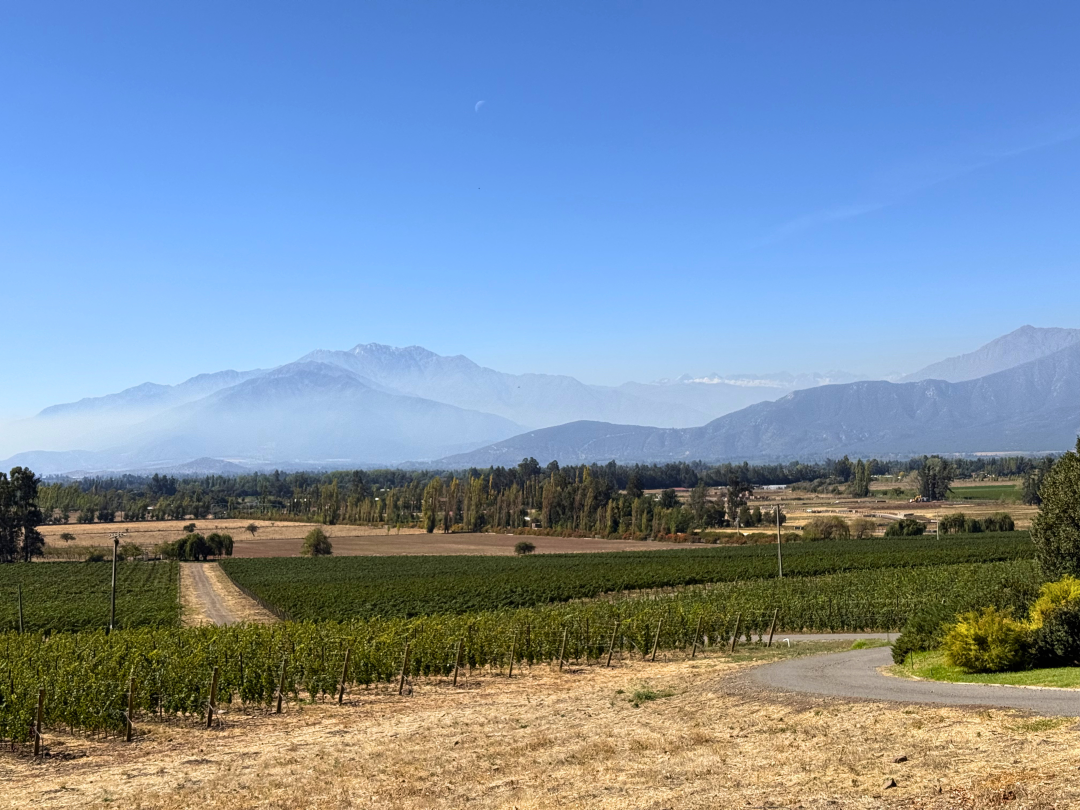
The view from Haras de Pirque reveals three key elements of the landscape: vineyards descending from the slopes in the foreground, the point where the Maipo River reaches the Central Valley (just behind the hills in the middle of the image) and, in the background to the left, the elevated ridge that gives rise to the Quebrada de Macul.
Alto Maipo
This is what I call historical Maipo, associated with the river's alluvial terraces — especially the third and fourth — in the upper part of the valley. It includes Puente Alto and Peñalolén on the northern bank, and Pirque on the southern side, between 600 and 800 meters above sea level. This is the Alto Maipo. Here, cool Andean air and gravel soils shape a Cabernet Sauvignon of black fruit, spice and a faint pyrazine note. It's a profile that made wines such as Aquitania, Cousiño Macul and Domus Aurea famous. These vineyards survive in a district where planted surface area continues to shrink.
Pirque functions almost as a valley of its own. Its mix of clay and gravel soils produces wines of greater intensity, fresher fruit and more assertive tannins. This remains a small area, divided between valley floor and hillside sites, with representative examples in the Cabernet Sauvignons of Haras de Pirque and El Principal.
Puente Alto, by contrast, is the classical gravel heart of Maipo and the cradle of the Cabernets that defined the Chilean profile of days gone by: plush and less herbal, with very polished tannins. This is the historic enclave formed by Viña Chadwick, Don Melchor (varietal Cabernets) and Almaviva (a Bordeaux-style blend), together representing the highest-priced wines in Maipo.
Further downriver, Buin and Paine represent the other side of the story. These are the zones that absorbed much of the migration from the classical vineyards. Since 1997, these regions have added more than 1,000 hectares and today account for a total of around 2,750 hectares. Here, old massale selections coexist with new plantings on terraces covered by heavier clay layers, which bring greater tension on the slopes and more velvety profiles on the plains. This is one of the areas responsible for changing the tannic profile of classic Maipo. From the traditionally styled 2023 Casa Real and 2023 Carmen Gold Cabernet Sauvignons to the more engaging and fruit-driven 2024 Pérez Cruz Pircas Cabernet Sauvignon, tannin refinement is increasing. The key distinction lies between hillside vineyards and the plains.
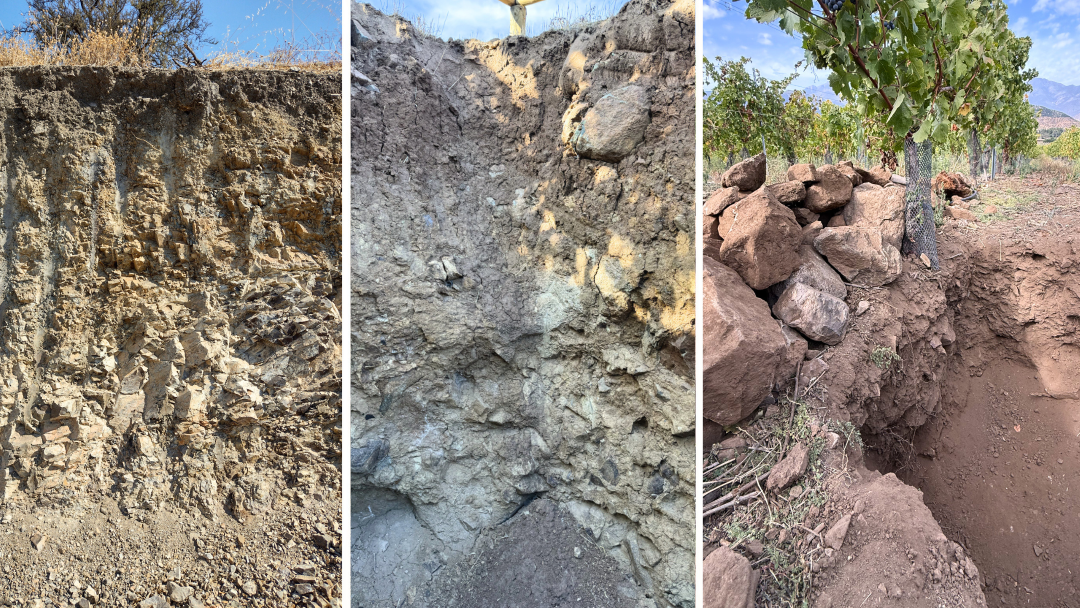
The varied soils of Maipo. On the left, weathered granites from the slopes of Pirque; in the center, the mix of clay and irregular stones found in Alto Jahuel; on the right, the classic colluvial soils of the DOM vineyard.
Maipo Medio
The Maipo River bends north where it meets the Coastal Range, before turning west again on its way to the sea. That point is Isla de Maipo, a zone rich in groundwater where the Maipo and Mapocho Rivers converge.
At around 350 meters above sea level, Isla de Maipo has grown by roughly 400 hectares over the past 25 years and now totals around 1,800. Planted on the river's fine gravels in a climate that begins to transition into coastal influence, Isla de Maipo’s growing conditions vary according to site. Some vineyards lie on heavier soils, as in the 2023 Tarapacá Etiqueta Dorada Cabernet Sauvignon, planted at the foot of the hills. In the center of the island, however, pure gravels dominate, as in De Martino's vineyard, where the estate explores leaner versions of Cabernet with earlier harvests and redder-toned fruit. De Martino's 2024 Cabernet Sauvignon Single Vineyard La Cancha is especially compelling.
Proximity to the coast means summer mists reach this far inland, cooling the mornings and filtering the light. Cabernets from this zone trend toward a more herbal and pyrazine-driven profile, with delicate, polished tannins. When fruit ripeness is well judged, these wines can offer some of the finest and most tensile expressions of Maipo.
Following the river toward the Pacific, a series of valleys unfolds along the Coastal Range, where vines grow under very different conditions than in gravelly Maipo. In places such as Carmen Alto or Melipilla, vineyard area has grown from 300 hectares in 1997 to around 1,300 hectares today. Granite is the dominant soil type while temperatures are lower than in Alto Maipo. Here, Cabernet tends toward redder fruit, spice and leaner, finer-grained mouthfeels, closer in style to some expressions of Apalta in Colchagua than to classical Maipo. Some pockets on the plains are planted on granitic clay, such as the vineyards of Viña Ventisquero. In the interior valleys, sun exposure becomes a determining factor: north-facing slopes produce riper profiles, while south-facing slopes preserve greater freshness. These are vineyards outside the traditional Maipo box, as evidenced by the 2018 Tabalí DOM Cabernet Sauvignon.
While Maipo is one river, it represents many terroirs. Most are linked to the irrigation the river provides, though some areas, such as Til Til or Pangue north of Santiago, are not even close to it. That dispersion reflects a reality found across much of Chile, but with a singular twist in the Metropolitan Region: here agricultural land competes directly with residential expansion, driven by Santiago's growth. That helps explain the pressure on historic zones such as Puente Alto and Peñalolén. Capturing that diversity requires detail. It was in that spirit that Maipo Origen was born three years ago, a collective bringing together small producers — some tiny, some larger — committed to sustaining the region's identity through its plurality. The fact that such a group has emerged is itself a sign of Maipo's internal shifts. Part of that new map is what I seek to highlight in this report.
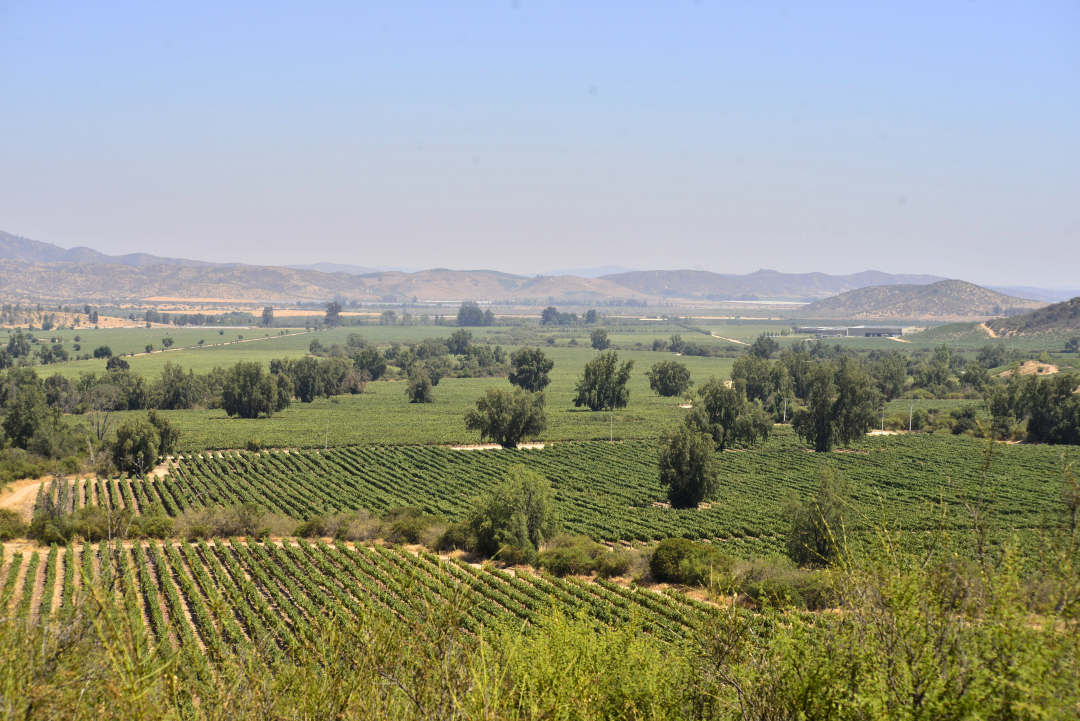
Viña Ventisquero near Melipilla, where the Maipo River transitions the Coastal Range into a landscape of rolling hills and granitic soils.
Chile Beyond Maipo
If Maipo offers today's clearest image of how territory can redefine style, the rest of Chile confirms that the same movement is taking place elsewhere. It is particularly evident in Maule and the Libertador General Bernardo O'Higgins Region, which together account for more than half the wines tasted for this report and nearly two-thirds of the country's planted surface. These are also the two regions that grew the most between 1997 and 2022. I have written about both in detail in recent reports, but here I will focus on a few elements that help explain the current moment of Chilean wine. For a broader sense of how these regions sit relative to one another, I encourage readers to consult this map.
Maule & Old Carignan
Maule covers around 50,000 hectares of vines, many of them dedicated to large-volume, entry-level wines. In these tastings, Maule once again stands out as one of Chile's most interesting regions. The 2024 and 2025 vintages appear particularly successful, especially 2024 (see below). In warmer zones such as Cauquenes, this translates into reds with notably pure fruit, far removed from the liqueur-like profiles of other solar years.
Maule remains one of Chile's most diverse red wine regions, particularly when comparing the Secano Interior — dry-farmed vineyards on the eastern side of the Coastal Range — with the Central Valley. País and Carignan function as ideal lenses through which to read the region. Cabernet Sauvignon, meanwhile, reached a notable level of quality in Cauquenes in 2024, with especially polished and precise tannins, in clear contrast with 2023.
But it is with Carignan and other Mediterranean varieties that Maule finds its greatest energy, especially in the Secano Interior. Field-grafted onto old País vines beginning in the 1930s, Carignan offers a profile unique within Chile. The VIGNO collective (Viñadores de Carignan) captures that spirit in silky reds with striking acidity. Among the 25 Carignans in this report, standouts include the 2023 Valdivieso Carignan VIGNO, 2021 Gillmore VIGNO Carignan and 2023 Lapostolle VIGNO Carignan.
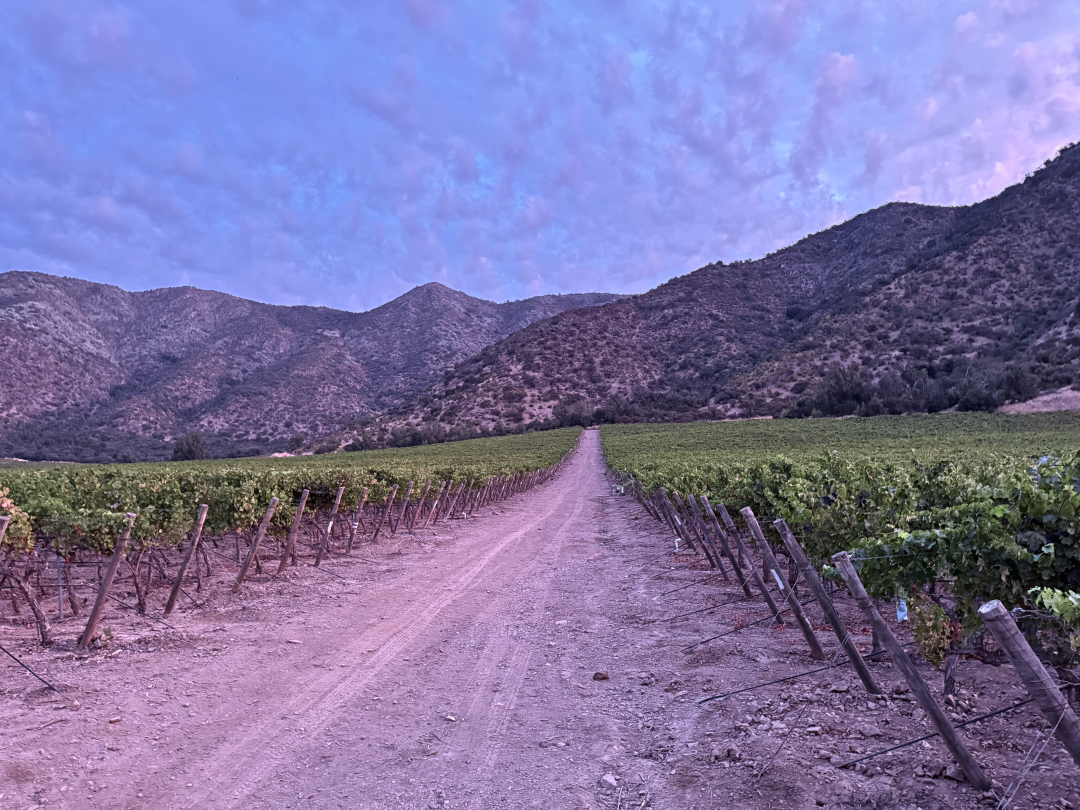
North-facing vineyards at Viña Tarapacá, in Isla de Maipo.
Colchagua & Cachapoal
In the O'Higgins Region, which covers around 40,000 hectares, Colchagua and Cachapoal account for roughly 140 wines in this report. What was said about the 2024 vintage in Maule also applies here, especially to Carménère, the variety that currently best expresses the region. In that vintage, Carménère shows a clearer, plusher and more intense profile than in previous years. Even in the Andean sectors, where the wines are usually more structured, the vintage delivers unusual delicacy.
Unlike the Secano Interior, where granitic soils tend to produce drier palates, Colchagua and Cachapoal still lean toward more indulgent and mature styles, with broad textures and elevated extract. The combination of solar intensity, extraction and high ripeness — often reinforced by aggressive canopy-thinning in Carménère — continues to shape the regional profile.
Apalta stands apart within Colchagua. This small, south-facing, granitic amphitheater (comparable in some ways to the lower valleys of Maipo) moderates temperatures and delivers some of the most refined wines in the region. In 2024, Apalta yielded wines with black fruit, native forest notes and a particularly clear spice profile in Carménère. The 2024 Floresta Carménère, 2024 Obliqua Carménère and 2024 Prelude Carménère are strong examples.
In Cachapoal, two styles currently coexist in tension. On one side: the rich, broad and ripe-fruited Carménères of Peumo, such as the 2024 Terrunyo Carménère. On the other: redder-toned, more precise versions with grippy tannins, such as the 2024 Azuda Carménère Concrete. Much of the region's stylistic future lies between these two poles. In blends, Cachapoal finds another dimension, as shown by the 2023 Altaïr and 2023 VIK, wines that reflect the energy of the vintage with fine tannins and exceptional complexity. These are examples of how producers in Cachapoal are beginning to move away from the indulgent, rich wines that defined the region for years.
Itata: Cinsault & País
Itata currently offers some of Chile's most radical profiles. The reds, based on País and Cinsault, move in a thinner, more transparent register, more precisely shaped by soil and place. For years, the weight of patrimonial tradition shaped much of the region's identity. Today, many producers seem less concerned with making "Itata wine" in the historical sense and more focused on simply making better wines. Among those who best embody that shift is the 2024 Pedro Parra Trane (100% Cinsault), 2025 Erazo Vineyards El Viaje en el Tiempo (100% País) and 2025 De Martino Viejas Tinajas Tinto Cinsault. Each shows terroir definition and a clear sense of Itata's future.
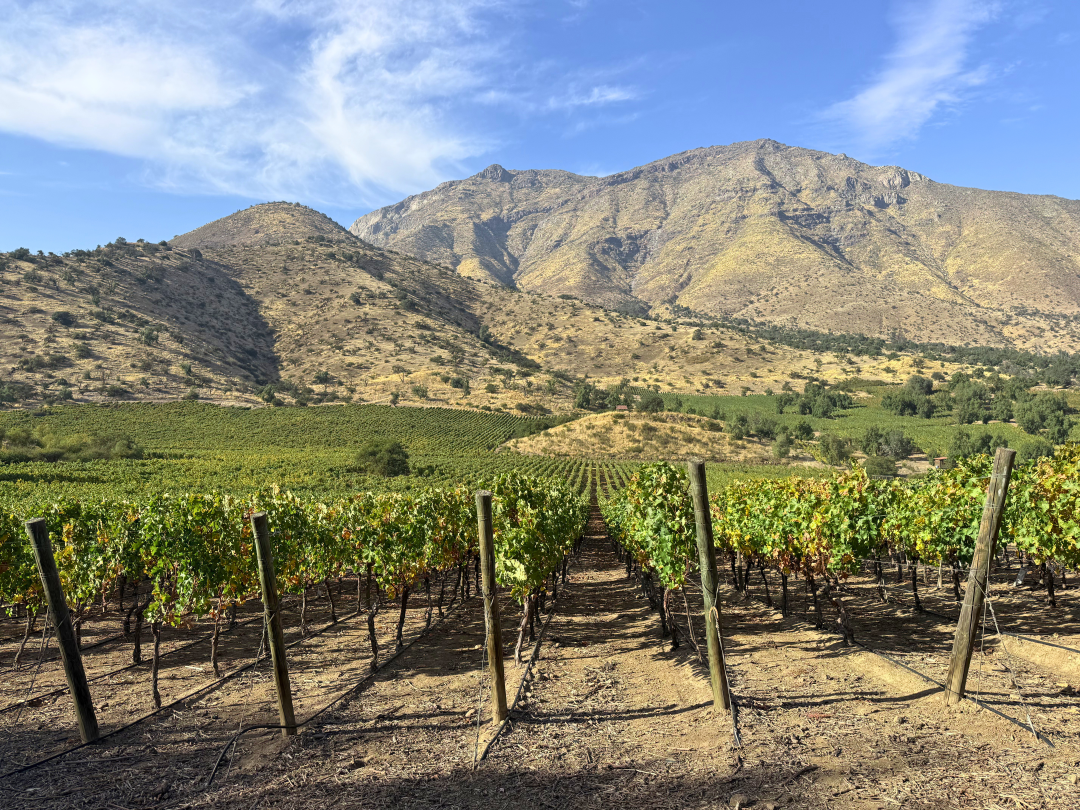
Alto Jahuel is home to some of the hillside vineyards that Santa Rita planted in the Buin area.
The 2024, 2025 and 2026 Vintages
Three consecutive vintages, three very different profiles. The 2024s are generally the most compelling. Across Chile's Central Valley, despite regional variation, the 2024 growing season unfolded within fairly typical temperature ranges, with a slight rise toward the end of the cycle. Even so, it was the coolest of the three years. The season began with abundant winter rain and a very cold spring. That delayed the entire growth cycle, so when the summer heat arrived, the berries were still uncolored and largely unaffected. A warm February across Chile helped with ripening and brought harvest dates back into more historical ranges. The result was wines of rounded ripeness — darker in profile in the warmer zones, yet nicely balanced and energetic.
The 2025 vintage was the second warmest of the cycle, though without hydric stress. The vines came out of winter with good reserves, and the cool spring allowed for even budbreak. From December onward, however, warm temperatures accelerated ripening. The earlier harvest produced wines marked by red fruit notes, ample energy and high freshness, though with somewhat lighter textures.
By contrast, 2026 was the warmest of the three years, with episodes of heat stress in the vineyards. From Colchagua southward, however, rain at the beginning of March refreshed the cycle and allowed producers to wait longer for tannins to ripen fully.
The 2024 vintage currently represents the majority of wines available in the market. This is an exciting moment to explore Chile's vast oenological riches.
I tasted all the wines in this report in Chile in April 2026.
© 2026, Vinous. No portion of this article may be copied, shared or redistributed without prior consent from Vinous. Doing so is not only a violation of our copyright but also threatens the survival of independent wine criticism.
You Might Also Enjoy
Coastal Chile: An Unfamiliar Terroir Worth Exploring, Joaquín Hidalgo, October 2025
Maule: The Magic of Old Vines and a Stylistic Reinvention in Chile, Joaquín Hidalgo, June 2025
The Chilean Coast: Where the Pacific Shapes Vibrant Reds and Whites, Joaquín Hidalgo, July 2024
Chile: El Niño Brought a Slow-Motion Season with a Long Harvest Window, Joaquín Hidalgo, May 2024
Chile: Thinking Outside The Box, Joaquín Hidalgo, June 2023
Chile: una recalibración en el corazón del Maipo
JOAQUÍN HIDALGO | 28 JULIO, 2026
El valle del Maipo es la región vitivinícola más prestigiosa de Chile. Concentra la tradición de las bodegas históricas construidas en torno a Santiago y algunos de los terruños de Cabernet Sauvignon más celebrados del país. Sin embargo, esa cercanía con Santiago es también la principal amenaza del Maipo. Entre 1997 y 2022, la superficie de viñedos de la Región Metropolitana —que incluye tanto Santiago como los viñedos del Maipo— creció en unas 4.000 hectáreas hasta superar las 10.000. Pero las cifras esconden una migración. Las viñas están abandonando sus hogares tradicionales: entre Peñalolén, Puente Alto y La Florida, comunas que alguna vez fueron cruciales para la región, desaparecieron unas 500 hectáreas. Al mismo tiempo, los viñedos se expandieron hacia otros rincones del Maipo, como Paine, Buin, San Bernardo y Melipilla. Con ese desplazamiento, están surgiendo nuevas expresiones para el Cabernet más famoso de Chile.
Hoy, el Maipo está en plena transformación a través del ascenso de nuevos lugares. Si bien muchos consumidores todavía esperan los vinos del viejo Maipo, son las nuevas fronteras de la región las que están empezando a definir su futuro.
Un río, muchos terruños
A medida que el río Maipo desciende hacia el Valle Central de Chile, bordea el extremo sur de Santiago y conecta una serie de zonas vitícolas que conforman el corazón aristocrático de Chile. Pero una cosa son los viñedos de altura de Pirque, y otra muy distinta los de Isla de Maipo o Melipilla, más cercanos a la costa. Lo que sigue es una guía a grandes rasgos para interpretar el Maipo a través del lente del Cabernet Sauvignon.
Desde Haras de Pirque, la vista ofrece tres elementos claves: en primer plano los viñedos que descienden de la ladera; la desembocadura del Maipo a la llanura (justo detrás de los cerros que están al medio de la toma); el cordón elevado del fondo, sobre la izquierda, que da origen a la Quebrada de Macul.
Alto Maipo
Esto es lo que yo llamo el Maipo histórico, asociado a las terrazas aluviales del río — especialmente la tercera y la cuarta — en la parte alta del valle. Incluye Puente Alto y Peñalolén en la ribera norte, y Pirque en la ribera sur, entre los 600 y los 800 metros sobre el nivel del mar. Este es el Alto Maipo. Aquí, el aire frío andino y los suelos de grava moldean un Cabernet Sauvignon de fruta negra, especias y una tenue nota de pirazina. Es un perfil que hizo famosos a vinos como Aquitania, Cousiño Macul y Domus Aurea. Estos viñedos sobreviven en una zona donde la superficie plantada sigue reduciéndose.
Pirque funciona casi como un valle propio. Su combinación de suelos de arcilla y grava da vinos de mayor intensidad, fruta más fresca y taninos más marcados. Sigue siendo una zona pequeña, dividida entre sitios de fondo de valle y de ladera, con ejemplos representativos en los Cabernet Sauvignon de Haras de Pirque y El Principal.
Puente Alto, en cambio, es el corazón clásico de grava del Maipo y la cuna de los Cabernets que definieron el perfil chileno de antaño: untuosos y menos herbáceos, con taninos muy pulidos. Este es el enclave histórico formado por Viña Chadwick, Don Melchor (Cabernets varietales) y Almaviva (un corte al estilo bordelés), que en conjunto representan los vinos más caros del Maipo.
Más río abajo, Buin y Paine representan la otra cara de la historia. Son las zonas que absorbieron buena parte de la migración desde los viñedos clásicos. Desde 1997, estas regiones sumaron más de 1.000 hectáreas y hoy suman un total de unas 2.750. Aquí, las viejas selecciones masales conviven con plantaciones nuevas en terrazas cubiertas por capas de arcilla más pesada, que aportan mayor tensión en las laderas y perfiles más aterciopelados en las planicies. Esta es una de las zonas responsables de cambiar el perfil tánico del Maipo clásico. Desde los Cabernet Sauvignon de estilo más tradicional, como el 2023 Casa Real y el 2023 Carmen Gold, hasta el más atractivo y frutal 2024 Pérez Cruz Pircas Cabernet Sauvignon, el refinamiento tánico va en aumento. La distinción clave pasa por los viñedos de ladera frente a los de planicie.
Las gravas típicas del Maipo, asociadas a los taninos aterciopelados. A la izquierda, la tercera terraza como luce en Buin; a la derecha, el corazón de Isla de Maipo. En la foto del medio, los antiguos cauces de agua fueron rellenados por arena y material fino como limo; por eso presentan un primer horizonte profundo. También corresponde a Isla de Maipo.
Maipo Medio
El río Maipo tuerce hacia el norte donde se encuentra con la cordillera de la Costa, antes de virar otra vez hacia el oeste en su camino al mar. Ese punto es Isla de Maipo, una zona rica en aguas subterráneas donde confluyen los ríos Maipo y Mapocho.
A unos 350 metros sobre el nivel del mar, Isla de Maipo creció unas 400 hectáreas en los últimos 25 años y hoy suma alrededor de 1.800. Plantada sobre las gravas finas del río, en un clima que empieza a transicionar hacia la influencia costera, las condiciones de cultivo en Isla de Maipo varían según el sitio. Algunos viñedos se asientan sobre suelos más pesados, como en el 2023 Tarapacá Etiqueta Dorada Cabernet Sauvignon, plantado al pie de los cerros. En el centro de la isla, en cambio, predominan las gravas puras, como en el viñedo de De Martino, donde exploran versiones más magras de Cabernet, con cosechas más tempranas y fruta de tono más rojo. El 2024 Cabernet Sauvignon Single Vineyard La Cancha, de De Martino, es especialmente convincente.
La cercanía con la costa hace que las neblinas de verano lleguen hasta tan adentro, refrescando las mañanas y filtrando la luz. Los Cabernet de esta zona tienden hacia un perfil más herbáceo y marcado por la pirazina, con taninos delicados y pulidos. Cuando la madurez de la fruta está bien lograda, estos vinos pueden ofrecer algunas de las expresiones más finas y tensas del Maipo.
Siguiendo el curso del río hacia el Pacífico, se despliega una serie de valles a lo largo de la cordillera de la Costa, donde las viñas crecen en condiciones muy distintas a las del Maipo de grava. En lugares como Carmen Alto o Melipilla, la superficie de viñedos pasó de 300 hectáreas en 1997 a unas 1.300 en la actualidad. El granito es el tipo de suelo dominante, mientras que las temperaturas son más bajas que en el Alto Maipo. Aquí, el Cabernet tiende hacia fruta más roja, especias y texturas más magras y de grano más fino, más cerca en estilo de algunas expresiones de Apalta, en Colchagua, que del Maipo clásico. Algunos sectores de la planicie están plantados sobre arcilla granítica, como los viñedos de Viña Ventisquero. En los valles del interior, la exposición al sol se vuelve un factor determinante: las laderas orientadas al norte producen perfiles más maduros, mientras que las orientadas al sur conservan mayor frescura. Son viñedos que están fuera de la caja tradicional del Maipo, como lo demuestra el 2018 Tabalí DOM Cabernet Sauvignon.
Aunque el Maipo es un solo río, representa muchos terruños. La mayoría está ligada al riego que provee el río, aunque algunas zonas, como Til Til o Pangue, al norte de Santiago, ni siquiera están cerca de él. Esa dispersión refleja una realidad que se repite en buena parte de Chile, pero con un matiz particular en la Región Metropolitana: aquí, la tierra agrícola compite directamente con la expansión residencial impulsada por el crecimiento de Santiago. Eso ayuda a explicar la presión sobre zonas históricas como Puente Alto y Peñalolén. Capturar esa diversidad exige detalle. Fue en ese espíritu que nació, hace tres años, Maipo Origen, un colectivo que reúne a pequeños productores — algunos muy chicos, otros más grandes — comprometidos con sostener la identidad de la región a través de su pluralidad. El hecho de que haya surgido un grupo así es en sí mismo una señal de los cambios internos del Maipo. Parte de ese nuevo mapa es lo que busco destacar en este informe.
Viña Ventisquero, cerca de Melipilla, donde el río Maipo hace la transición hacia la cordillera de la Costa, dando paso a un paisaje de lomas suaves y suelos graníticos.
Chile más allá del Maipo
Si el Maipo ofrece hoy la imagen más clara de cómo el territorio puede redefinir un estilo, el resto de Chile confirma que ese mismo movimiento se está dando en otros lugares. Se ve con particular claridad en el Maule y en la Región del Libertador General Bernardo O'Higgins, que juntas concentran más de la mitad de los vinos catados para este informe y casi dos tercios de la superficie plantada del país. Son, además, las dos regiones que más crecieron entre 1997 y 2022. Ya escribí sobre ambas en detalle en informes recientes, pero aquí me voy a concentrar en algunos elementos que ayudan a explicar el momento actual del vino chileno. Para tener una idea más clara de cómo se ubican estas regiones entre sí, invito a los lectores a consultar este mapa.
Maule y el viejo Carignan
El Maule cubre unas 50.000 hectáreas de viñedos, muchas de ellas dedicadas a vinos de entrada de gran volumen. En estas catas, el Maule vuelve a destacarse como una de las regiones más interesantes de Chile. Las añadas 2024 y 2025 se muestran particularmente exitosas, en especial 2024 (ver más abajo). En zonas más cálidas como Cauquenes, esto se traduce en tintos de fruta notablemente pura, muy alejados de los perfiles casi licorosos de otros años solares.
El Maule sigue siendo una de las regiones tintas más diversas de Chile, sobre todo al comparar el Secano Interior — viñedos de secano en el lado oriental de la cordillera de la Costa — con el Valle Central. El País y el Carignan funcionan como lentes ideales para leer la región. El Cabernet Sauvignon, por su parte, alcanzó un nivel de calidad notable en Cauquenes en 2024, con taninos especialmente pulidos y precisos, en claro contraste con 2023.
Pero es con el Carignan y otras variedades mediterráneas que el Maule encuentra su mayor energía, sobre todo en el Secano Interior. Injertado sobre viejas cepas de País a partir de la década de 1930, el Carignan ofrece un perfil único dentro de Chile. El colectivo VIGNO (Viñadores de Carignan) capta ese espíritu en tintos sedosos y de acidez llamativa. Entre los 25 Carignan de este informe, se destacan el 2023 Valdivieso Carignan VIGNO, el 2021 Gillmore VIGNO Carignan y el 2023 Lapostolle VIGNO Carignan.
Viñedos de exposición norte en Viña Tarapacá, en Isla de Maipo.
Colchagua y Cachapoal
En la Región de O'Higgins, que cubre unas 40.000 hectáreas, Colchagua y Cachapoal suman cerca de 140 vinos en este informe. Lo dicho sobre la añada 2024 en el Maule también vale aquí, sobre todo para el Carménère, la variedad que mejor expresa hoy la región. En esa añada, el Carménère muestra un perfil más nítido, untuoso e intenso que en años anteriores. Incluso en los sectores andinos, donde los vinos suelen ser más estructurados, la añada entrega una delicadeza poco habitual.
A diferencia del Secano Interior, donde los suelos graníticos tienden a producir paladares más secos, Colchagua y Cachapoal siguen inclinándose hacia estilos más generosos y maduros, con texturas amplias y extracto elevado. La combinación de intensidad solar, extracción y alta madurez — muchas veces reforzada por un deshoje agresivo en el Carménère — sigue moldeando el perfil regional.
Apalta se distingue dentro de Colchagua. Este pequeño anfiteatro granítico de exposición sur (comparable, en algún sentido, a los valles bajos del Maipo) modera las temperaturas y entrega algunos de los vinos más refinados de la región. En 2024, Apalta dio vinos de fruta negra, notas de bosque nativo y un perfil especiado particularmente nítido en el Carménère. El 2024 Floresta Carménère, el 2024 Obliqua Carménère y el 2024 Prelude Carménère son buenos ejemplos de esto.
En Cachapoal, conviven hoy dos estilos en tensión. Por un lado, los Carménère ricos, amplios y de fruta madura de Peumo, como el 2024 Terrunyo Carménère. Por el otro, versiones de tono más rojo, más precisas y de taninos firmes, como el 2024 Azuda Carménère Concrete. Buena parte del futuro estilístico de la región se juega entre estos dos polos. En los cortes, Cachapoal encuentra otra dimensión, como muestran el 2023 Altaïr y el 2023 VIK, vinos que reflejan la energía de la añada con taninos finos y una complejidad excepcional. Son ejemplos de cómo los productores de Cachapoal están empezando a alejarse de los vinos generosos y ricos que definieron la región durante años.
Itata: Cinsault y País
Itata ofrece hoy algunos de los perfiles más radicales de Chile. Los tintos, basados en País y Cinsault, se mueven en un registro más fino y transparente, más precisamente moldeado por el suelo y el lugar. Durante años, el peso de la tradición patrimonial marcó buena parte de la identidad de la región. Hoy, muchos productores parecen menos preocupados por hacer "vino de Itata" en el sentido histórico y más enfocados, simplemente, en hacer mejores vinos. Entre quienes mejor encarnan ese cambio están el 2024 Pedro Parra Trane (100% Cinsault), el 2025 Erazo Vineyards El Viaje en el Tiempo (100% País) y el 2025 De Martino Viejas Tinajas Tinto Cinsault. Cada uno muestra definición de terruño y un sentido claro del futuro de Itata.
En la zona de Buin, Alto Jahuel es parte del viñedo plantado por Santa Rita hacia las laderas. Son los responsables de unos taninos más angulosos y reactivos. Si pudiéramos asomarnos sobre el perfil izquierdo del cerro, veríamos Pirque, que está justamente al otro lado.
Las añadas 2024, 2025 y 2026
Tres añadas consecutivas, tres perfiles muy distintos. Los 2024 son, en general, los más convincentes. En todo el Valle Central de Chile, y pese a las variaciones regionales, el ciclo de crecimiento de 2024 se desarrolló dentro de rangos de temperatura bastante típicos, con una leve suba hacia el final del ciclo. Aun así, fue el más fresco de los tres años. La temporada comenzó con lluvias invernales abundantes y una primavera muy fría, lo que retrasó todo el ciclo vegetativo: cuando llegó el calor del verano, las bayas todavía no habían entrado en envero y quedaron en gran medida a resguardo. Un febrero cálido en todo Chile ayudó a la maduración y devolvió las fechas de cosecha a rangos más históricos. El resultado fueron vinos de madurez redondeada — de perfil más oscuro en las zonas más cálidas, pero bien equilibrados y enérgicos.
La añada 2025 fue la segunda más cálida del ciclo, aunque sin estrés hídrico. Las plantas salieron del invierno con buenas reservas, y la primavera fresca permitió una brotación pareja. Sin embargo, a partir de diciembre, las temperaturas cálidas aceleraron la maduración. La cosecha más temprana dio vinos marcados por notas de fruta roja, mucha energía y alta frescura, aunque con texturas algo más livianas.
En cambio, 2026 fue la más cálida de las tres añadas, con episodios de estrés térmico en los viñedos. Sin embargo, desde Colchagua hacia el sur, las lluvias de comienzos de marzo refrescaron el ciclo y permitieron a los productores esperar más tiempo para lograr una maduración tánica completa.
La añada 2024 representa hoy la mayoría de los vinos disponibles en el mercado. Este es un momento apasionante para explorar la vasta riqueza enológica de Chile.
Caté todos los vinos de este informe en Chile, en abril de 2026.
© 2026, Vinous. Ninguna parte de este artículo puede ser copiada, compartida o redistribuida sin el consentimiento previo de Vinous. Si se incurriese en ello, no solo se viola nuestro copyright, sino que también se amenaza la supervivencia de la crítica independiente de vinos.
También Podrías Disfrutar
Chile Costero: Un Terroir Poco Conocido que Vale la Pena Descubrir, Joaquín Hidalgo, octubre 2025
El Maule, el talento de las viñas viejas y la reinvención estilística de Chile, Joaquín Hidalgo, junio 2025
Chile Costero: Donde el Pacífico Modela Tintos y Blancos Vibrantes, Joaquín Hidalgo, julio 2024
Chile: el Niño trajo una vendimia en cámara lenta con una larga ventana de cosecha, Joaquín Hidalgo, mayo 2024
Chile: Pensando Fuera de la Caja, Joaquín Hidalgo, junio 2023
Show all the wines (sorted by score)
- Almaviva
- Arboleda
- Aresti
- Baettig
- Balduzzi
- Baron Philippe de Rothschild
- Baron Philippe De Rothschild
- Bodegas Tagua Tagua
- Bouchon
- Casas del Bosque
- Casa Silva
- Casas Patronales
- Chateau Potrero Seco
- Clos Apalta
- Clos Du Lican
- Cono Sur Vineyards & Winery
- Dagaz
- Dakél
- De Martino
- Erazo Vineyards
- Errázuriz
- Estación Yumbel
- Flaherty Wines
- Garage Wine Co.
- Gavilea
- Gillmore
- Gonzalo Guzmán
- Hacienda Araucano
- Haras De Pirque
- Invina
- Itata Paraíso
- Lapostolle
- Las Veletas
- LOF
- Lomas de Llahuen
- Los Quiscos
- Los Vascos
- Masintin
- Miguel Torres Chile
- Montes
- MontGras
- Morande
- Neyen De Apalta
- Odfjell Vineyards
- Pedro Parra
- Polkura
- P.S. Garcia
- Puntí Ferrer
- Rocas de Seña
- Santa Rita
- Seña
- tabalí
- Tabalí
- TerraNoble
- Trasiego Wines
- TresC
- Undurraga
- Valdivieso
- Valle Secreto
- Vik
- Viña Amelia
- Viña Aquitania
- Viña Carmen
- Viña Casa Marin
- Viña Concha y Toro
- Viña Cousiño Macul
- Viña Dagaz
- Vina El Principal
- Viña i
- Viña I
- Viña La Rosa
- Viña Los 3
- Viña Perez Cruz
- Viña Quebrada de Macul
- Viña San Esteban
- Viña San Pedro
- Viña San Rafael
- Viña Santa Ema
- Viña Siegel
- Viña Tarapacá
- Viñateros de Raiz
- Viña Tres Mosqueteros
- Viña Undurraga
- Viña Ventisquero
- Viñedo Chadwick
- Viñedos Organicos Emiliana
- Vinos Infinitas
- Vinos Peroli
- Viu Manent