
Browse using the new Vinous website now. Launch →
Printed by, and for the sole use of . All rights reserved © 2015 Vinous Media
Sancerre: An Undulating Landscape
BY REBECCA GIBB MW | AUGUST 18, 2026
The vineyards of Sancerre have always demanded lean legs and strong lungs. Every June, runners in the arduous Trail de Sancerre slog up and down the appellation’s relentless slopes, gasping through vineyards that seem designed less for agriculture than for altitude training. In recent years, Sancerre’s wines have emulated this landscape: just when growers and drinkers appear to settle into a stylistic rhythm, the wines veer sharply uphill or plunge in another direction entirely.
The ripe, sun-soaked 2025 growing season recalls the generous, climate-change-influenced 2020 and 2022 seasons. It stands in vivid contrast to the taut, nervy classicism of 2024, a vintage that seemed to hark straight back to 2021, 2014 and the 1990s. In today’s Sancerre, consistency is less a straight line than a hill climb: unpredictable, often rewarding and occasionally leaving even seasoned observers slightly out of breath.
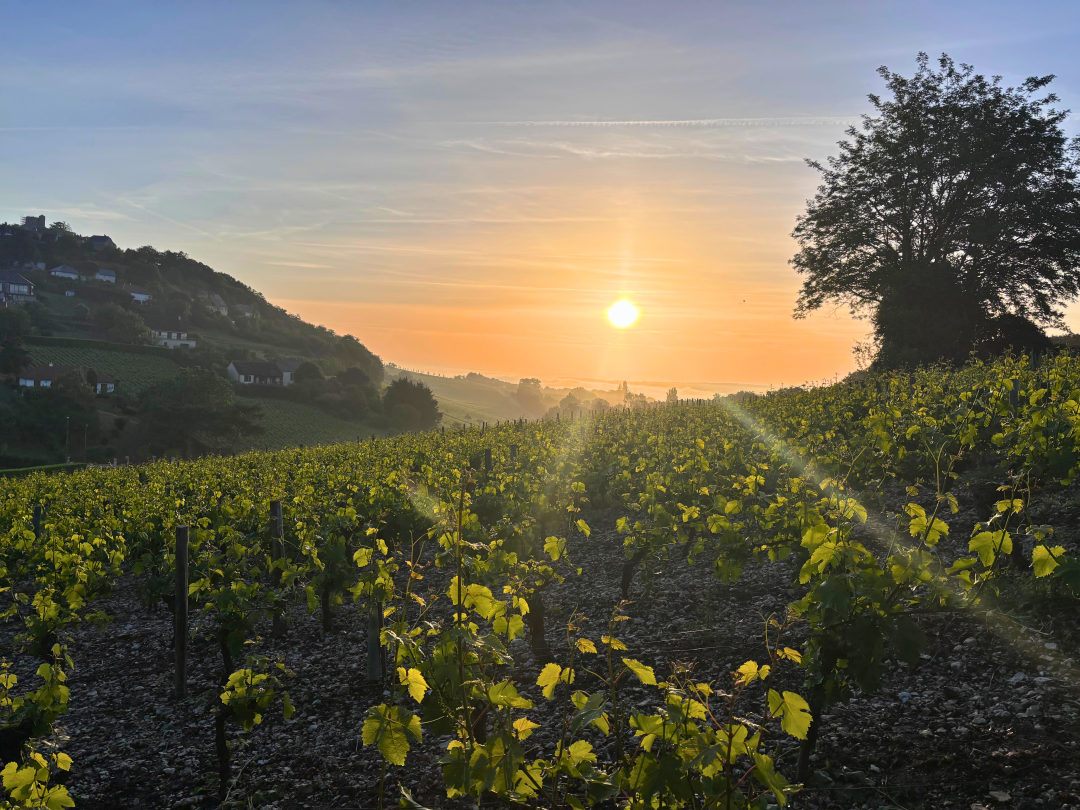
Looking eastward toward the Loire River, which separates Sancerre from Pouilly-Fumé.
The 2025 Growing Season
While the summer of 2025 was dry and warm, a wet preceding autumn and winter offered vital reserves for the coming season. Growth kicked off early in the season, with summer-like temperatures in late March and early April initiating budbreak in some vineyards as early as April 7. Temperatures in late April and early May encouraged the vines to accelerate further, and by mid-May, growth was around 10 days further ahead than expected. This vigour was a factor in poor fruit set, leading to lower potential yields. Heat relented at the start of the summer, with showers and a spell of cool weather slowing the frenetic pace of the vines and pushing back harvest forecasts to the second week of September.
Though 2025 was a warm vintage that yielded ripe, concentrated wines, ripeness does not automatically mean blowsiness. This is unquestionably a vintage of ripe fruit flavours rather than Sauvignon greens, moderate-to-high alcohol levels that sometimes tip beyond balance, and gentle rather than nervous acidity. Picking dates were fundamental to the success of the best wines, most of which are yet to be bottled. Producers known for picking earlier, such as Domaine du Bouchot in Pouilly-Fumé or Sancerre’s Paul Prieur et Fils and Domaine Delaporte, started in late August and appear to have hit the sweet spot in terms of balancing ripeness with freshness. Those who left it until mid-September found themselves with sluggish acidity and alcohol levels of 14.5% to 15%. While growers rely on their limestone, flint or clay-based terroirs to bring tension, there’s only so much one can do when acidity levels drop to such an extent.
A recurring theme of my conversations with growers was the berries: small with little juice, stubbornly refusing to swell. Growers waited for late-summer rain, hoping the fruit would soften and release more juice. Instead, berries remained tense and compact, concentrating sugars and raising alcohol without truly increasing volume.
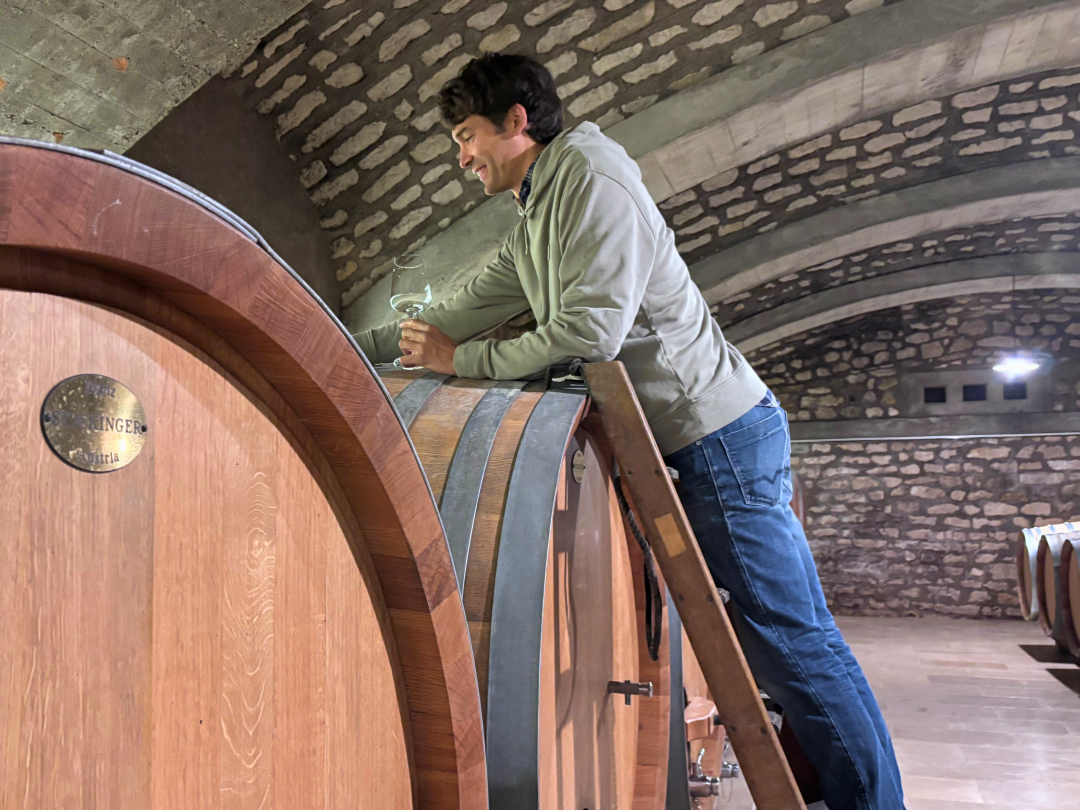
Matthieu Delaporte's hard work is paying off at his family domaine in Chavignol, where the wines are increasingly pure and refined.
Though the 2025s feel generous, that is partly because the shadow of 2024 still hangs like a dark cloud. Conversations in cellars invariably drift back to mildew, endless sorting tables, microscopic yields and abandoned cuvées. Many domaines bottled only a single wine in 2024, folding prized parcels back into broader blends simply to produce enough volume to release anything at all. Against that backdrop, the relative ease of 2025, with its healthy fruit, minimal disease pressure and orderly harvest, was a welcome relief, even if the final yields remained frustratingly small for some.
The finest wines somehow manage to avoid excess. Again and again, growers spoke about searching for “windows” of aromatic and phenolic maturity before sugars ran too high. The resulting wines possess weight, density and layered fruit yet often retain a chalky propulsion that keeps them airborne rather than heavy-footed. The vintage may be sun-shaped, but at its best it is not sunburnt.
The least fortunate growers in the area were unquestionably those in the village of Sury-en-Vaux. Home to Claude Riffault, Vincent Gaudry, Jean-Philippe Agisson and the improving Domaine des Chasseignes, Sury-en-Vaux is attracting increased attention for the quality of its wines. While most producers elsewhere in Sancerre basked in the dry, disease-free conditions of a heady summer, a storm brought hail and rain to Sury on the afternoon of July 23. Aurore Dézat of Domaine des Chasseignes left her home in Sury to collect her children from their holiday club and returned half an hour later to find her vineyards stripped of leaves. Jean-Philippe Agisson lost 50% of his fruit. For producers in Sury, ripening slowed to a stop with no leaves to undertake the photosynthesis. Green shoots and leaves returned a few weeks later, but this break in maturation meant ripeness took longer to attain and picking took place a little later. If there was a silver lining, it was that these conditions preserved acidity where others struggled to maintain freshness.
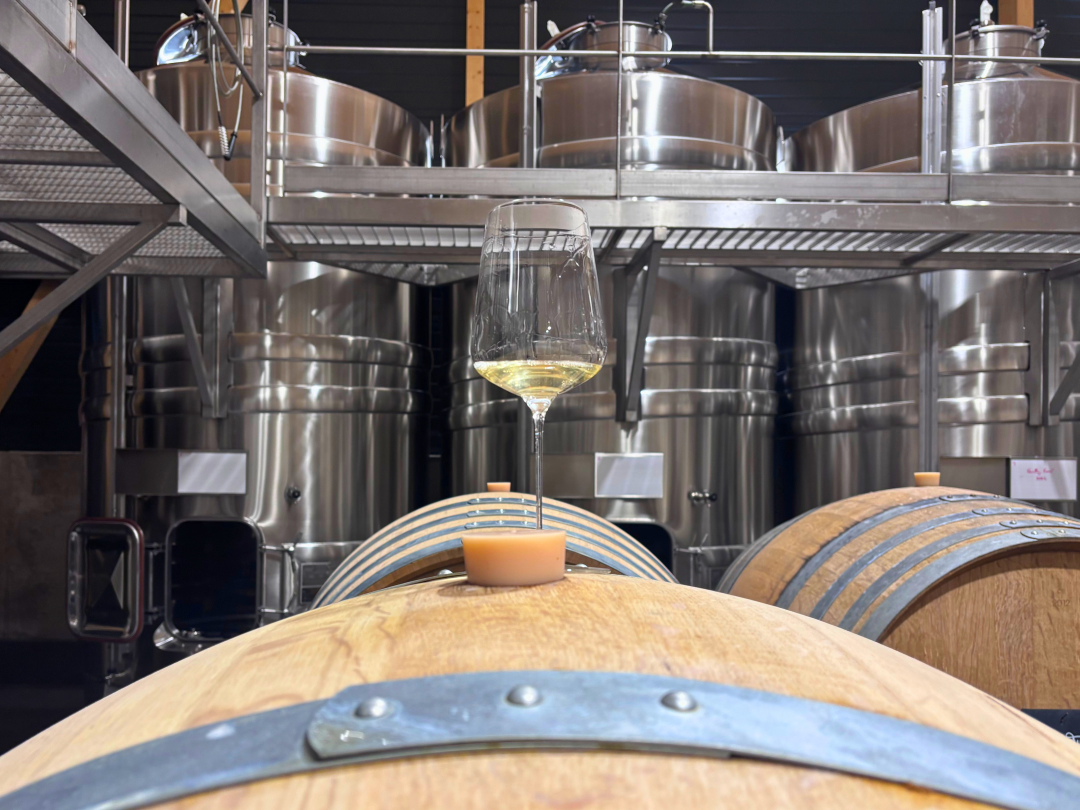
Ambitious producers seek to emphasize texture over aromatics using a wide variety of vessels, from the classic stainless steel tanks to varied barrels, concrete eggs, amphorae and Wineglobe.
All of this is due to the irregularities of climate change, but perhaps one of the clearest signs of climate change in Sancerre is psychological. For generations, growers were taught patience: to wait, to chase full maturity, to avoid the vegetal edge of underripeness. In 2025, as in 2022, 2020 and 2018, many experienced the exact opposite anxiety. The fear now is not green flavours but runaway sugars, collapsing acidity and alcohol levels that overwhelm terroir. Harvest decisions increasingly resemble tactical exercises measured in hours rather than days, with growers searching nervously for fleeting moments when flavour, freshness and phenolic ripeness align.
Sancerre in the Winery
Many consider Sancerre an early-release refresher to drink the summer after it was harvested, but that’s an overly simplistic view. The region’s most ambitious producers leave their wines on lees in a variety of vessels, from conventional stainless-steel tanks to small barrels, demi-muids or large foudres. There’s even a smattering of à la mode concrete eggs and amphorae, plus the occasional glass Wineglobe. While quality-conscious producers have been trying to age their whites for longer, inconsistent yields and global demand mean that’s not always possible. Some estates are stretching out their 2023 releases to allow the 2024s more time to soften and put on a bit of weight in bottle. A few domaines have even held back some stock of 2022s or 2023s to make up for future supply gaps. The small volumes of 2024s that do exist are just starting to hit the market, but don’t blink or you’ll miss them.
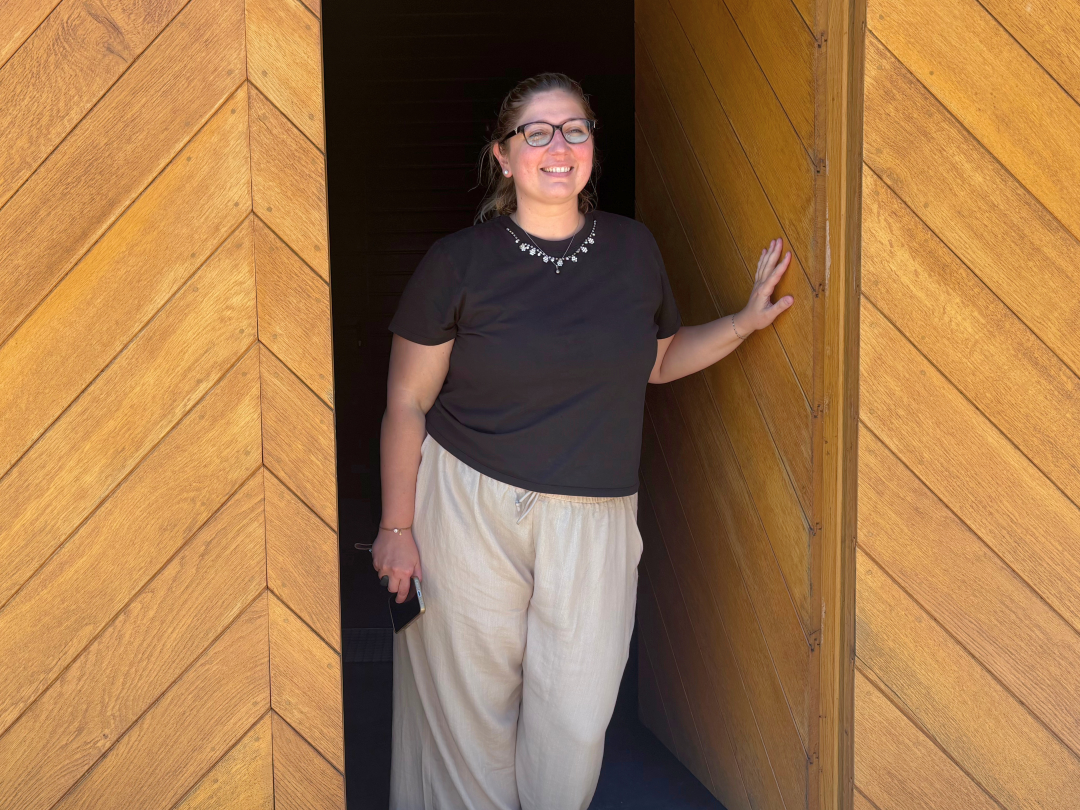
Jennifer Denizot and her husband, Thibaut, took over the family domaine in the village of Verdigny in 2018. Their star has been on the rise since.
Softening On 2024
Nearly two years on, the word “catastrophic” is still bandied around the region’s cellars regarding the damp, grey summer of 2024. As I wrote in last year’s report, producers were allowed to chaptalize as much as 2% versus the usual 1%, but the wines’ flavours are on the green end of the spectrum, and the malic acidity is nothing short of cheek-puckering.
While 2024 will never be a great vintage, the region’s better producers have shown that care and patience can overcome challenging seasons. You’ll often find fruit from the top lieux-dits in the estate wines since, due to the meagre quantities that made it past the sorting table, multiple single-vineyard cuvées often had to be blended into a single wine. The single-vineyard wines that were made can amount to as little as just one barrel.
Fortunately, the richness of the 2025s means that the wines generally won’t require extended élevage and can be released without an agonising wait. In the meantime, producers are bringing their workers’ 2026 holidays forward and wringing their hands over the upcoming harvest, which is predicted to be two weeks earlier than normal — whatever “normal” means these days.
I tasted the wines for this report in early summer 2026 through a combination of centralized tastings and estate visits in Sancerre, with follow-up tastings at my home office in the UK.
© 2026, Vinous. No portion of this article may be copied, shared or redistributed without prior consent from Vinous. Doing so is not only a violation of our copyright but also threatens the survival of independent wine criticism.
You Might Also Enjoy
Sancerre 2024: A Test of Endurance, Rebecca Gibb MW, August 2025
Sancerre: Combat Fatigue, Rebecca Gibb MW, August 2024
Sancerre’s Charm Offensive, Rebecca Gibb MW, July 2023
Sancerre Sees Red, Rebecca Gibb MW, December 2022
Sancerre: Finding Its Place, Rebecca Gibb MW, August 2022
Show all the wines (sorted by score)
- Alban Roblin
- Alexandre Bain
- Anthony & David Girard
- Anthony Girard
- Aurore Dezat & David Girard
- Château de Tracy
- Clair de Brumes
- Claude Michot
- Claude Riffault
- Corty Artisan
- Daniel Crochet
- Domaine Champeau
- Domaine Chollet
- Domaine Chotard
- Domaine Croix St-Laurent
- Domaine de Chézatte
- Domaine Delaporte
- Domaine Denizot
- Domaine de Terres Blanches
- Domaine Didier Dagueneau
- Domaine Dominique et Janine Crochet
- Domaine du Bouchot
- Domaine du Clos Saint Martin
- Domaine du Piton
- Domaine Éric Louis
- Domaine Figeat
- Domaine Fouassier
- Domaine Francis Blanchet
- Domaine Franck Millet
- Domaine Gérard Boulay
- Domaine Godon-Reverdy
- Domaine Hubert Brochard
- Domaine Jonathan Didier Pabiot
- Domaine La Perrière
- Domaine Masson-Blondelet
- Domaine Michel Redde et Fils
- Domaine Philippe Raimbault
- Domaine Pierre Morin
- Domaine Pierre Riffault
- Domaine Raimbault-Pineau
- Domaine Reverdy Bernard et Fils
- Domaine Roger Champault
- Domaine Serge Laloue
- Domaine Tabordet
- Domaine Tinel-Blondelet
- Domaine Vacheron
- Domaine Vincent Pinard
- Fournier Père et Fils
- François Cotat
- François Crochet
- Gitton Père et Fils
- Henri Bourgeois
- J de Villebois
- Jean-Max Roger
- Jean Pabiot
- Joseph Mellot
- La Garenne
- Les Alliés
- Lucien Crochet
- Matthias et Emile Roblin
- Michel Girault
- Nicolas Girard
- Pascal Cotat
- Pascal et Nicolas Reverdy
- Paul Prieur et Fils
- Pierre Prieur et Fils
- Pinard Brothers
- Roc de l'Abbaye
- Rolland Tissier et Fils
- S & J.P. Agisson
- Vignobles Berthier