
Browse using the new Vinous website now. Launch →
Printed by, and for the sole use of . All rights reserved © 2015 Vinous Media
Vatan Sancerre Clos La Néore: 2005-2022
BY ANTONIO GALLONI | AUGUST 20, 2026
Mention Clos La Néore and oenophiles’ ears immediately perk up. One of the world’s rarest and most distinctive whites, Clos La Néore represents the pinnacle of artisan farming and winemaking. This vertical spanning 13 vintages back to 2005 showed Clos La Néore in many facets, from wines driven by steely minerality to those marked by textural richness and weight. With one or two exceptions, the wines were superb.
My first memory of Clos La Néore is a bottle I shared with our late colleague Josh Raynolds. It didn’t taste like Sauvignon Blanc; it didn’t taste like Sancerre. It was quite simply one of the most riveting and unique wines I had ever come across. A few years later, I chanced on an offer for the 2006, my son’s birth year, and promptly snapped up a six-pack. The price was $44 a bottle. I dutifully sent the wines to offsite storage and then completely forgot about them for years, until a routine inventory check turned up some very pleasant surprises. I was completely blown away when I started tasting the 2006 after about ten years. That was the turning point in my appreciation for Clos La Néore. By then, Clos La Néore had become much better known than a decade prior, when it was readily available and inexpensive to a degree younger consumers would have a hard time believing.
Clos La Néore belongs on the endangered species list of wines that are made with minimal human inputs, a rarity in today’s technology-driven world. It’s defined by a fragility that reflects the very essence of the human spirit. The wines aren’t perfect, and yet there is a feeling of perfection in imperfection that is at the heart of what makes Clos La Néore so unique.
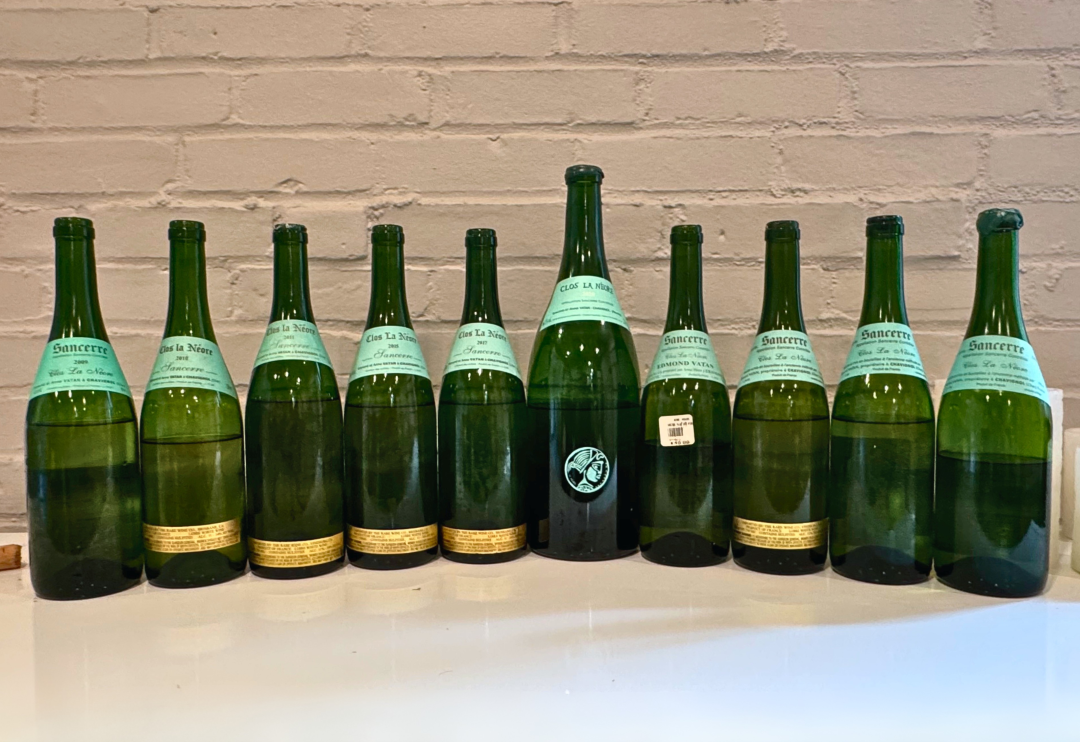
Edmond Vatan was born in 1929; his first vintage was 1947. In 1960, Vatan tore out his old Sauvignon Blanc vines. He left the land fallow for nine years, unthinkable today, before replanting in 1969 using a massale selection he had kept for the purpose of propagating. Clos La Néore emerges from a one-hectare plot in the heart of Le Mont Damné in Chavignol, by far the most famous site in Sancerre. This particular section features Kimmeridgian soils more typically found in other regions, most notably Chablis. Clos La Néore is the only wine Vatan makes, Edmond Vatan having sold his small Pinot Noir parcel to Hubert Brochard in 2003. Daughter Anne, a professor and Ph.D., stepped in before Vatan could sell Clos La Néore. She collaborated on the 2006 and 2007 before making the 2008 on her own.
"I met Edmond Vatan in 1989,” longtime American importer Peter Weygandt told me recently. “At the time, the wines were aged in old Martinique rum barrels covered with mold, like what Jacques Reynaud had at Rayas in the 1970s.” Vatan’s aesthetic is steeped in the very essence of minimalism. No chemicals or synthetic products are used in the vineyard. Massale selection naturally produces small, tight bunches. The preference is for harvesting on the later side. All work in the vineyard and ambient cellar is done according to lunar cycles. There is no SO2 at crush, fermentations are spontaneous and the wines go into barrel with a high percentage of solids. Topping is minimal. Clarity, malolactic fermentation, residual sugar and other technical aspects that concern most winemakers are left to follow their own course. Wines are bottled when they are ready, with no fining or filtration.
This hands-off approach, which some might define as “natural,” is neither positive nor negative, but simply descriptive of a philosophy driven by a desire to make wines that reflect a place and a vintage. Alcohols have climbed in recent years, to 14% for the 2022 and 15% for the 2020. I suspect most of that is attributable to letting the wines express themselves. The wines don’t feel alcoholic at all, but they do have real density.
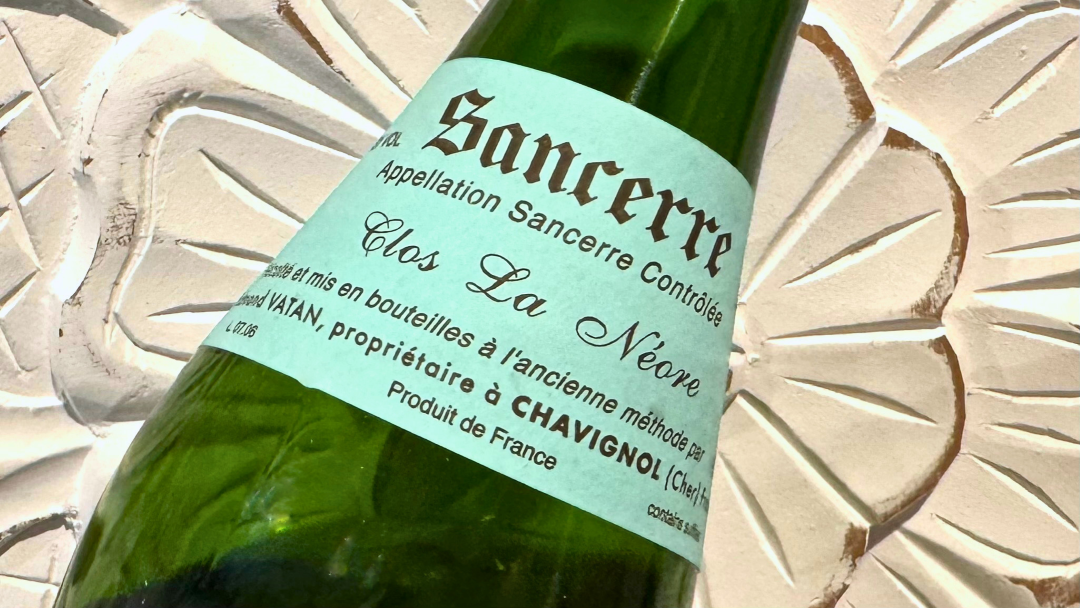
At its best, Clos La Néore is truly spectacular, easily on a par with the best whites anywhere in the world. Texturally, Clos La Néore is more similar to Chenin Blanc than to Sauvignon Blanc, especially in warmer years, but it also has a mineral drive that recalls Chardonnay in Chablis. Some vintages show reduction; in others, residual sugar is especially evident. As a taster and consumer, these aspects don’t bother me — as long as the wines are in balance, which is, of course, subjective. At the same time, some vintages clearly have issues. The 2011 comes to mind. There is also an inherent instability in some vintages that causes bottle variation. I recently ordered one of the wines in this report in a restaurant. The sommelier informed us that the previous bottle he had opened was horribly oxidized. Some readers might balk at the prospect of bottle variation in what has become a very expensive wine. That is a very fair point and certainly understandable. When Clos La Néore is on, which in my experience is most of the time, there is nothing like it.
Edmond Vatan passed away in 2022. He was 92 years old. Today, the domaine is run by Anne Vatan and her husband, Nady Foucault, whose family owned Clos Rougeard for more than 120 years. Since 2018, Vatan and Foucault have bottled Clos La Néore only in magnum to discourage early drinking. I am not sure that works, but it’s a noble ideal given that in most vintages, Clos La Néore starts hitting its stride around age ten. It’s tempting to wonder how much the style has changed here since Anne Vatan took over. My impression is that Clos La Néore remains driven by a singular expression of place, shaped first by a minimalist aesthetic and then by the personality of each vintage.
I tasted all the wines in this report over the last year, many of them more than once. I would like to thank my friends and colleagues who opened bottles, as well as Peter Weygandt, Jason Exposto and Tom Stephenson for sharing their unique insights.
© 2026, Vinous. No portion of this article may be copied, shared or redistributed without prior consent from Vinous. Doing so is not only a violation of our copyright but also threatens the survival of independent wine criticism.
You Might Also Enjoy
Sancerre: An Undulating Landscape, Rebecca Gibb MW, August 2026
Sancerre 2024: A Test of Endurance, Rebecca Gibb MW, August 2025
Sancerre: Combat Fatigue, Rebecca Gibb MW, August 2024
Sancerre’s Charm Offensive, Rebecca Gibb MW, July 2023
Sancerre Sees Red, Rebecca Gibb MW, December 2022