
Browse using the new Vinous website now. Launch →
Printed by, and for the sole use of . All rights reserved © 2015 Vinous Media
Castillo Ygay 1959–2016: A Legacy in the Present Tense
BY JOAQUÍN HIDALGO | APRIL 10, 2026
Luciano Murrieta founded Marqués de Murrieta in 1852 with a clear vision: to produce wines capable of long aging. It was the first modern estate in Rioja, uniting vineyard and winery under a single property—the Bordeaux château model transplanted to the outskirts of Logroño. There, Finca Ygay’s 300 hectares still stand, planted primarily to Tempranillo, alongside smaller proportions of Graciano, Mazuelo and Garnacha, as well as Viura and other white varieties. In essence, this is the historical core of Rioja wine, a modern enterprise for its time, laid out across slopes and valleys around the Valsalado River.
Since the mid-19th century, much wine has passed through the old cellars, and much more through the pipes of the current facility, inaugurated in 2014. The new winery introduced a level of systemization and automation rarely seen in Rioja, yet Murrieta has preserved a human dimension in the cellar. Precision here is not only technological, but interpretative. As current winemaker María Vargas told me, “Castillo Ygay is a wine that calls out to you. It says, ‘I’m right here.’ Our job is to find it and treat it with the respect it deserves.”
First made in 1893 and produced only sporadically in the early 20th century, Castillo Ygay is a wine that has gone through many stylistic iterations. Yet Ygay always presents a precise equilibrium—a delicate interplay of energy and nuance, of elegance and élevage, expressed with singular clarity. In the cellar, lots destined for Ygay tend to reveal themselves midway through aging, ultimately being chosen and assembled as a barrel selection in great vintages.
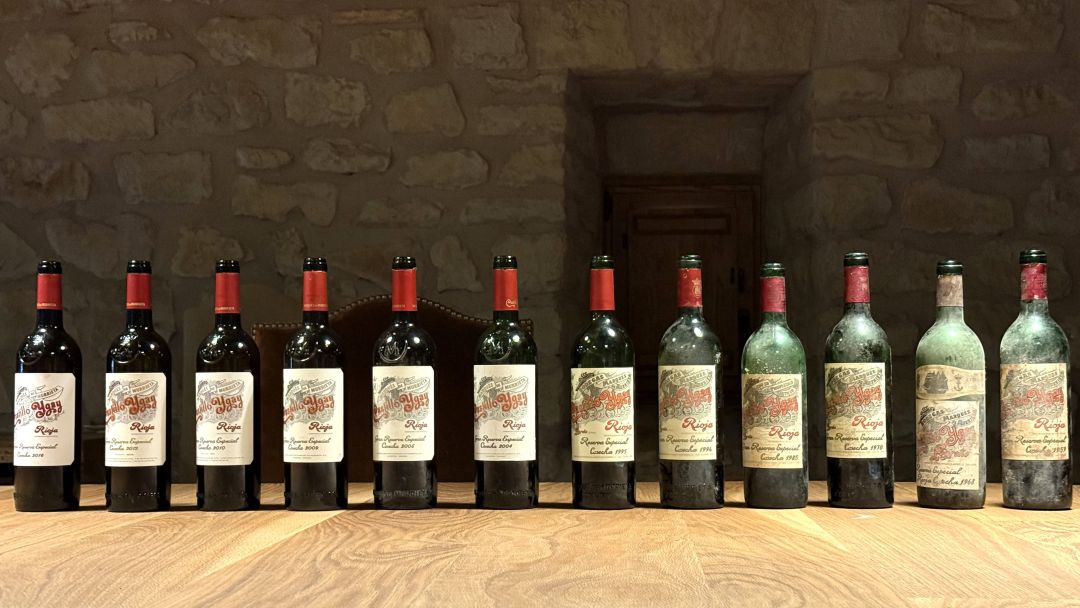
Sourced from the La Plana parcel of the Finca Ygay estate, Castillo Ygay comprises a backbone of Tempranillo complemented by smaller proportions of Garnacha, Mazuelo and Graciano, with the blend tailored to each vintage. However, the evolution of Ygay since its inception is most clearly seen in its élevage. Historically fermented in large wooden vats and aged in a mix of vessels, the wine is now matured exclusively in barrel. Since the 1950s, most changes have been in the form of subtle refinements of this aging process.
Vicente Dalmau—who has led the estate since the Cebrián-Sagarriga family acquired it in 1983—remarked, “Ygay began as a wine bottled on demand, with aging periods of up to 30 years depending on the vintage. In the 1980s, this was reduced to around seven years. In the 1990s, barrel aging redefined the model, and by the 2000s, we began bottling each wine according to its needs.” A long history distilled into a few lines. True to the tradition of historic Rioja, American oak has consistently shaped the development of Castillo Ygay. Today, Ygay is a wine that represents a synthesis of knowledge and the cumulative result of years of fine-tuning and experimentation: extended aging in American oak, the art of blending and vintage selection, and a precise understanding of terroir.
What defines a classic Rioja—what I like to call Rioja Riojana—is an extraordinary capacity for aging, the result of an élevage geared toward maximum oxygen exposure in order to stabilize the wine. Castillo Ygay is a shining example. On my most recent visit to Rioja, I had the opportunity to explore the “modern era” of Castillo Ygay.
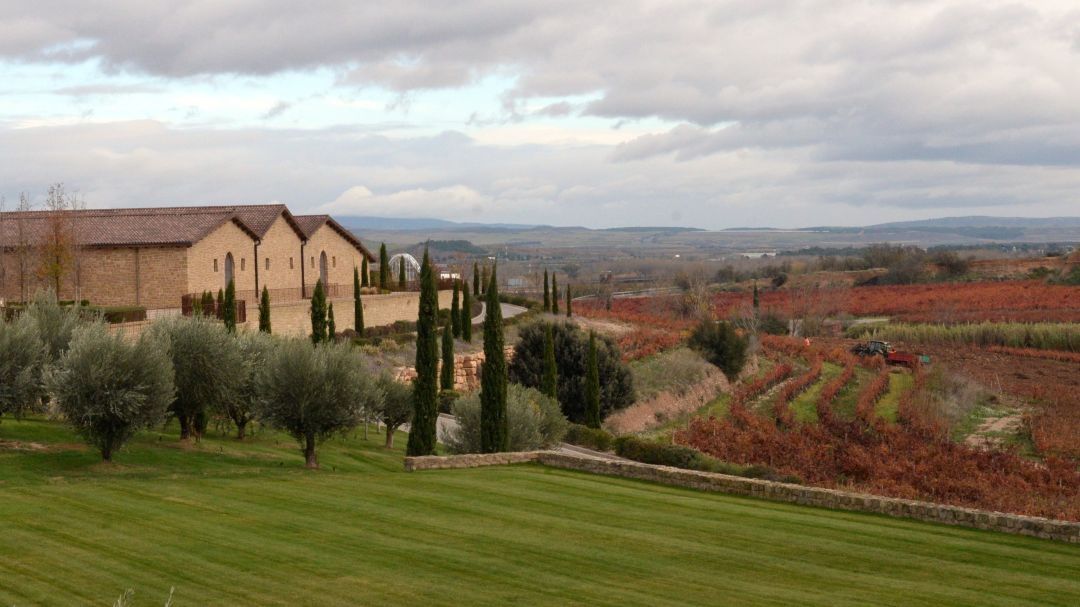
The Marqués de Murrieta winery was restored in 2014, preserving its original style with stone walls and timber roof trusses.
1959-2016
The defining trait of the 1959, 1968 and 1970 Castillo Ygay is that they were bottled after extended aging in wood. These wines are all supported by a backbone of high acidity, with a silky mouthfeel and the oxidative profile of classic Rioja. The 1959 is particularly compelling: a wine aged in old wood due to the constraints of Franco-era autarchy, which limited access to new barrels. The 1970, by contrast, is less structured and shows a volatile lift that points to a more fragile starting point. Long élevage left the wine feeling slightly exposed. The seriously complex 1968, from what is considered a mythical vintage in Rioja, fully delivers here. The 1968 Ygay is also the wine that famously circumnavigated the globe by sea alongside the King of Spain.
From 1985 to 2004, the wines take on a range of distinct expressions. The 1985, for example, was released in two versions: an early bottling and a more traditional late release. I tasted the former, which has evolved beautifully in bottle. At the time, Rioja was beginning to move toward earlier bottling and more controlled aging, and the 1985 Ygay stands as a clear example of the trend, offering a detailed, fully developed bouquet.
The 1994 is the weakest wine in the series. The tannins remain reactive, with a slightly green edge on the finish that never quite resolves. The 1995 follows a similar line and reflects a period of stylistic adjustment as Murrieta sought to calibrate élevage.
The 2004 marks a clear stylistic shift, with Tempranillo taking center stage. In this vintage, Tempranillo accounts for 93% of the blend, alongside 7% Mazuelo, pushing the wine toward a darker profile. The 2004 is a wine of its time, in which ripeness begins to shape the style. This is even more evident in the 2005, a wine born from a warm vintage that was a natural match to the more forward approach. These are more robust wines, though they are still underpinned by carefully calibrated aging.
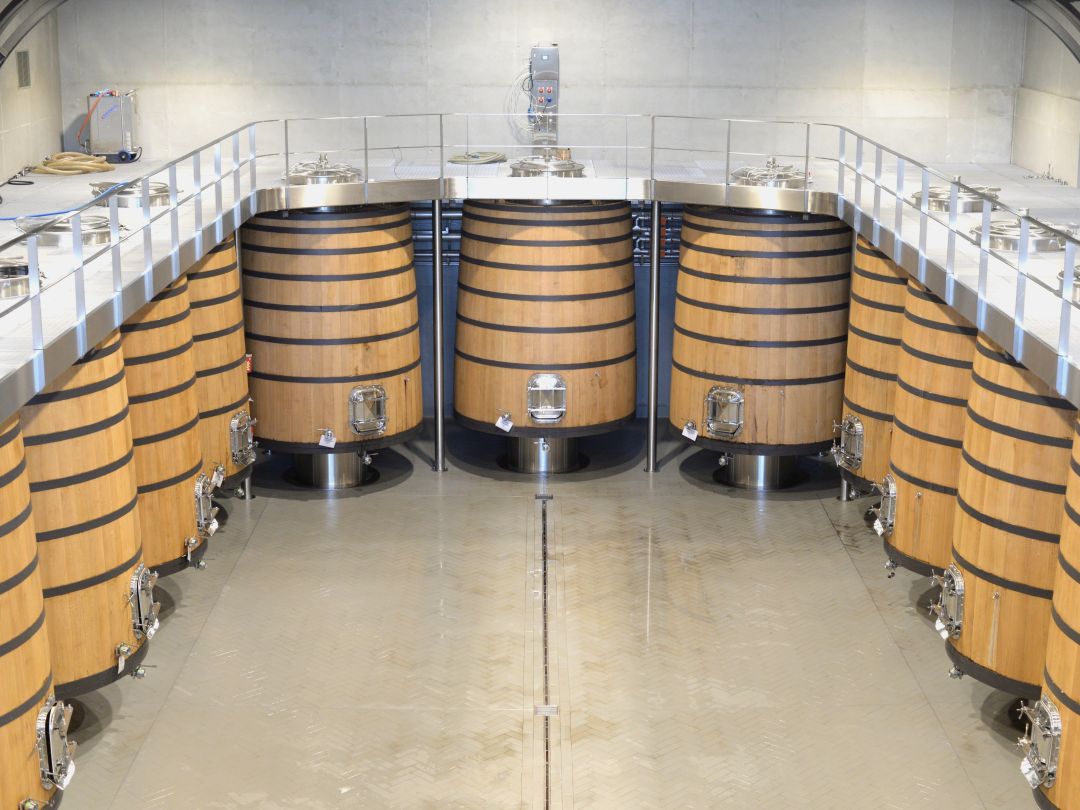
Wooden fermentation vats are central to the house style and managed with surgical precision. Sophisticated software aids the vinification process.
The 2010 Ygay begins a run of three particularly notable wines. The 2010 stands out for its tertiary character in a cool year, while the 2012 shows hints of reduction that deftly frame mentholated notes and a precise palate. The 2016 is the highlight. Born from a cool and generous vintage that allowed for slow ripening, the 2016 is a wine of layered nuance. At the same time, it reflects a finely tuned approach to aging: 31 months in American oak for the Tempranillo and 31 months in French oak for the Mazuelo, followed by six months in concrete and a further six in large French oak vats before bottling. It only continued to gain depth in bottle.
I also tasted the magnificent 1986 Castillo Ygay Blanco Gran Reserva. The Blanco is a remarkable wine that anticipated Rioja’s white wine renaissance by nearly four decades. Based on Viura with a small addition of Malvasía and sourced from the Capellanía parcel planted in 1945 at the highest point of the estate, the 1986 was bottled in 2014 after more than 20 years in American oak and nearly six years in concrete. It represents a perfectly refined expression of oxidative white Rioja. Magical.
Marqués de Murrieta’s Castillo Ygay is an icon that has helped define Rioja’s global identity through one essential idea: time as a tool for shaping style.
I tasted the wines for this report in Rioja in February 2026.
© 2026, Vinous. No portion of this article may be copied, shared or redistributed without prior consent from Vinous. Doing so is not only a violation of our copyright but also threatens the survival of independent wine criticism.
You Might Also Enjoy
2022, 2023 and 2024: The Rioja Renaissance, Joaquín Hidalgo, April 2026
The Diverse Villages of Rioja: A New Trend Emerges, Joaquín Hidalgo, May 2025
The Vivacious Reds of Ribeira Sacra and El Bierzo, Joaquín Hidalgo, February 2025
From Revolution to Evolution: The Garnatxas and Cariñenas of Priorat & Montsant, Joaquín Hidalgo, November 2024
The Many Riojas of Rioja: A Tale of Forking Paths, Joaquín Hidalgo, April 2024
JOAQUÍN HIDALGO | 7 ABRIL, 2026
Luciano Murrieta fundó Marqués de Murrieta en 1852 con una idea muy clara: elaborar vinos capaces de envejecer durante largo tiempo. Fue la primera propiedad moderna de Rioja, al reunir viñedo y bodega en una sola finca, siguiendo el modelo del château bordelés trasladado a las afueras de Logroño. Allí siguen en pie las 300 hectáreas de Finca Ygay, plantadas principalmente con Tempranillo, junto con menores proporciones de Graciano, Mazuelo y Garnacha, además de Viura y otras variedades blancas. En esencia, este es el núcleo histórico del vino riojano: una empresa moderna para su tiempo, desplegada entre laderas y valles alrededor del río Valsalado.
Desde mediados del siglo XIX ha pasado mucho vino por las viejas cavas, y mucho más por las tuberías de la actual bodega, inaugurada en 2014. La nueva instalación introdujo un grado de sistematización y automatización poco habitual en Rioja, pero Murrieta ha sabido conservar una dimensión humana en la elaboración. La precisión acá no es sólo tecnológica: también es interpretativa. Como me dijo la actual enóloga, María Vargas: “Castillo Ygay es un vino que te llama. Te dice: ‘Estoy acá’. Nuestro trabajo es encontrarlo y tratarlo con el respeto que merece”.
Elaborado por primera vez en 1893 y producido sólo de manera esporádica en la primera mitad del siglo XX, Castillo Ygay es un vino que ha atravesado muchas etapas estilísticas. Y, sin embargo, siempre conserva un equilibrio muy particular: una trama delicada de energía y matices, de elegancia y crianza, expresada con una claridad singular. En bodega, los lotes destinados a Ygay suelen revelarse a mitad de la crianza; es ahí cuando, en las grandes añadas, se los elige y ensambla como selección de barricas.
Procedente del pago La Plana, dentro de Finca Ygay, Castillo Ygay tiene una base de Tempranillo complementada por proporciones menores de Garnacha, Mazuelo y Graciano, con un corte que se ajusta según cada cosecha. Pero la evolución de Ygay desde sus orígenes se percibe, sobre todo, en la crianza. Antiguamente fermentado en grandes tinos de madera y criado en distintos recipientes, hoy el vino madura exclusivamente en barrica. Desde la década de 1950, la mayor parte de los cambios han sido ajustes sutiles dentro de ese mismo proceso.
Vicente Dalmau—al frente de la propiedad desde que la familia Cebrián-Sagarriga la adquirió en 1983—lo resumió así: “Ygay comenzó siendo un vino que se embotellaba a demanda, con crianzas que podían llegar a 30 años según la añada. En los años 80 eso se redujo a unos siete años. En los 90, la crianza en barrica redefinió el modelo, y ya en los 2000 empezamos a embotellar cada vino según lo que pedía”. Toda una historia condensada en pocas líneas. Fiel a la tradición del Rioja histórico, el roble americano ha marcado de manera constante el desarrollo de Castillo Ygay. Hoy, Ygay representa una síntesis de saberes y el resultado acumulado de años de afinamiento y experimentación: larga crianza en roble americano, arte del ensamblaje y selección de añadas, además de una comprensión precisa del terruño.
Lo que define a un Rioja clásico—a eso que me gusta llamar Rioja Riojana—es una extraordinaria capacidad de guarda, fruto de una crianza pensada para exponer el vino al oxígeno de manera controlada y así estabilizarlo. Castillo Ygay es un ejemplo brillante. En mi visita más reciente a Rioja, tuve la oportunidad de explorar la “era moderna” de Castillo Ygay.
La Bodega Marqués de Murrieta fue restaurada con el estilo original en 2014. El trabajo artesano en piedra para las paredes y las cabreadas de madera para los techos es buena parte del atractivo. Al final de la foto, sobre la izquierda, se ve el Ebro.
1959-2016
El rasgo definitorio de los Castillo Ygay 1959, 1968 y 1970 es que fueron embotellados después de una prolongada crianza en madera. Son vinos sostenidos por una acidez firme, con una textura sedosa y ese perfil oxidativo propio del Rioja clásico. El 1959 resulta particularmente convincente: un vino criado en madera vieja debido a las restricciones de la autarquía franquista, que limitaban el acceso a barricas nuevas. El 1970, en cambio, tiene menos estructura y muestra un vuelo volátil que delata un punto de partida más frágil. La larga crianza lo dejó algo expuesto. El 1968, en cambio, de enorme complejidad y procedente de una añada considerada mítica en Rioja, responde plenamente a las expectativas. Fue también el vino que dio la vuelta al mundo por mar junto al Rey de España.
Entre 1985 y 2004, los vinos adoptan perfiles bien distintos. El 1985, por ejemplo, se comercializó en dos versiones: una de salida temprana y otra con el esquema tradicional de larga espera. Yo probé la primera, que ha evolucionado magníficamente en botella. En ese momento, Rioja empezaba a inclinarse por embotellados más tempranos y crianzas más controladas, y el Ygay 1985 funciona como un ejemplo claro de esa transición, con un bouquet detallado y plenamente desarrollado.
El 1994 es el vino más débil de la serie. Los taninos siguen reaccionando, con un borde apenas verde al final que nunca termina de integrarse. El 1995 va en una línea parecida y refleja una etapa de ajuste estilístico, en la que Murrieta buscaba calibrar con mayor precisión la crianza.
El 2004 marca un giro estilístico claro, con el Tempranillo ocupando el centro de la escena. En esa añada, el corte está compuesto por 93% Tempranillo y 7% Mazuelo, lo que empuja el vino hacia un perfil más oscuro. El 2004 es un vino muy de su tiempo, en el que la madurez empieza a modelar el estilo. Eso se vuelve todavía más evidente en 2005, una cosecha cálida que encajó de manera natural con un enfoque más frontal. Son vinos más robustos, aunque siguen sostenidos por una crianza cuidadosamente calibrada.
La sala de fermentación en tinos de madera, parte central de la fermentación de los vinos de la casa, es un quirófano que se gestiona por un sofisticado software.
El Ygay 2010 inaugura una seguidilla de tres vinos especialmente notables. El 2010 se distingue por su carácter terciario en un año fresco, mientras que el 2012 muestra notas de reducción que enmarcan con precisión matices mentolados y un paladar exacto. El 2016 es el punto más alto. Nacido de una añada fresca y generosa, que permitió una maduración lenta, el 2016 es un vino de matices superpuestos y gran profundidad. Al mismo tiempo, refleja un trabajo de crianza afinadísimo: 31 meses en roble americano para el Tempranillo y 31 meses en roble francés para el Mazuelo, seguidos por seis meses en hormigón y otros seis en grandes tinos de roble francés antes del embotellado. En botella no hizo más que ganar profundidad.
También probé el magnífico Castillo Ygay Blanco Gran Reserva 1986. Es un blanco extraordinario, que se adelantó por casi cuatro décadas al renacimiento de los blancos de Rioja. Elaborado sobre una base de Viura con un pequeño aporte de Malvasía, y procedente del pago Capellanía, plantado en 1945 en la parte más alta de la finca, el 1986 fue embotellado en 2014 tras más de 20 años de crianza en roble americano y casi seis años en hormigón. Representa una versión refinadísima del blanco oxidativo riojano. Mágico.
Castillo Ygay, de Marqués de Murrieta, es un ícono que ayudó a definir la identidad global de Rioja a partir de una idea esencial: el tiempo como herramienta de estilo.
Probé los vinos para este reportaje en Rioja, en febrero de 2026.
© 2026, Vinous. Ninguna parte de este artículo puede ser copiada, compartida o redistribuida sin el consentimiento previo de Vinous. Si se incurriese en ello, no solo se viola nuestro copyright, sino que también se amenaza la supervivencia de la crítica independiente de vinos.
También Podrías Disfrutar
2022, 2023 y 2024: el renacimiento de Rioja, Joaquín Hidalgo, abril 2026
Los Diversos Pueblos de Rioja: Emerge una Nueva Tendencia, Joaquín Hidalgo, mayo 2025
Los Tintos Vivaces de Ribeira Sacra y El Bierzo, Joaquín Hidalgo, febrero 2025
De la Revolución a la Evolución: Las Garnatxas y Cariñenas de Priorat & Montsant, Joaquín Hidalgo, noviembre 2024
Las Muchas Riojas del Rioja: una Historia de Encrucijadas, Joaquín Hidalgo, abril 2024