
Browse using the new Vinous website now. Launch →
Printed by, and for the sole use of . All rights reserved © 2015 Vinous Media
Australian Syrah: The Quest for Refinement
BY ANGUS HUGHSON | JANUARY 14, 2026
The winds of change are blowing hard through the international wine trade. There is a hurricane brewing, and it seems more than likely that we will look back at recent decades as a time of significant stability. Climate change, economic headwinds and changing consumer tastes will play their part in remoulding how, what, when and why wine is enjoyed. Its survival is guaranteed, but there is no doubt our industry will look very different by 2050.
One of the most fascinating recent changes has been the evolution in consumer tastes. This is nothing new, as tastes have always been in a state of flux, although it seems the pace is more dramatic than in any other time in living memory. Today’s key changes seem to be a move away from monolithic red wines and toward finer, more cerebral, mid-weight wines, often with a touch lower alcohol and generally requiring less cellaring to hit their peak. Beaujolais’ rise in popularity is a beautiful case in point, although the wines from many New World regions are also pulling back on ripeness and oak impact to appeal to the changing consumer palate.
Some would see this as a challenge to the classic Australian Shiraz style. Yet the country’s Shiraz has never been a singular entity, as is seen in the contrast between two icons: Penfolds Grange and Henschke Hill of Grace. Not only is there plenty of diversity today, but there has also been a long history—stretching back into the 1800s—of mid-weight wines that have more in common with Rhône Valley Syrah than a modern, robust “Parkerised” style. In fact, it was these mid-weight wines that marked Australia’s first significant foray into the global wine market, labelled as “Australian Red Burgundy” in the late 1800s.
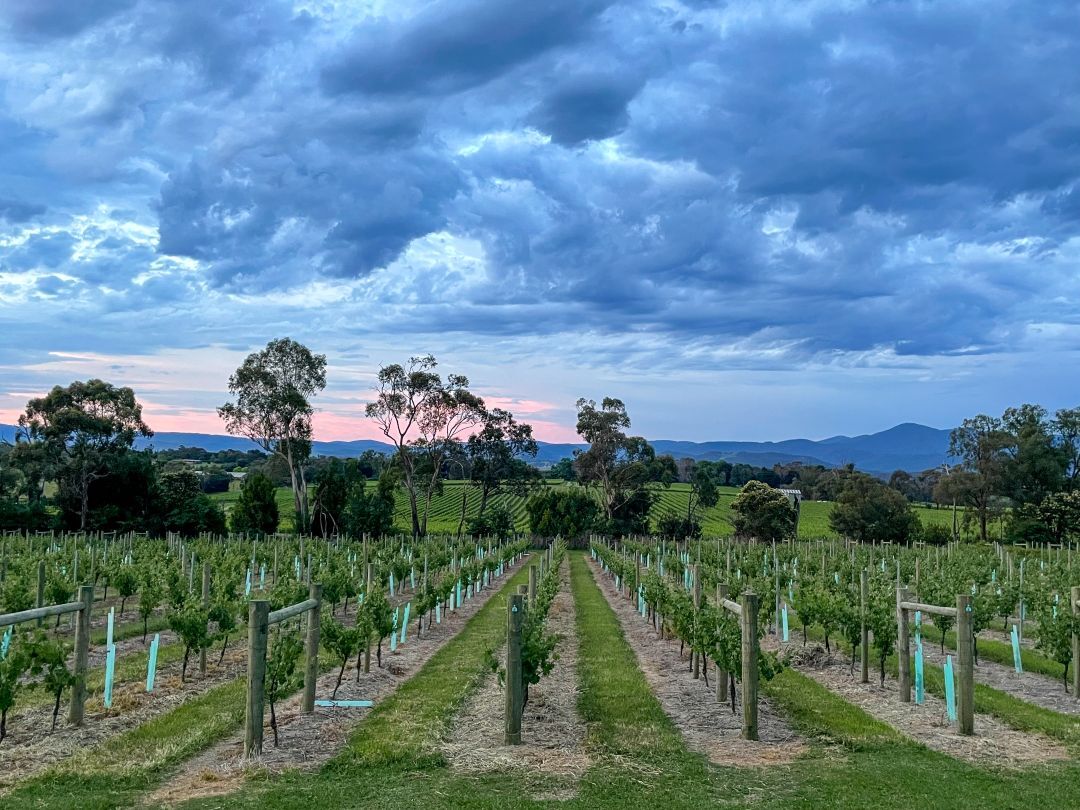
Twilight in Yarra Yering’s historic vineyard.
The Genesis of Australian Syrah
The rise of phylloxera in Europe wrought havoc on the international wine trade. Devastation in the classic wine regions of France saw yields fall dramatically as economic hardship threatened livelihoods and their ongoing existence. However, as the world scrambled to understand the causes and come up with solutions, consumer thirst remained strong. The trade searched for alternatives.
Far away in Australia, the nascent wine industry was moving into second gear. The first vineyards, which arrived a century prior with the first settlers, had taken root and the grapevine had moved into all the key states. The constant influx of ships and settlers brought them dozens of varieties and hundreds of clones that were slowly settling into place. The gold rush added wealth to the mix, bringing with it a desire by the moneyed classes to enjoy the finest wines that Europe had to offer. This filtered down and in turn saw the slow development of a wine culture. In time, a cultural aversion to local wines eroded and a taste for Australian wine developed. From the earliest times, many were labelled as Australian Red Burgundy.
While some of these were undoubtedly made from Pinot Noir and imported Burgundian clones, Australian Red Burgundy was more of a stylistic label than a varietal one. These were medium-weight wines with supple tannins and some earthy tones, thanks to old-fashioned winemaking, generous yields and the use of old oak. Hijacking a famous French brand was undoubtedly a useful marketing technique, although this was also far before the time of widespread varietal labelling.
Few could have imagined how Australian Red Burgundy would underpin the country’s first beachhead into international wine markets. Phylloxera provided the perfect opportunity, and Australian Red Burgundy filled the gap, particularly in the UK market. The wines came from broad origins, with South Australia, North-Eastern Victoria and Central Victoria the leading sources. They were often blends of Mataro, Grenache and Syrah. It was only the First World War and taxation changes—which followed soon thereafter in the United Kingdom—that precipitated the gradual decline of these wines.
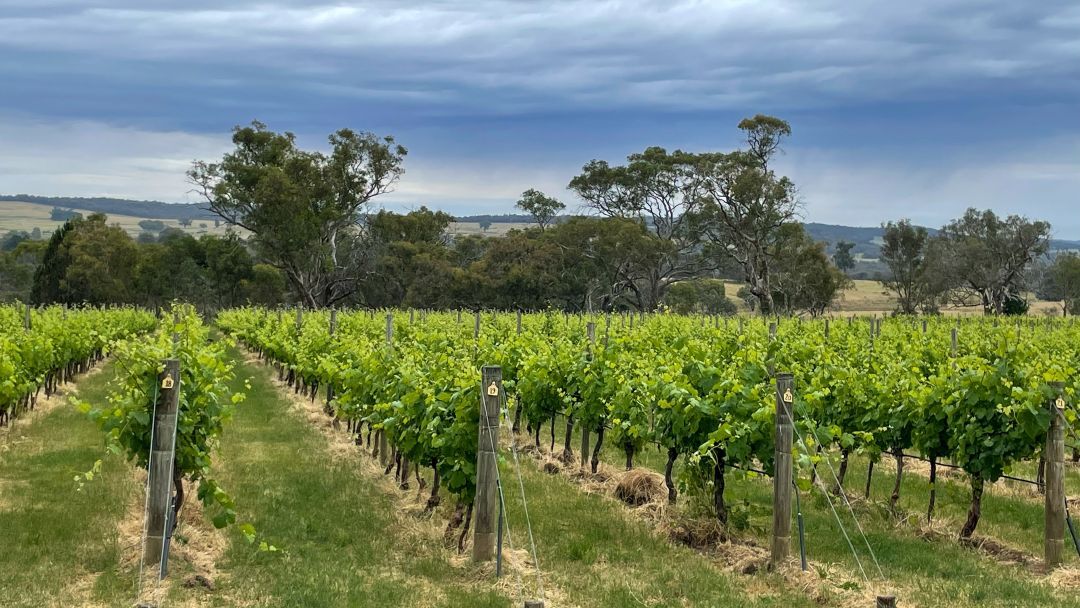
Beechworth’s iconic Castagna vineyard.
New Beginnings
While there have always been fine, detailed, cooler-climate expressions of Australian Shiraz, these wines have often remained underexposed to the wine-drinking public. The reasons are various, although the relatively small number of wineries involved—most of which are boutique and without clout or volume—has played a significant role. So has the contrast with the overriding narrative and broader perception of Australian Shiraz. Despite this, the wines from Bailey Carrodus at Yarra Yering in the Yarra Valley, and old vine beauties from Best’s, Seppelt and Wynns Coonawarra Estate have attained an almost cult-like following. The Seppelt Show Vintage Sparkling Shiraz is a fascinating part of that history, a wine that can drink well for decades.
A key moment for the Australian Syrah movement was the development of the Clonakilla Shiraz Viognier from the largely unheralded area of Murrumbateman, near the Australian capital of Canberra, located roughly halfway between Sydney and Melbourne. This was the first time in recent decades that there had been genuine innovation in the space. The choice of location initially came about by happenstance as research scientist Dr. John Kirk searched for varieties that may suit his family property. What began as a weekend project morphed into a wine that was revolutionary, delivering a silky, perfumed, seductive and thoroughly unique expression of the variety. While broadly modelled on Côte-Rotie, these wines are vastly different and, although the Shiraz-Viognier blend was initially the key wine, the success of Clonakilla’s straight Syrah shows this estate is not a one-trick pony. Arguably, this was a moment that the Australian wine industry as a whole fully embraced its significant unexplored potential for fine wine production in cooler climates.
The rise of Clonakilla and the ensuing buzz led numerous winemakers to follow suit over the last 25 years, exploring more savoury styles from cooler regions. Impressive results have been widespread—from Frankland River in Western Australia to the Adelaide Hills, across much of Victoria and even into Tasmania, all achieved through quality site selection. Refinements in winemaking and viticulture have yielded wines with both tension and refinement. The use of whole cluster fruit to add structure and complexity has grown in popularity, while more recent years have seen the introduction of amphora and concrete eggs for ferments and maturation, as well as the blending with Viognier, all helping to build a more savoury complexion into the resulting wines.
Unfortunately, there has been little consistency in the naming of these wines as Shiraz or Syrah, which remains to this day. Historically, when varietal labelling became common, wines made from this grape variety were only known as Shiraz, despite variations in style. It is only recently that wines labelled as Syrah have emerged, although plenty of Syrah styles are still labelled as Shiraz. In this article, “Syrah” refers to spicy, mid-weight expressions that are defined by savory rather than sweet fruit profiles.
Australian Syrah comes in many guises. Depending on climate and winemaker preference, some are roughly analogous to those of the Northern Rhône, while other local styles are completely unique. The most obvious example is the Cornas-like wines from the warmer areas of Heathcote in central Victoria. There, the continental climate combines with ancient Cambrian soils to deliver powerful, muscular wines that are richly endowed with fruit and structure. Many of the wines from central and northern Victoria take on a more structured, southern Saint-Joseph-like profile, with spice/earthy tones and a mix of red and black fruits. However, around Beechworth and the Grampians, there are also outcrops that take on Hermitage-like density and structure. The coolest areas around Melbourne and the Canberra district are notably perfumed, not unlike Syrahs from Côte-Rôtie. Overall, there is very much a feeling throughout the country that the top Syrah winemakers are committed to making continual refinements, breaking stereotypes and forging a strong counterpoint to the dominant national Shiraz style.
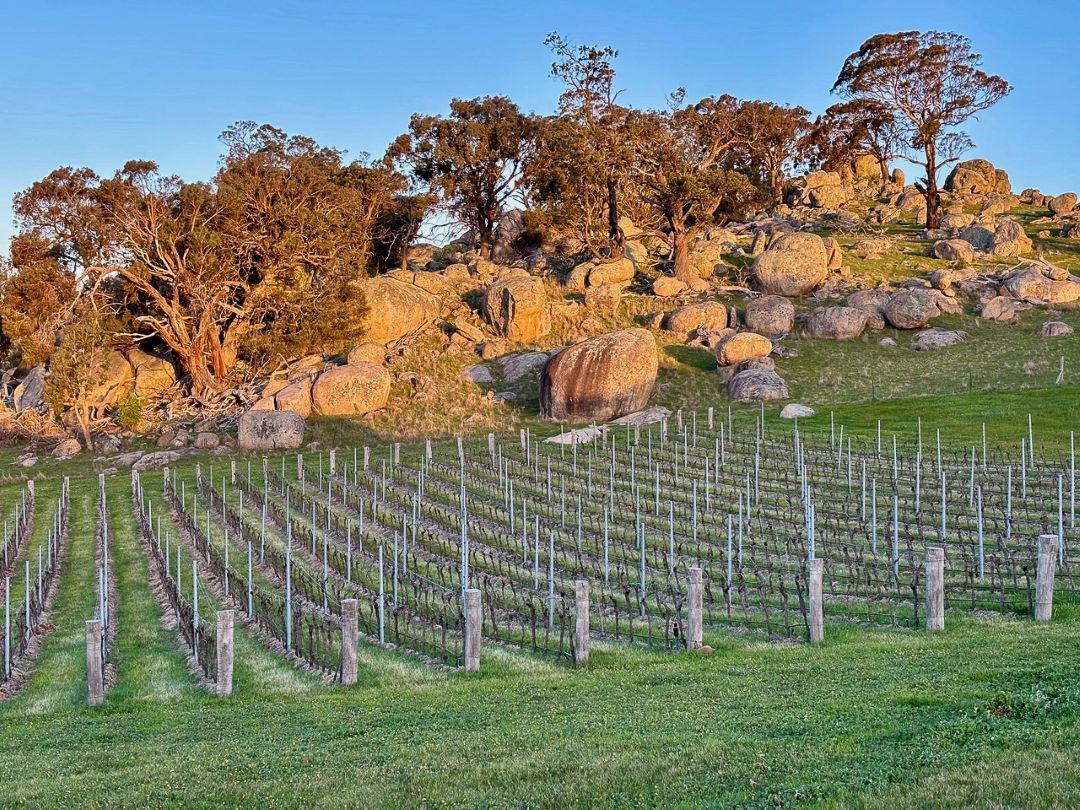
Syrahmi's Home Block in the southern Heathcote foothills.
Even in regions known for traditional, big-boned Shiraz, such as the Barossa and McLaren Vale, winemakers are pushing the boundaries, with fresher wines picked at lower ripeness levels. Adam Foster, a former chef and sommelier who now makes the wines at Syrahmi, is at the forefront of this movement, utilising fruit from his vineyards in Heathcote. After a vintage at Torbreck in the Barossa Valley, Foster spread his wings wide through various harvests across Australia and the Rhône Valley. He first did a stint at Chapoutier before diving deeper into Côte-Rôtie, working with Stephane Ogier and Pierre Gaillard between 2002 and 2008, while at the same time making his first Heathcote wine in 2004.
At the time, Heathcote was home to deeply flavoured Shiraz, but Foster went down a different route by paring back the wines. He purposefully chose cooler sites in the southern end of the appellation while also introducing Viognier into some of his blends, which were aged in small wood. However, the 2007 vintage saw some dramatic changes. Foster ditched the Viognier and moved toward whole bunch fermentation, larger-format oak and extended maturation, influenced by the likes of Jamet. But there is also no firm recipe, and Foster tailors his winemaking to the season. “It's just like cooking when I was a chef,” he told me. “I get the grapes and I have to make one dish out of them. And if I stuff it up, I have to wait another 12 months. What’s more important now is reflecting the season, and there’s no rhyme or reason to what it might bring.”
Now, Foster generally uses a high proportion of whole bunch and ferments his wines for 30-40 days. He then matures the wines in a very cool cellar by Australian standards, around 16-17°C with 80% humidity, which helps reduce evaporation and retain aromatics while keeping alcohol in check. Foster also uses a variety of maturation vessels after small, open-top ferments in stainless steel. The standard Syrahmi label is matured in concrete.
The Home Block, Foster’s recent addition, is where he is bringing all the pieces together. There, a natural amphitheatre block is planted at high density near the apex of a hill littered with granite boulders, while the east-west orientation provides the maximum fruit shading during the growing season. This protection and location can allow the fruit to be picked a full two months later than in other parts of the region. The use of 50% whole bunch, extended fermentation and two years’ maturation in ceramic eggs helps the wines build beautiful layers of flavour and texture. The eggs are sourced locally in Byron Bay, a hub for free-thinkers and alternative-lifestyle-seekers. Foster is keen to make this portfolio a truly unique and authentic expression of Heathcote and Australian—Syrah. He has achieved his aims with the 2021 Home Block, and the entire Syrahmi range is a global beacon for modern Syrah.
Recent Vintages
The recent run of seasons provides a fascinating subtext to the story of Australian Syrah. Embracing cooler regions for Syrah works brilliantly in warmer, drier seasons. Over the last two decades, this has allowed the variety to achieve a higher level of ripeness while retaining varietal character. However, recent growing seasons from 2021 to 2024 have been an anomaly, cooler (and in some cases, wetter) than usual. This has brought about significant challenges for many vignerons. However, through fastidious viticulture and fruit selection, wineries such as Fighting Gully Road, Mount Langi Ghiran, Syrahmi, Clonakilla, Parker Estate, Yarra Yering and The Story have managed to triumph against these more difficult conditions.
The first Shiraz vines landed in Australia almost two hundred years ago, and over the course of time, wine styles have evolved thanks to changes in winemaking, consumer tastes and changing growing seasons. The rise of modern, world-class Syrah is a relatively new phenomenon, although one that very much has the potential to become a more important component in the Australian wine story.
I tasted the wines for this report at my office in Sydney.
© 2026, Vinous. No portion of this article may be copied, shared or redistributed without prior consent from Vinous. Doing so is not only a violation of our copyright but also threatens the survival of independent wine criticism.
You Might Also Enjoy
Barossa and Clare Valley: The Champion and the Contender, Angus Hughson, August 2025
The Second Coming of Australian Chardonnay, Angus Hughson, June 2025
McLaren Vale: Pushing the Envelope of Refinement, Angus Hughson, April 2025
Behind the Red Curtain: Penfolds Special Bins from the Vault, Angus Hughson, March 2025
The Yin and the Yang of Western Australia, Angus Hughshon, May 2024
Show all the wines (sorted by score)
- Altera Terra
- Balnaves of Coonawarra
- Bannockburn Vineyards
- Bekkers
- Berrigan Wines
- Black & Ginger Wines
- Bowen Estate
- Buller Wines
- Castagna
- Clonakilla
- Conforti Estate
- Even Keel
- Fighting Gully Road
- Fowles Wine
- Gundog Estate
- Hither & Yon
- Hollick
- Indigo Vineyard
- Jasper Hill Vineyard
- Jayden Ong Wines
- Karrawatta
- Majella Wines
- McPherson Wines
- Moorooduc Estate
- Mount Langi Ghiran
- Oakdene Wines
- Oakridge
- Parker Estate
- Pike & Joyce
- Port Phillip Estate
- Riddoch Coonawarra
- Rymill Coonawarra
- Seppelt
- SOUMAH of Yarra Valley
- Sutton Grange
- Syrahmi
- Tellurian
- The Story Wines
- Trentham Estate
- Vinea Marson
- Wynns Coonawarra Estate
- Yarra Yering
- Yering Station