
Browse using the new Vinous website now. Launch →
Printed by, and for the sole use of . All rights reserved © 2015 Vinous Media
2025 Rheinhessen-Nahe and Mittelrhein: Opulence, Clarity and Sweet Marvels
BY ANNE KREBIEHL MW | AUGUST 20, 2026
After the frost horrors of 2024, several winemakers noted how “pleasant” or “relaxed” the 2025 growing period was. There was no frost damage at all, winter had left good moisture reserves, and while there were some dry periods, rain always came in time. The warm summer did not have any crazy heat spikes, but 2025 was another year of above-average temperatures. In fact, the German Weather Service counted 1,980 sunshine hours in the federal state of Rheinland-Pfalz, making 2025 one of the top five sunniest years since 1951. The vines thus had everything they needed and ripeness raced ahead, prompting many to start picking in late August and early September.
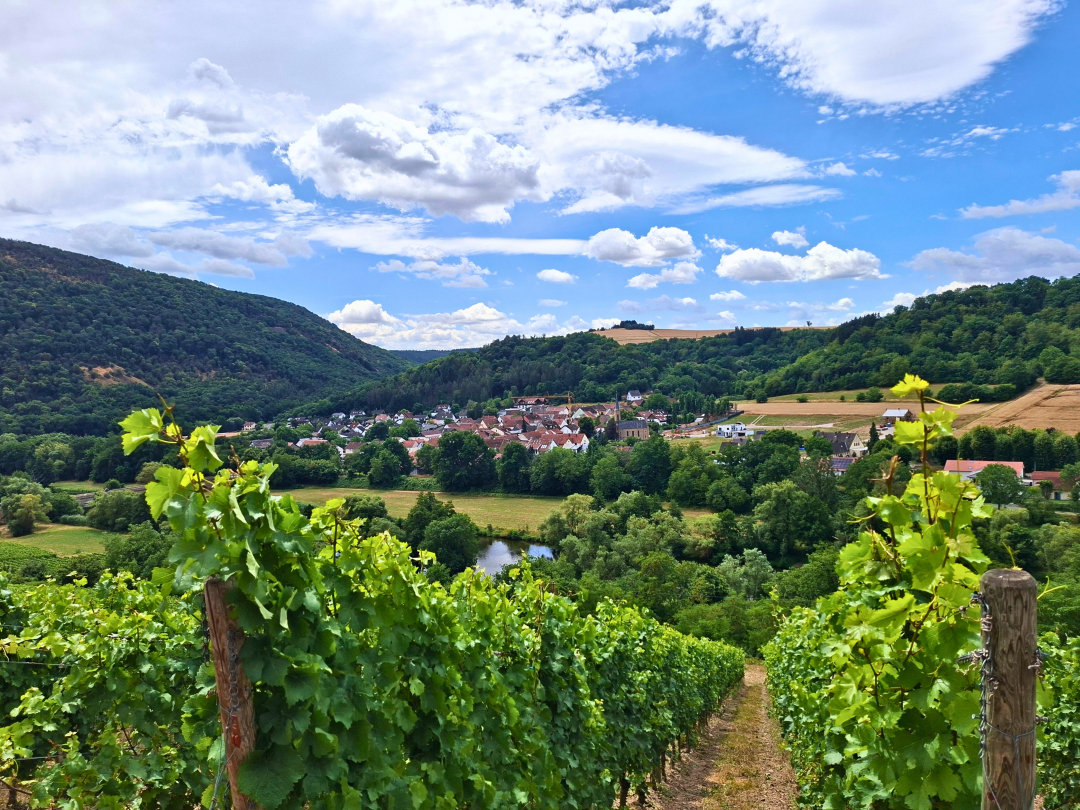
Looking toward the Nahe from a vantage point in Schlossböckelheim, en route to Gut Hermannsberg.
Turbo Harvests, Impending Rain and Lots of Auslese
Several estates reported that, unusually, everything ripened at once. Most spoke of an exhausting, quick harvest with long days. Some raced against fast-advancing ripeness, and some were able to pick wonderfully pure sweet Riesling Prädikate from shriveled grapes without botrytis, but all knew significant rainfall was forecast for the weekend of September 20-21. Many who had ripe fruit saw that as a natural deadline, hurrying to get everything in before the rain. Growers strategized to pick parcels from each site so that they would have “some of everything” in the cellar, eventually being able to blend with later-picked parcels. Some managed to pick everything before the rain by resorting to machine harvest for estate-level wines, increasing harvest crews or equipping their pickers with headlamps to harvest through the night. Others deliberately waited longer to start picking, knowing the rain would come and it would be necessary to sort and discard a lot of fruit. (When rain hits ripe fruit that already has soft skins, berries split and become an ideal breeding ground for all sorts of rot.) Most estates were finished by early October, if not earlier. Seventy-six-year-old Helmut Dönnhoff, of Weingut Dönnhoff in the cool Nahe, said that for the first time in his life, the entire harvest was picked within the month of September.
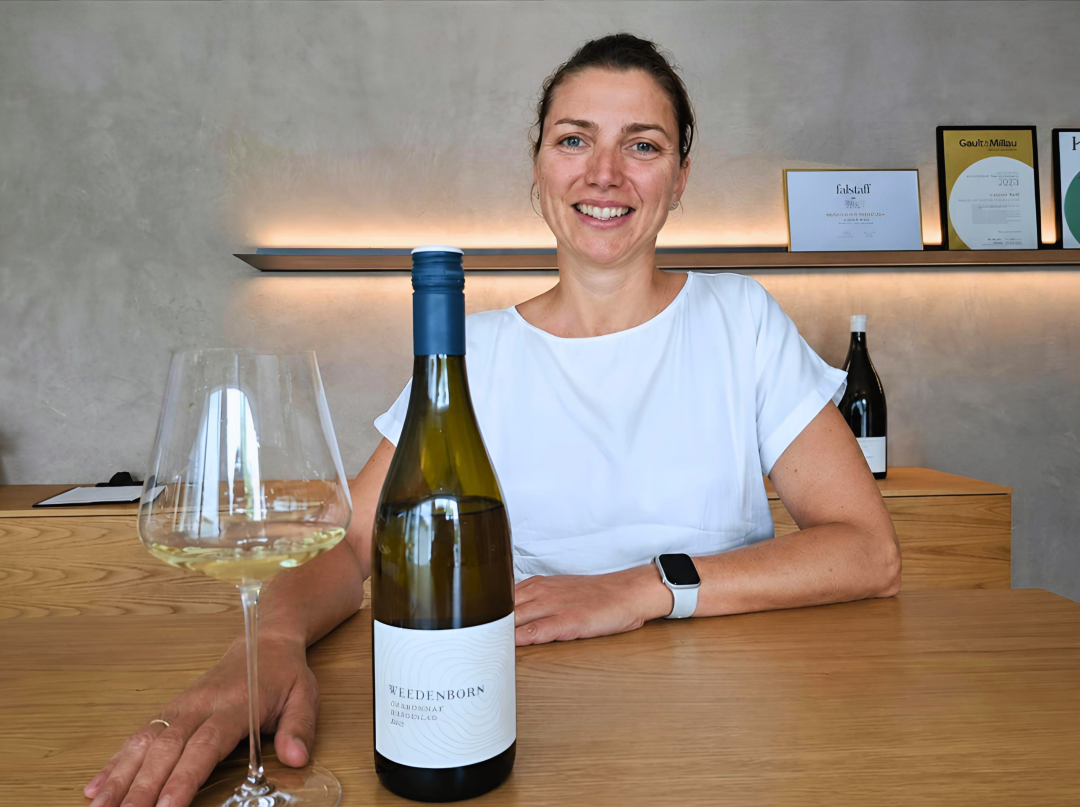
At Weedenborn, Gesine Roll presides over some of the finest Sauvignon Blancs in Germany, all grown in Monzernheim.
Low Yields and Lecker Riesling
Many winemakers commented on the low yields of 2025, which exacerbated ripening and catapulted sugar levels. Different factors contributed to the low yields. In southern Rheinhessen, wind and rain at flowering led to millerandage and poor fruit set, with spots of hail affecting some. Several growers remarked that there was just less juice in the grapes, or that berries were small even if there was good fruit set. This explains the high extract and healthy, stable acid levels of 2025. The Rieslings thus brim with fruit, often prompting an involuntary exclamation of “Lecker,” the German word for “tasty.” This is not a term the Germans love, especially in a wine context, because it is associated with easy pleasures of unsophisticated food and drink, but all the peachy, inviting, juicy openness and relative opulence of the wines made it hard to suppress this expression. Of course, such ripeness also spells higher alcohol, and many wines clock in at a full degree more than last year. But 2025 goes well beyond fruit since acids remained stable, giving contour and spine to all this generosity. The 2025s are easy to like, approachable and pliant. Many estates crafted luminous marvels of Riesling, chiseled monuments that simply have everything. I encountered only a few examples with a touch of heat or not quite enough tension. The usual suspects did everything right.
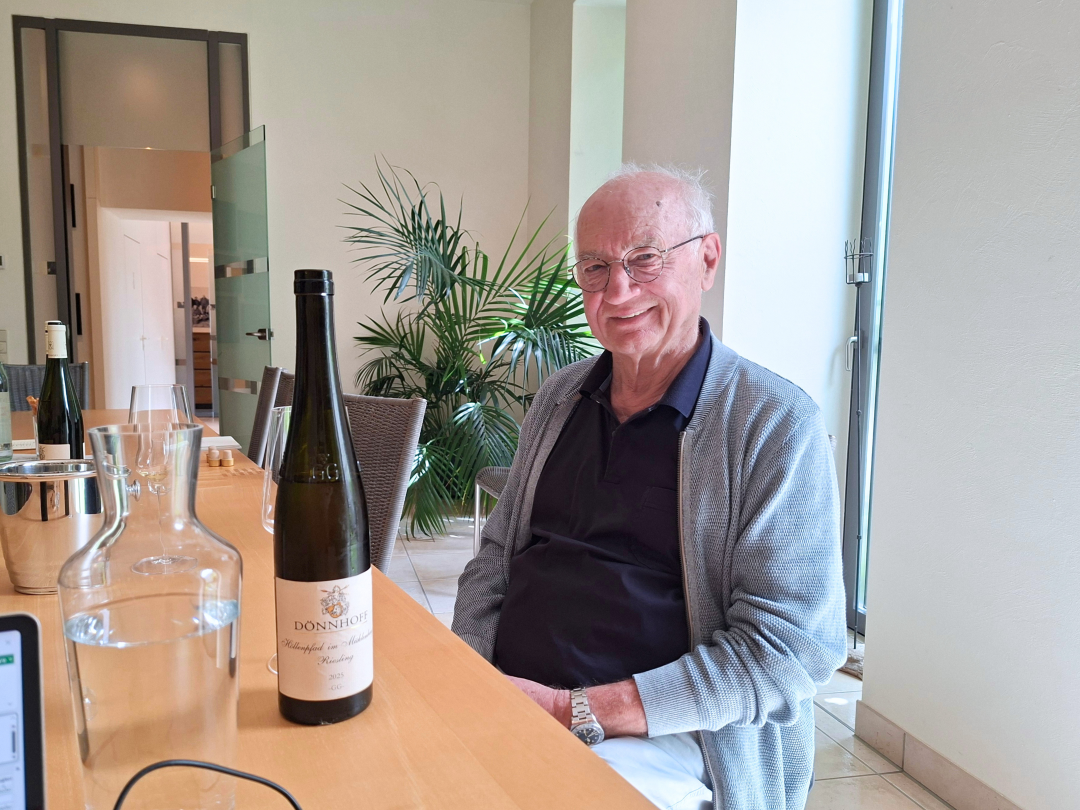
Helmuth Dönnhoff in his tasting room in Niederhausen.
Sweet Marvels
Two thousand twenty-five was also a year for sweet wines with and without botrytis. The fruit, already concentrated by low yields and ample ripeness, often began shriveling on the vine, resulting in Spätlesen and many Auslesen. In many cases, ripeness was already too high for the light-footed Kabinett style. Some producers picked botrytised fruit, while for others the botrytis had dried out by harvest. With or without botrytis, 2025 Auslesen are abundant. One winemaker joked that he had made enough Auslese to last him for the rest of his life. Few made TBAs, as that final concentration wasn’t often possible with more rain coming. Sweet-wine lovers, however, are spoilt for choice in 2025.
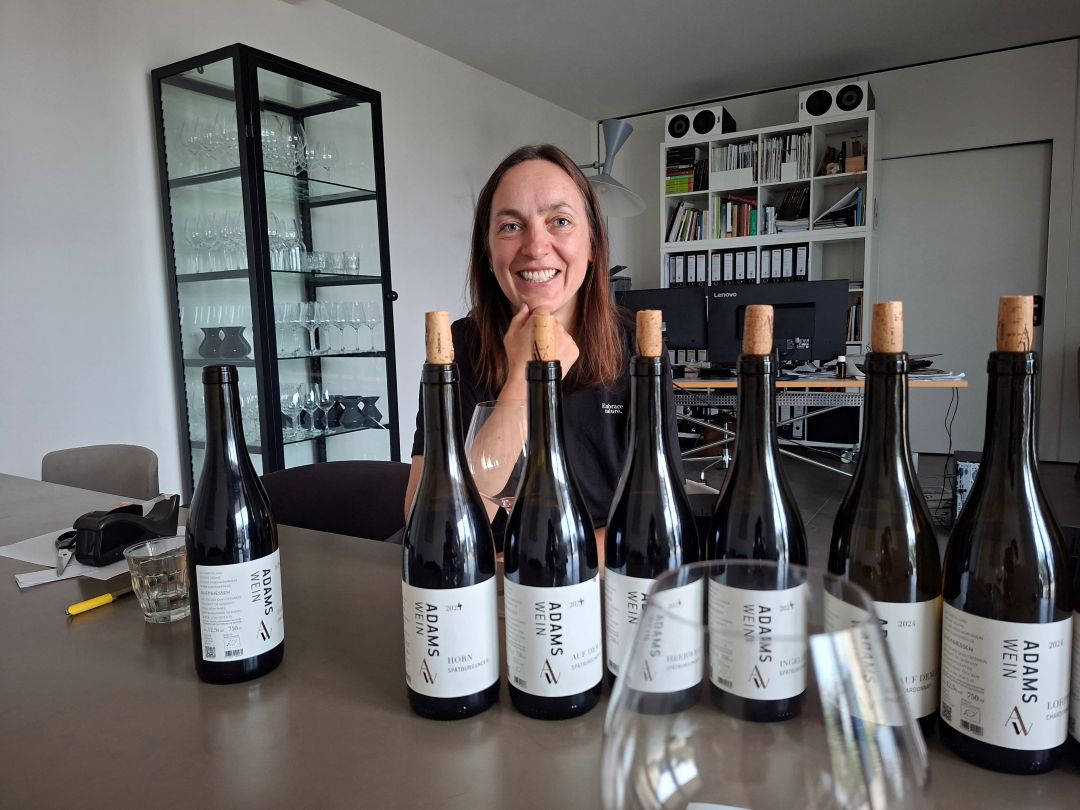
Simone Adams has become a real beacon among German Pinot Noir producers.
Spätburgunder Special
For some reason, many consumers are still skeptical about German Pinot Noir. I wish they could taste some of the silky, beautiful wines I came across for this report. The 2024 Pinot Noirs should finally drive it home that Germany can and does excel with Spätburgunder. Standout names are Thörle, Keller, Knewitz, Adamswein, Wagner-Stempel and Battenfeld-Spanier.
I tasted the wines for this report during estate visits in early July 2026. Readers will find more detail on individual estates in the producer commentaries.
© 2026, Vinous. No portion of this article may be copied, shared or redistributed without prior consent from Vinous. Doing so is not only a violation of our copyright but also threatens the survival of independent wine criticism.
You Might Also Enjoy
Rheinhessen, Pfalz & Mittelrhein: A Game of Patience, Anne Krebiehl MW, September 2025
Rheingau and Nahe 2024: Rain, Frost and Unexpected Brilliance, Anne Krebiehl MW, September 2025
Rheinhessen & Rheingau: Riesling Triumphs After Rain, Anne Krebiehl MW, October 2024
Nahe, Pfalz & Mittelrhein–Of Wheat, Chaff and Thrill, Anne Krebiehl MW, September 2024
2022 Rheingau, Pfalz and Mittelrhein: Before, During and After the Rain, Anne Krebiehl MW, December 2023
Show all the wines (sorted by score)
- Adamswein
- Battenfeld-Spanier
- Braunewell
- Christopher Barth
- Dexheimer
- Dönnhoff
- Dr Crusius
- Dreissigacker
- Emrich-Schönleber
- Fritz Ekkehard Huff
- Groebe
- Gunderloch
- Gut Hermannsberg
- Jakob Schneider
- Joh. Bapt. Schäfer
- Kai Schätzel
- Keller
- Knewitz
- Korrell
- Kühling-Gillot
- Lanius-Knab
- Matthias Müller
- Ratzenberger
- Riffel
- Saalwächter
- Schäfer-Fröhlich
- Schlossgut Diel
- Stefan Winter
- Tesch
- Thörle
- Toni Jost
- Wagner-Stempel
- Weingut Baer
- Weingut Weedenborn
- Wittmann