
Browse using the new Vinous website now. Launch →
Printed by, and for the sole use of . All rights reserved © 2015 Vinous Media
English Still & Sparkling: Forging Ahead
BY ANNE KREBIEHL MW | JANUARY 2, 2026
England delivered a slew of delicious sparkling wines for this report. Lovers of Blanc de Blanc styles should pay special attention. The top-scoring wines are all long-aged and vintage-dated, beautifully coming into their own now and claiming their place amongst the global ranks. Beyond Chardonnay, one long-aged, pure Pinot Meunier surprised with its elegance. Over in the still wine camp, England’s performance is equally impressive, especially when it comes to Chardonnay. Plus, there is exciting news: the first Burgundians have made wine in Essex.
Sparkling Wines: Proof of Patience
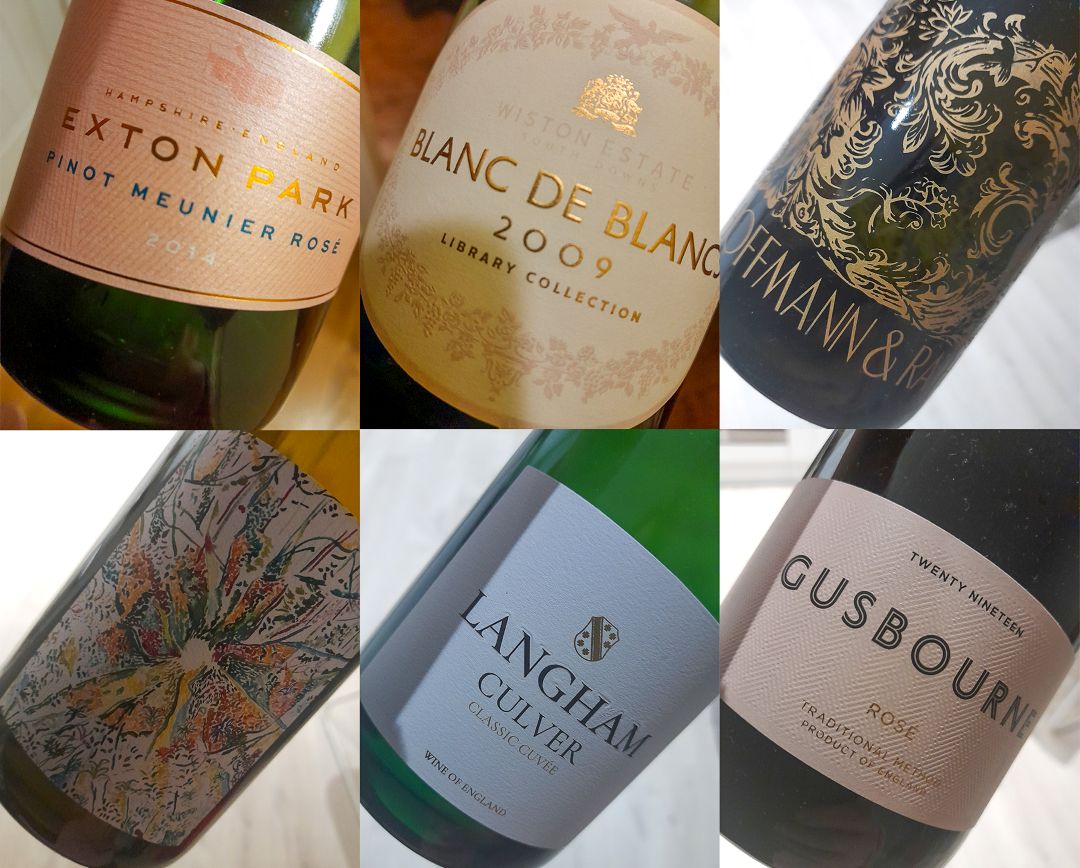
Two thousand twenty-five saw some beautiful late releases of vintage-dated wines going back to 2009. Wines from 2013, 2014, 2015 and 2016 are showing quite well, with one pleasant surprise from the super-difficult 2012 vintage, which goes to show that generalisations are just that. The beauty of all these long-aged wines is their freshness. Of the best wines in this report, none are tired or merely evolved; no, these wines have only just started on their trajectory. They have a calm, reassuring, deep-seated energy. I salute the winemakers who put away these bottles for this amount of time, even in limited quantities. They understood and recognized then what is obvious now. This demonstrates their belief and confidence in the intrinsic quality and depth of these wines, well beyond any youthful fruitiness, as attractive as that can be. These wines also show us what is yet in store as vines grow older and root deeper, as expertise and experience increase.
Challenging Times
At the time of writing, news broke that Ridgeview—one of England’s most prominent producers, and pioneers to boot—entered administration (insolvency) in late September 2025. The speculation is that they expanded and took on debt, which, in this high-interest-rate environment, became too challenging. Other wineries are for sale, or “looking for investment,” even as owners soldier on and keep on financing and investing, despite the difficulty in turning a profit. Making sparkling wine in a marginal climate with wildly varying vintages and yields requires much patience and ever deeper pockets. However, this reality has not prevented new plantings. Wine GB, the representative body of the UK wine industry, reports 4,841 hectares under vine in 2024, which is 632 more than in 2023. Of these, 3,763 hectares are now bearing fruit, up from 3,230 hectares the year before. So, this still is a growing industry, albeit a small one.
Sparkling Heartlands and Outposts
Of the 122 sparkling wines reviewed for this report, only 32 are non-vintage; again, this is related to the cost of building up and holding back reserves. Notable among these is Rock Story, a multi-vintage release from Sugrue South Downs that contains 40% reserve wines going back to 2011. This is still rare in England. The vast majority of sparkling wines are from the southern counties of Kent, East and West Sussex and Hampshire, with a handful of entries from Devon, Dorset and Wiltshire in the west. Oxfordshire, Buckinghamshire and Berkshire are represented, too, as are wines from Norfolk and, for the first time, Herefordshire. These latter two are on the 52nd degree of latitude—further north than Calgary in Canada!

Alex Moreau and Nick Speakman in Speakman's Missing Gate Vineyard in Essex.
The Still East
After tasting nearly 90 English still wines, the growing importance of this category is evident, and the geographic focus is shifting east. A mere handful of wines are from Sussex and further west, as it is difficult to achieve the ripeness and dry weather needed to make quality still wine. England’s west coast takes most of the rain; it gradually gets drier the further east you go. London’s famous Green Park is now a misnomer in summer, as its lawns usually look ochre by then, as do most of the city’s metropolitan parks. There are thus more still wines from Kent and Norfolk, with the vast majority from Essex. Most of these are from the Crouch Valley, England’s sunniest and driest spot. Some Essex Pinot Noirs from the hot summer of 2022 taste far warmer and riper than anyone would associate with England, clocking in at up to 13.5% alcohol. Charlie Holland, winemaker at Jackson Family Wines, who launched their first Chardonnay under the Marbury label earlier this year, said, “I was trying to work out what makes the Crouch Valley special. Is it the climate? is it the soils? Is it viticulture or witchcraft? Are they just being braver than other people? The reality is it's a little bit of all of these things.”
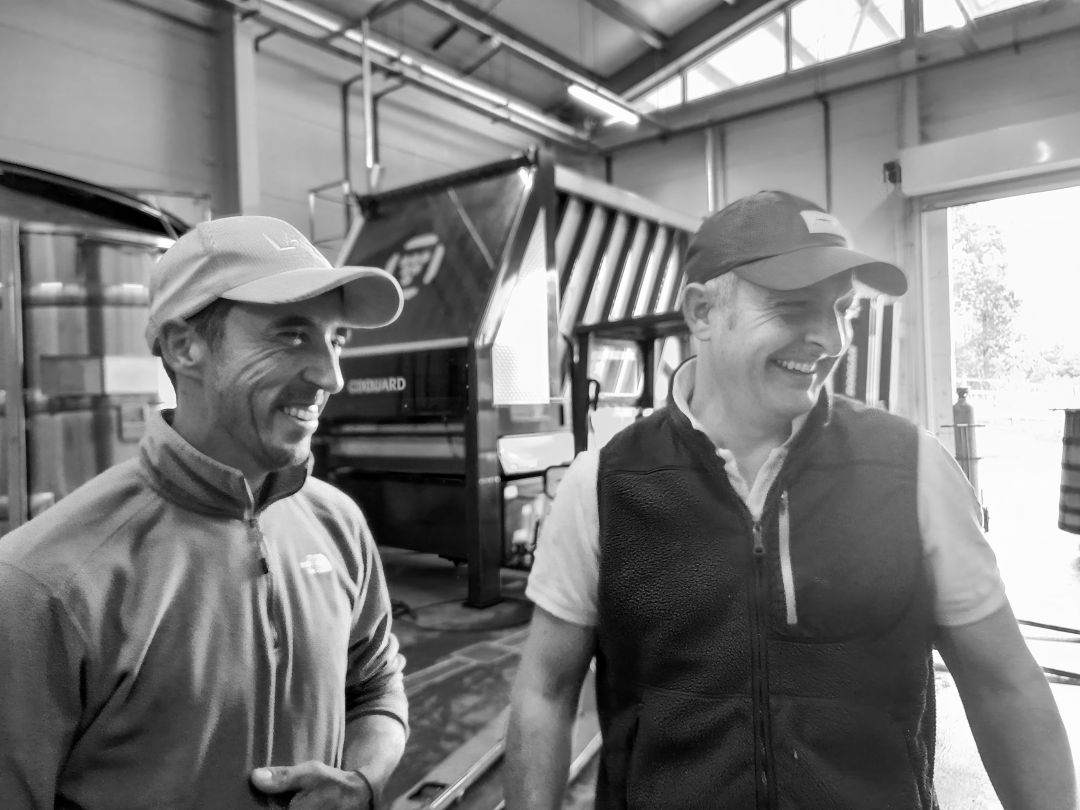
Pierre Duroché and Liam Idzikowski during their collaboration at Danbury Ridge.
Famous Visitors
Charlie Holland is not alone in seeing that this part of England offers completely different possibilities. There certainly is momentum in Essex. Wine GB advised that plantings in Essex grew from 93 hectares in 2010 to 493 hectares in 2024, more than a five-fold increase. Under the auspices of London wine merchant Flint Wines and its co-founder Jason Haynes, two Burgundian winemakers arrived in October 2025 to make wine from Essex fruit: Alex Moreau of Chassagne-Montrachet made his first English Chardonnay from fruit grown at Missing Gate vineyard, while Pierre Duroché from Gevrey-Chambertin made his first English Pinot Noir from fruit grown at Danbury Ridge. Their presence has caused quite a stir. This partnership project had been in the pipeline for a while. It could not be realized in 2024, as the Burgundians hardly dared to leave their vineyards in that challenging vintage. It all feels like it was meant to be, since those two adventurous vignerons were able to make their maiden English vintages with sensationally healthy fruit from 2025. We will have to wait to taste their wines, but their presence bodes well for Essex and English still wine as a whole. Both Moreau and Duroché were all smiles as they picked their fruit in early October.
A Clear Varietal Course
The vast majority of the still wines in this report are made either solely from Chardonnay, Pinot Noir (and Pinot Noir Précoce), Pinot Meunier, Pinot Blanc and Pinot Gris or from blends of these varieties. Bacchus, England’s fourth-most planted variety, only accounts for nine entries. While the Germanic varieties of yesteryear still thrive—a Schönburger from Norfolk was a real surprise—the direction of travel is clear. As England’s winemakers branch out, they are more likely to plant Sauvignon Blanc or Albariño than lesser-known hybrids bred for cool climates. At this stage, there is no question that England is a world-class producer of sparkling wine, but still wine is catching up fast.
I tasted most of the wines in this report at home in London, with a handful at outside tastings and winery visits.
© 2026, Vinous. No portion of this article may be copied, shared or redistributed without prior consent from Vinous. Doing so is not only a violation of our copyright but also threatens the survival of independent wine criticism.You Might Also Enjoy
English Still Wine: Much Promise, Much Afoot, Anne Krebiehl MW, April 2025
English Sparkling Wine: Effervescence and Reserve, Anne Krebiehl MW, February 2025
The Only Way Is Essex: Danbury Ridge, Neal Martin, April 2024
Albion Gets Serious: English Sparkling Wine, Neal Martin, July 2020
Show all the wines (sorted by score)
- Ambriel
- Balfour Winery
- Black Book Winery
- Black Chalk
- Bolney Estate
- Burn Valley Vineyard
- Busi-Jacobsohn
- Carvers Hill Estate
- Chapel Down
- Charles Palmer
- Coates & Seely
- Danbury Ridge
- Digby
- Domaine Hugo
- Exton Park Vineyard
- Flint Vineyard
- Great Wheatley
- Gusbourne
- Gutter & Stars
- Hambledon
- Harrow & Hope
- Hattingley Valley Wines
- Henners
- Hoffmann & Rathbone
- House on the Hill
- Hundred Hills
- Langham Wine
- Leonardslee
- Louis Pommery
- Lyme Bay
- Lyme Bay Winery
- Marbury
- Missing Gate
- Nyetimber
- Oastbrook
- Oxney
- Penn Croft
- Raimes Family Vineyards
- Rathfinny
- Ridgeview
- Roebuck Estates
- Sandridge Barton
- Simpsons
- Sugrue South Downs
- The Evolution Winery
- The Grange
- The Heretics
- Walgate
- Westwell Wines
- Weyborne
- Whitewolfe Estates
- Windsor Great Park Vineyard
- Wiston
- Wyfold Vineyard