
Browse using the new Vinous website now. Launch →
Printed by, and for the sole use of . All rights reserved © 2015 Vinous Media
Lazio: The Sleeping Giant of Central Italy
BY ERIC GUIDO | JUNE 11, 2026
In the six years I have covered Italy at Vinous, only one of my articles has touched upon Lazio, and even then, it shared the spotlight with Umbria. The Lazio wines I have tasted over the years have been inconsistent. A great wine from Lazio was once the exception, not the rule. I once asked a winemaker why there weren’t more great wines coming out of the region, to which they replied, “Many producers don’t think beyond our region’s borders.”
Each year, as I drove through Lazio’s gorgeous surroundings—thick, lush forests over undulating hillsides with castles, historic towns and vineyards in the distance—I wondered why this beautiful region with fascinating indigenous varieties and volcanic terroirs wasn’t more prominently on my radar. There had to be great wines to uncover. This year, I was determined to make the effort. Despite miserable weather, a dog bite that left me with an infection and far too little time to take in any local flavor, I departed Lazio thoroughly impressed.
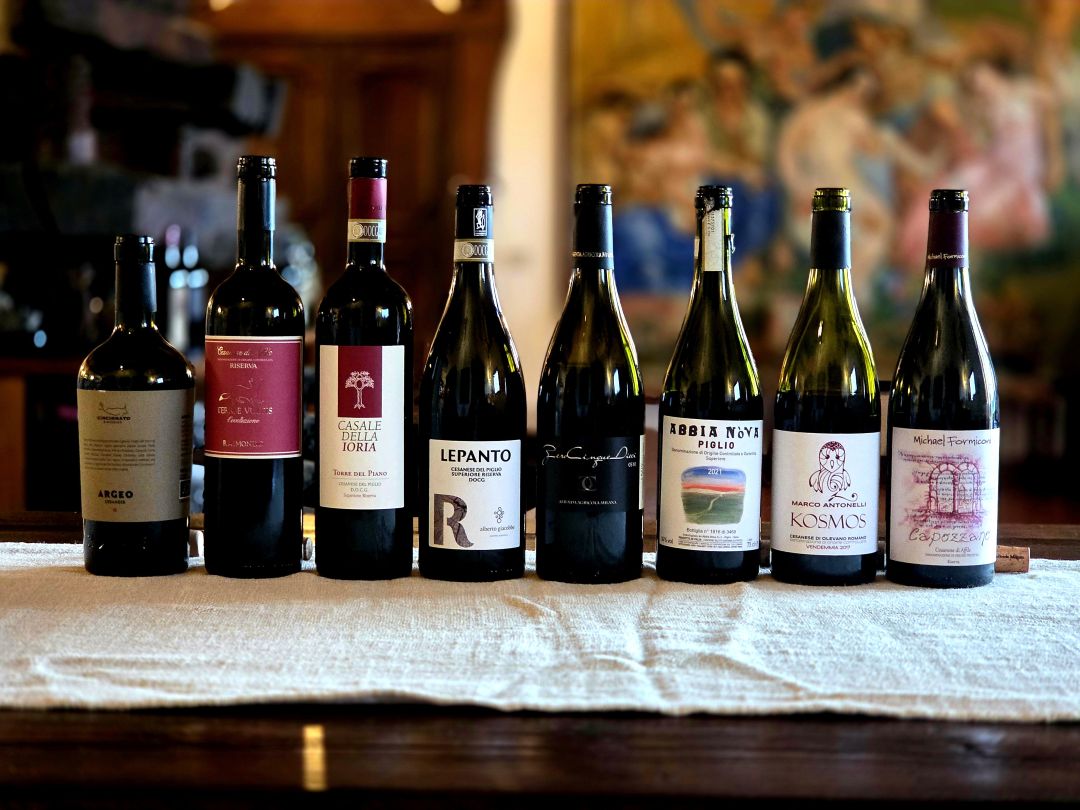
A stunning mix of Cesaneses from across multiple appellations.
A Tale as Old as Time
Why are wines from Lazio not more prominent on the world stage? Sadly, like many regions in Italy, Lazio fell victim to the same pitfalls of overproduction and commercialization that most of the country did throughout the twentieth century. The history of winemaking in Lazio goes back over 3,000 years, predating the Romans. Even as the Empire fell and Catholicism spread across Italy, wine production remained Lazio’s primary focus. The wines filled the restaurants of Rome and the cellars of the Vatican. However, following the devastating effects of phylloxera and the two World Wars, the aim of local wine production shifted to marketing to local tourists.
That’s not to say that Lazio didn’t have visionaries. In the 1940s, the legendary Prince Alberico Boncompagni Ludovisi planted Cabernet Sauvignon, Merlot and Sémillon just within the borders of Rome. He even introduced organic principles throughout the 1960s and 1970s. Though Ludovisi tore out nearly all his vineyards in the mid-1990s, four rows of old-vine Merlot and Cabernet Sauvignon and three rows of Sémillon still exist. That fruit now goes into the Tenuta Principe Alberico wines, overseen by Alessia Antinori. It was Cesanese, though, that would prove the catalyst for the surge in quality across the region, as a handful of small producers in the late 1990s began to see what their native grape could actually do.

The original old-vine parcel that Prince Alberico Boncompagni Ludovisi planted, now tended by Alessia Antinori.
Terroir And Varieties
Lazio has three distinct terroirs. Lazio’s northwest borders Tuscany and shares many of its features, with gentle rolling hills and a Mediterranean landscape. This area mainly focuses on the Aleatico variety for red wines, and Trebbiano and Malvasia for whites. Though the northwest is not usually considered a hot spot for quality wine, a small number of boutique wineries are pushing the bar higher. For example, Andrea Occhipinti takes Aleatico beyond its usual lively, floral personality and imparts depth and structural complexity. Additionally, San Giovenale, producer of the Habemus label, crafts internationally styled reds from Rhône varieties and Cabernet Franc.
Further east, where Lazio borders Umbria, the Orvieto DOC spills into the region. Both sides of the border share the well-draining volcanic tuff (tufo) soils rich in calcium and potassium, created by the ancient Mount Vulsini volcano. Grechetto excels, but you’ll find the best Orvieto in the Classico region on the Umbrian side of the border.
Finally, Lazio’s coastal areas are quite flat (whereas the bulk of the region is hilly) with only gentle changes in elevation above sea level. The longstanding reference point here is Casale del Giglio, another foundational Lazio estate. Beginning in 1985, founder Dino Santarelli took a scientific approach to planting the vineyards, experimenting with different varieties to determine which performed best in the area. Today, under the management of Antonio Santarelli, Casale del Giglio stands as a benchmark for terroir-focused producers in Lazio. While a host of international varieties excel in these sandy soils, Bellone is the most important indigenous variety. Easily one of Italy's most underrated white grapes, Bellone’s high acidity and structure make for excellent dry, sparkling and sweet wines. The variety yields wines with a stern core of minerality and intense citrus/herbal tones. Following my recent trip, I find myself tempted to carve out a section of my cellar for Bellone.
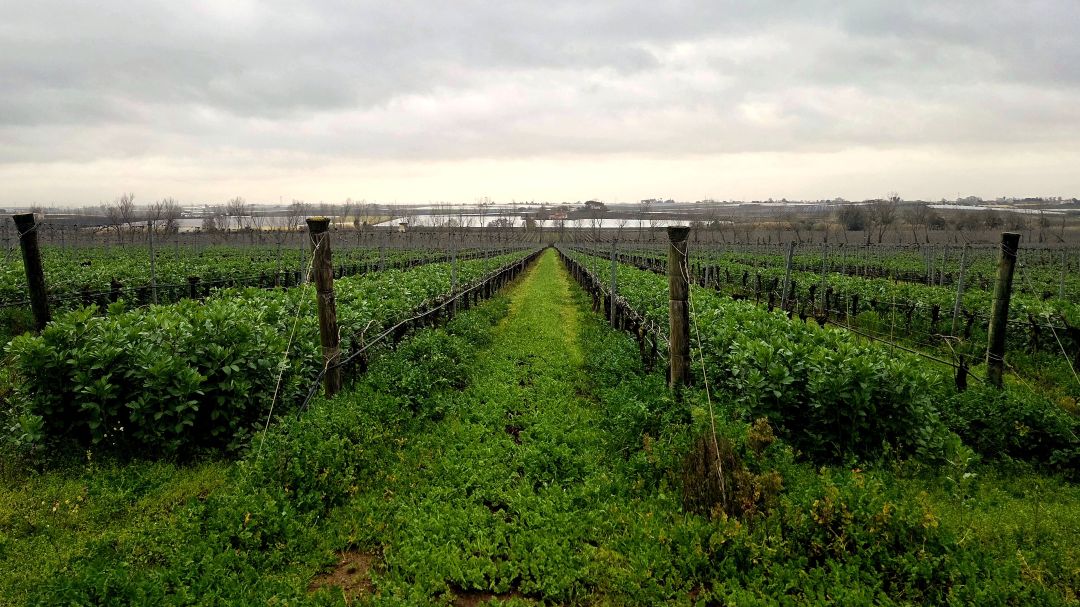
Casale del Giglio’s coastal-influenced vineyards.
The big draw of Lazio’s terroir is its volcanic hills. Lazio is on the eastern border of the Apennine Mountains, and the foothills host many of Lazio’s most important DOCs and DOCGs, such as the Frascati Superiore DOCG in the Castelli Romani hills, southeast of Rome. Malvasia del Lazio (Puntinata) is the base for Frascati Superiore. Blending regulations permit the inclusion of up to 30% Trebbiano Toscano, Bombino Bianco, Greco or Bellone, but most quality-minded producers focus on a blend of Malvasia del Lazio, Bombino Bianco and Greco. The best Frascati Superiores are aromatic and classy, more mineral and structured than Orvieto. These wines age quite well. The biggest standouts from my recent trip include the Frascati Superiores from Merumalia, Villa Simone and Gabriele Magno.
Finally, there’s the red variety Cesanese, the regional darling, with its two DOCs and one DOCG. Cesanese has generated more global interest in Lazio than any other variety. Three main clones of Cesanese yield completely different results: Cesanese d’Affile gives rise to the highly aromatic, complex, structured, terroir-transparent wines that are propelling Lazio forward on the world stage. Cesanese Comune makes a rounder, more approachable, food-friendly wine, while Cesanese Nostrano is the rarest of the three, planted mainly in the northeast and known for yielding bright, approachable wines.
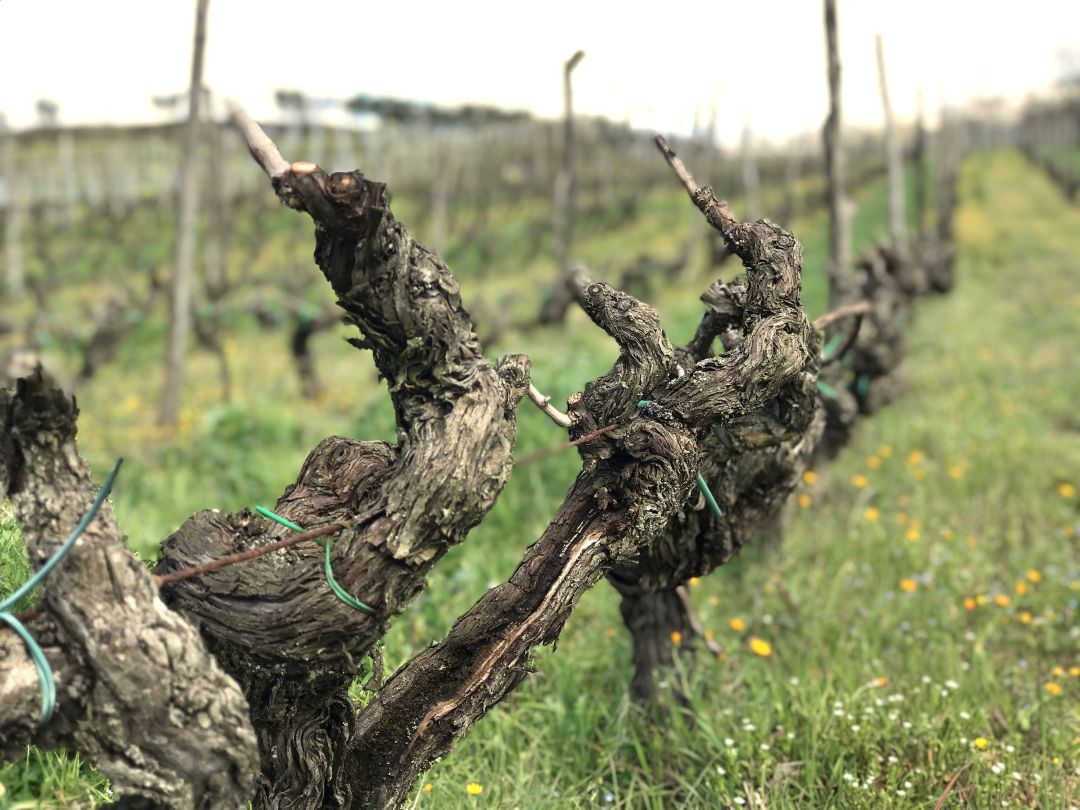
Old-vine Cesanese d’Affile in Damiano Ciolli’s Cirsium vineyard.
Due to similar naming, there is often confusion over Cesanese clones versus appellations. The three Cesanese-growing zones form a cluster in central Lazio. The largest of the three zones, the Cesanese del Piglio DOCG has dark red, iron-rich, volcanic clay soils at elevations between 300 and 600 meters. Look to producers like Maria Ernesta Berucci, Abbia Nòva and Casale della Ioria for some excellent varietal Cesanese d’Affiles from the Cesanese del Piglio DOCG.
The Cesanese di Affile DOC (not to be confused with the Cesanese d’Affile clone), is a smaller mountainous area in the northeast of the cluster. This area contains more calcareous clay and limestone, and incredibly steep vineyards. I found the wines from Raimondo to be the most exciting of the offerings from Cesanese di Affile.
Lastly, the Cesanese di Olevano Romano DOC contains both lower-lying plains and elevations of up to 450 meters. Though this DOC is known as the primary source for the less prestigious Cesanese Comune clone, the Cesanese d’Affile clone dominates at higher elevations. There are several excellent producers in Cesanese di Olevano Romano, namely Marco Antonelli and the esteemed Damiano Ciolli. I do not find an overwhelming difference in terroir quality between Cesanese del Piglio and the two DOCs. However, quality varies by producer. Consistency remains a problem for Lazio.
Vintages in the Market: 2022, 2023 and 2024
Vintages in Lazio are often comparable to those in southern Tuscany. However, given that its most important growing areas are concentrated closer to the Apennine Mountains, it’s important to evaluate Lazio vintages on their own terms.
There’s a lot of pleasure to be found in the 2022s; the wines are concentrated, ripe and nicely structured. This was one of the hottest and driest growing seasons on record, halting development throughout the summer months. However, late-summer rains restored balance by extending the harvest and allowing berries to achieve phenolic ripeness.
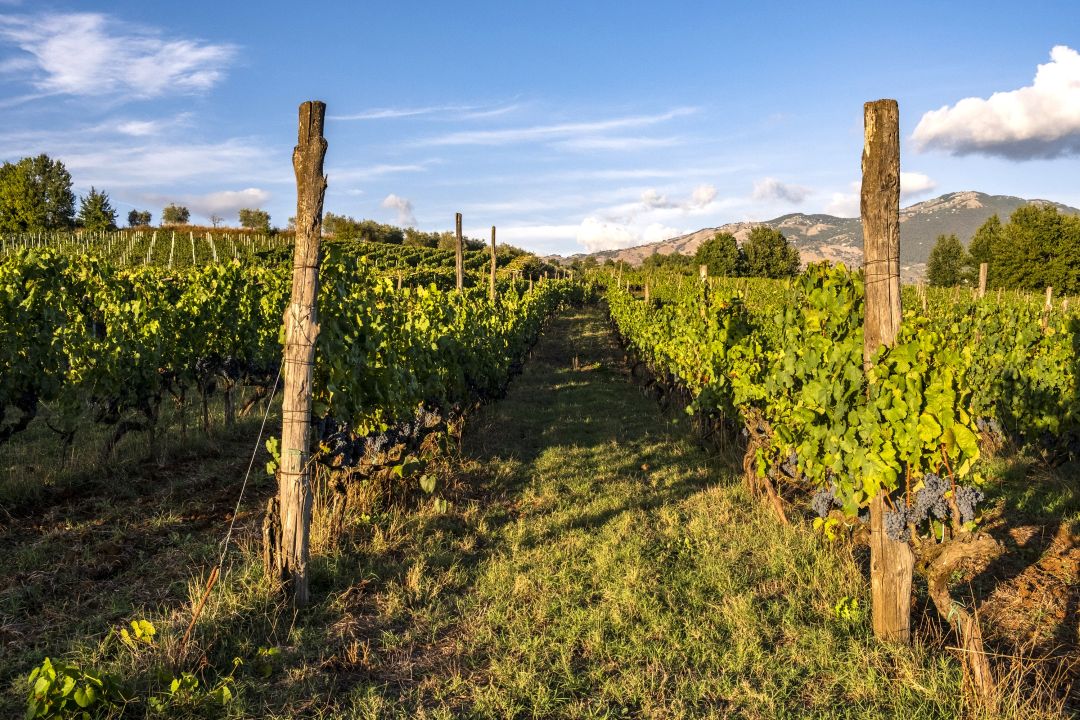
The Cesanese d’Affile clone in Lazio's Cesanese di Olevano Romano DOC.
The 2023 reds are pretty and lighter in feel. White varieties performed better than reds, achieving higher mineral concentration and acidity. Lazio suffered through the same persistent rains and overcast conditions in the spring as most of Italy. Peronospora (downy mildew) decimated Cesanese's thin skins. The summer months brought warm, humid conditions that pulled moisture from the soil. Some estates lost up to 90% of their production. Expect inconsistent quality across the region in 2023.
Both red and white 2024s mix ripeness with high acidity. This warm vintage began with significant rainfall. Luckily, breaks in the weather and windy conditions allowed for steady vine health throughout the spring. Those same heavy rains also replenished soil moisture reserves, which mitigated the effects of the summer's intense heat. Late-harvest rains added further disease pressure and, in many cases, reduced production by as much as 30%. The wines have higher acidity but lower alcohol and should drink well relatively early.
I tasted the wines for this report in Lazio in March 2026.
© 2026, Vinous. No portion of this article may be copied, shared or redistributed without prior consent from Vinous. Doing so is not only a violation of our copyright but also threatens the survival of independent wine criticism.
You Might Also Enjoy
Abruzzo's Triumphant 2025 Vintage, Eric Guido, June 2026
2024 Vulture: Defying the Paradigm, Eric Guido, May 2026
Making The Case for Campania, Eric Guido, September 2025
Emilia-Romagna: Chomping at the Bit, Eric Guido, May 2025
Umbria: Peeling Back the Layers, Eric Guido, October 2024
Show all the wines (sorted by score)
- Abbia Nòva
- Alberto Giacobbe
- Andrea Occhipinti
- Cantina Castello di Torre In Pietra
- Casale del Giglio
- Casale della Ioria
- Cincinnato
- Damiano Ciolli
- De Sanctis
- Famiglia Cotarella
- Gabriele Magno
- Marco Antonelli
- Marco Carpineti
- Maria Ernesta Berucci
- Merumalia
- Michael Formiconi
- Milana Gioacchino
- Monti Cecubi
- Omina Romana
- Palazzo Prossedi
- Poggio Le Volpi
- Raimondo
- Riserva della Cascina
- San Giovenale
- Sant'Andrea
- Sergio Mottura
- Tenuta di Fiorano - Principe Alessandrojacopo Ludovisi Boncompagni
- Tenuta Principe Alberico
- Villa Simone