
Browse using the new Vinous website now. Launch →
Printed by, and for the sole use of . All rights reserved © 2015 Vinous Media
Northern Rhône 2024: One Hill Rises
BY NICOLAS GREINACHER | JANUARY 29, 2026
No region is better suited to showcase Syrah’s many facets than its birthplace, the Northern Rhône. Syrah’s compatibility with whole-cluster fermentation, barrel aging and co-fermentation with white varieties, along with its adaptability to different soil types, allows for a wide stylistic range. And while over 80% of the Northern Rhône’s production is red wines, Viognier, Marsanne and Roussanne are far too compelling to overlook, having long carved out their own unique identities.
This report includes more than 700 tasting notes from over 100 producers, the result of a two-week visit in November 2025. I begin with a comprehensive examination of the challenging 2024 growing season, which left virtually no leeway for growers in managing their vineyards. Readers will also find detailed appellation-by-appellation evaluations, comparisons with other recent vintages, in-depth producer commentaries and an initial look at the extremely low-yielding 2025 vintage.
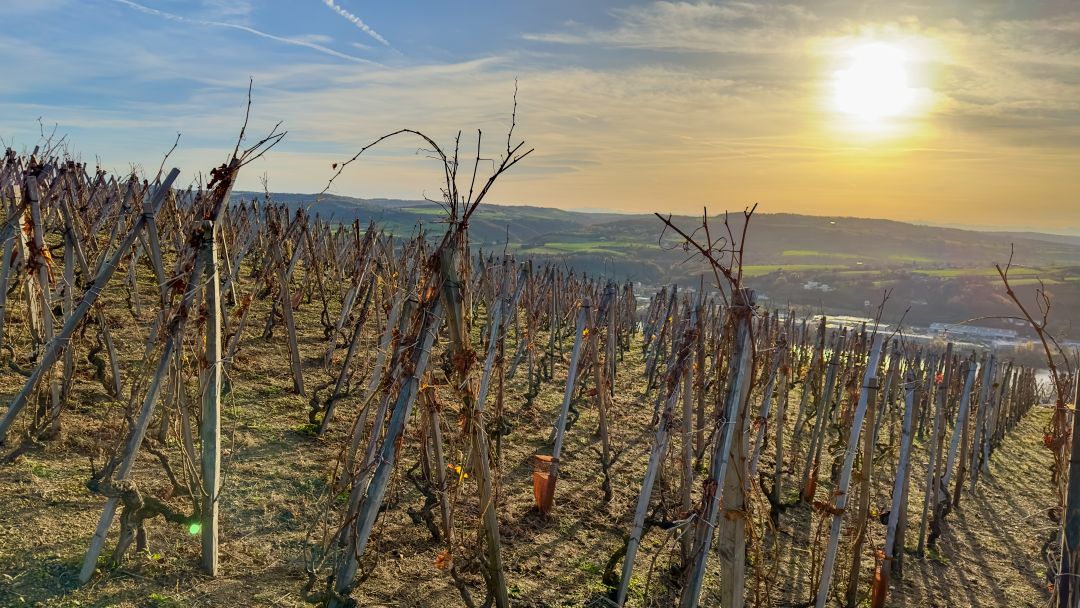
Leafless Syrah vines in Côte-Rôtie on a crisp November morning.
The 2024 Vintage
Two thousand twenty-four went down as one of the most demanding growing seasons in recent Northern Rhône history. Except for a brief pause in summer, it was wet throughout the year. Aggregated rainfall from January 1 to October 1 exceeded 700 millimetres (mm), surpassing the levels recorded in 2021, the wettest vintage in recent memory. Breaking the season into three key periods helps clarify what unfolded and how these weather conditions shaped grape quality.
Phase 1: Rainfall, Coulure and Downy Mildew
While precipitation was modest in the first two months of the year, heavy rain defined March, nearly 290% (!) above the 2010-2020 ten-year average. Temperatures in the year’s first quarter were mild, leading to an early budbreak, and although cluster emergence aligned with recent years, noticeable heterogeneity was already evident.
Flowering began at the end of May and concluded by mid-June under wet conditions. Progress was often slow, with marked variability even within the same parcel. Cases of coulure were frequent in white varieties such as Viognier, as well as in younger Syrah vines. This condition, in which flowers do not progress into viable berries, weakens fruit-set and can reduce yields. It is worth noting that Viognier is much more prone to coulure than Syrah, as confirmed by Christine Vernay of Condrieu’s Domaine Georges Vernay.
The combination of rainfall and warming temperatures facilitated the spread of downy mildew, with primary infections detected as early as mid-April. The situation quickly became concerning in warmer zones such as Saint-Péray, as well as certain parcels in Crozes-Hermitage and Hermitage. Some vineyards were already seriously affected by mid-May, as secondary infections rapidly overlapped with primary infections, and significant pre-flowering attacks led to severe crop losses. Exceptional May rainfall—up 68% compared to the 2010-2020 ten-year average—further fuelled the spread.
Although June was dryer than May, conditions still demanded continuous protective measures, particularly as leaf lesions became widespread across all appellations. Rainfall in the first half of July also required growers to maintain their protective programs. Implementing shoot-thinning after rigorous disbudding proved essential this year to effective vine-protection. These measures were all the more effective if initiated early in the season, a lesson learned from 2023.
As a result, growers had to apply frequent treatments to keep downy mildew in check, even during weekends, as Hermitage’s Guillaume Sorrel noted: “Treatment opportunities were so limited due to constant rainfall, and often fell on Sunday mornings. The workload was immense, with leaf removal, shoot-trimming and continuous treatments extending into August.” Jean-Louis Chave applied 12 treatments in total, roughly 50% more than in 2021, while Maxime Graillot and Emmanuel Darnaud both reported 13. Pierre Gonon confirmed 16 treatments for their white varieties.
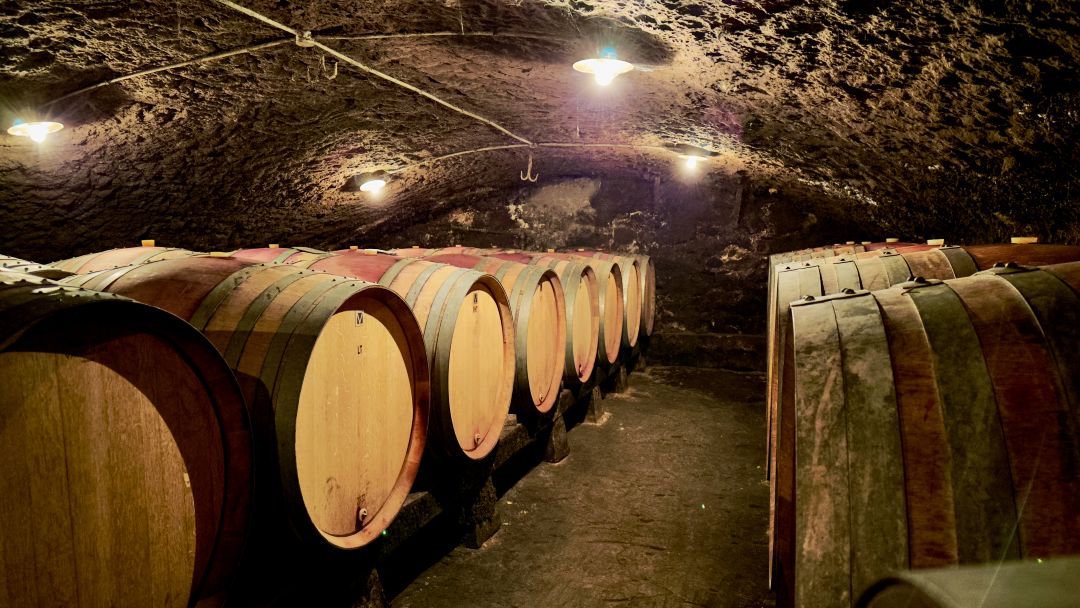
Gonon’s maturation cellars in the Saint-Joseph appellation is bound to raise the pulse of Syrah lovers.
It is important to stress that crop loss attributable to downy mildew varies and is difficult to quantify. While Syrah fared relatively well in general, downy mildew pressure on top of coulure was clearly one of the factors behind this year’s lower yields in white varieties. Powdery mildew was less problematic in 2024, and the disease was mostly well controlled.
Another important factor was the behaviour of the Mistral, the cool northern wind that typically helps maintain sanitary conditions in vineyards after rainfall. According to Pierre Gonon, the Mistral’s usual rhythm was disrupted in 2024: “I usually observe the following weather pattern: for up to three days, southern winds cause temperatures to rise. Then comes the storm. After the storm, the Mistral takes over, and the weather turns beautiful until the southern winds come again, and so forth. But in 2024, that pattern rarely happened. There was less overall wind in the vineyards, which would have helped to dry the vines.”
Phase 2: A Welcome Break in the Clouds
From July 22 all the way to September 4, almost no rain fell. This dry spell was accompanied by high temperatures, with daily maximums exceeding 30°C on nearly every day of that period. There were eight days when temperatures even rose above 35°C. These conditions caused only a few mild symptoms of grape sunburn—far less extensive than in 2023, when temperatures above 40°C were recorded at the end of August.
Although the improved weather slowed the spread of downy mildew, drought issues began to emerge. Because many vines were not prepared for the sudden onset of drought, vines (especially younger ones) began to show signs of water stress. Véraison progressed slowly and in some areas extended into mid-August. By early September, the first white grapes were harvested.
Phase 3: The Wet Weather Returns
Water stress—which had occasionally begun to emerge in early September, causing initial signs of ripening blockage—came to an end with the early September rains of roughly 85 mm. These pre-harvest rainfalls were followed by a pronounced cooling period. Berry skins became more fragile, and occasional outbreaks of grey rot appeared. Aggregated September rainfall reached 123 mm, a whopping 82% increase from the 2010-2020 ten-year average.
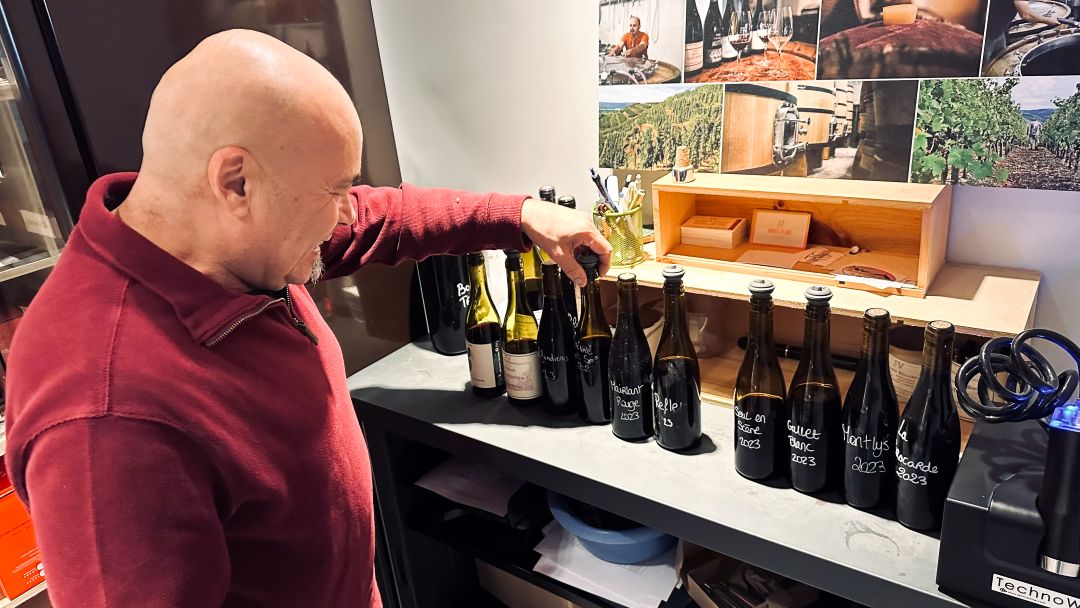
François Villard is one of the Northern Rhône’s most under-the-radar voices. His expressive wines reflect a career built from scratch, and his estate now spans key appellations from Saint-Péray to Côte-Rôtie.
Following the sudden temperature drop, sugar accumulation slowed. Because the occasional ripening blockages took place fairly late in the season, the resumption of sugar maturity progressed only modestly. As a result, producers had to monitor their vineyards closely, taking into account the evolution of all maturity parameters and increasingly fragile sanitary conditions. While many parcels were harvested at modest potential alcohol levels, those affected by drought or situated in later-ripening zones struggled to reach the desired degrees, necessitating chaptalization later on.
Furthermore, the 2024 harvest was cut short for many. According to Loïc Jamet of Domaine Jamet, “In 2023, we harvested over a nice four-week period, during which we could pick all the grapes on exactly the dates we wanted. In 2024, we only had a total of three weeks because of variable weather conditions.” I asked every winemaker I visited whether they would have waited a few more days to pick their Syrah had the weather allowed it, and the vast majority said yes, particularly in Saint-Joseph and Côte-Rôtie. But that didn’t stop the most skilled winemakers from crafting outstanding wines, even in those two regions.
Tasting the Wines
On initial assessment, the 2024s display modest alcohol levels consistent with 2021, 2022 and 2023, and below those of 2018, 2019 or 2020. Although the reds show exceptional freshness, often surpassing that of the preceding two vintages, acidity levels remain modest, which means 2024 can’t be seen as a high-acid vintage. The cool nighttime temperatures in September encouraged the development of varietal aromatic expressions that define the year, most notably a cool-toned austerity paired with an intense pepperiness. I actually can’t recall such a pronounced pepperiness in the Northern Rhône since the 2013 vintage.
Stylistically, the 2024s invite comparisons to the 2021 whites and reds, though the 2024s are riper and more concentrated. The 2024s offer less richness than the 2022s and 2023s. Issues with Brettanomyces are rare in 2024, a welcome development similar to what I observed in 2023, especially after 2022 yielded an unusually high number of wines affected by Brett. Overall, 2024 is shaping up to be a good vintage for reds, but the most skilled winemakers were able to craft outstanding wines that will stand the test of time.
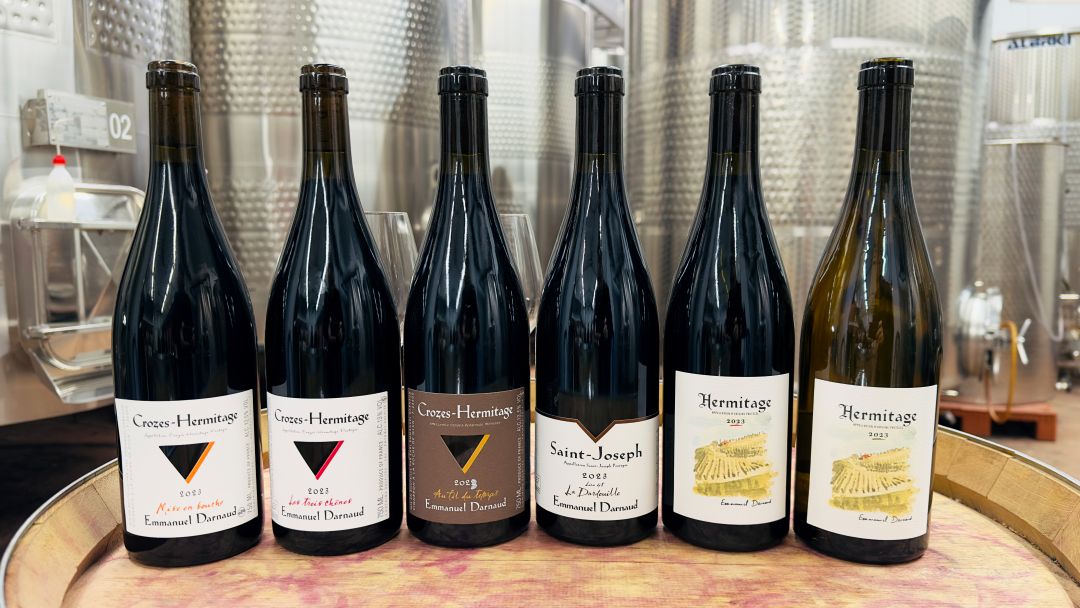
Consistently high quality across Crozes-Hermitage, Saint-Joseph and Hermitage confirms Emmanuel Darnaud as one of the Northern Rhône’s must-watch talents.
As for the whites, the 2024s often match or even surpass the quality of both the 2022s and 2023s. The 2024s are slightly less rich than the 2023s but show with greater verve. Marsanne and Viognier were harvested in more stable weather conditions than Syrah, enabling optimal picking decisions. At this early stage, 2024 is shaping up to be a very good vintage for Northern Rhône whites, with Hermitage demonstrating particular poise. The best 2024 whites outperform the best 2024 reds, at least for now.
Average yields were 37 hl/ha across all Northern Rhône crus, representing a 5% reduction from 2023. In terms of appellation performance, readers will recall that Côte-Rôtie delivered the finest results in 2023, whereas in 2024, Hermitage took the lead. That brings me to an appellation-by-appellation assessment.
Hermitage
While September proved challenging across all Northern Rhône appellations, the majestic Hermitage hill allowed for steady ripening. When rainfall forecasts dictated picking dates, the grapes here were generally more advanced than those in appellations such as Côte-Rôtie or the northern sectors of Saint-Joseph. In a vintage like 2024, Hermitage demonstrated the strength of its terroir, producing wines that fully reflect its status as one of the Rhône Valley’s greatest sites.
The only caveat is that there was little fruit. Average yields for whites and reds combined reached just 28 hl/ha in 2024, roughly 25% less than in 2023. Jean-Louis Chave, who produced one of the finest red and white wines of the vintage, confirmed that his last day of harvest was September 18. “Although substantial rainfall was announced in the days that followed, I would not have waited even one day longer,” Chave told me. “The grapes were ready.” Along with Chave, M. Sorrel, E. Guigal, Delas Frères and Maison Chapoutier merit recognition for producing standout Hermitage in 2024.
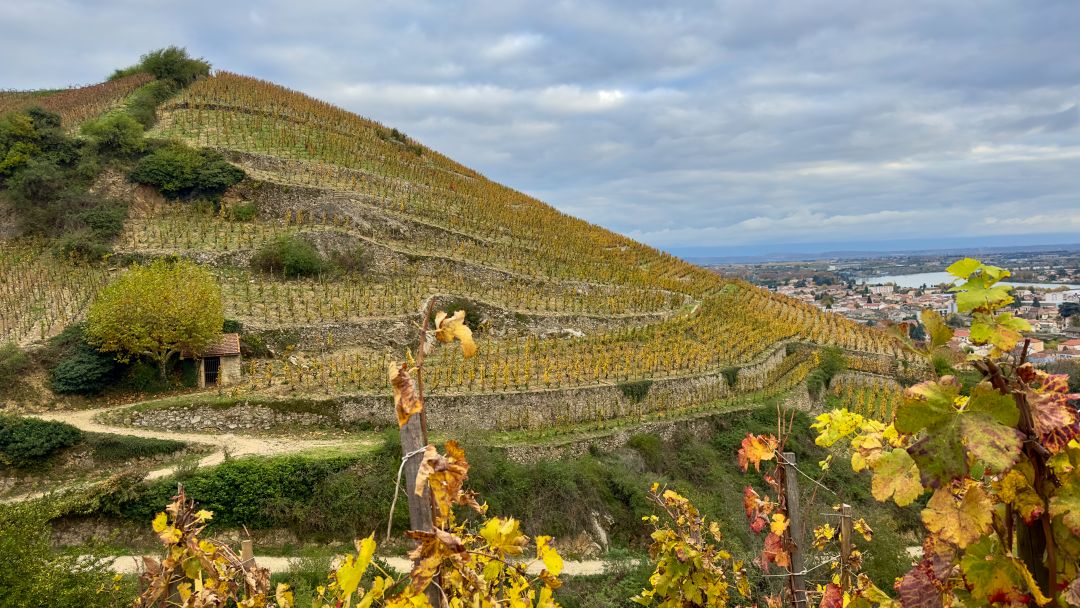
Hermitage gracefully weathered the challenging 2024 growing season.
Côte-Rôtie
The overall picture in this red-only appellation is heterogeneous in 2024, but despite the cool and wet harvest conditions, I encountered no green tannins. Philippe Guigal noted, “In 2024, phenolic ripeness arrived before sugar ripeness, which is quite a new phenomenon here.” The wines are moderately concentrated, marked by just-ripe fruit, the vintage’s hallmark pepperiness and an occasional floral lift. At this early barrel-sample stage, Domaine Jean-Paul, Corinne and Loïc Jamet and E. Guigal produced the most impressive wines.
Cornas
Though also variable, Cornas gave rise to several promising wines in 2024. Some growers, such as Delas Frères, were able to harvest fairly late—their Saint Pierre parcel was picked on October 11. At this stage, the wines show elegant Cornas austerity alongside fleshy and spicy tones. Average yields were 29 hl/ha, with Olivier Clape reporting 34 hl/ha. The most compelling wines come from Domaine A. Clape, Domaine Vincent Paris, Maison Chapoutier and Domaine Lionnet.
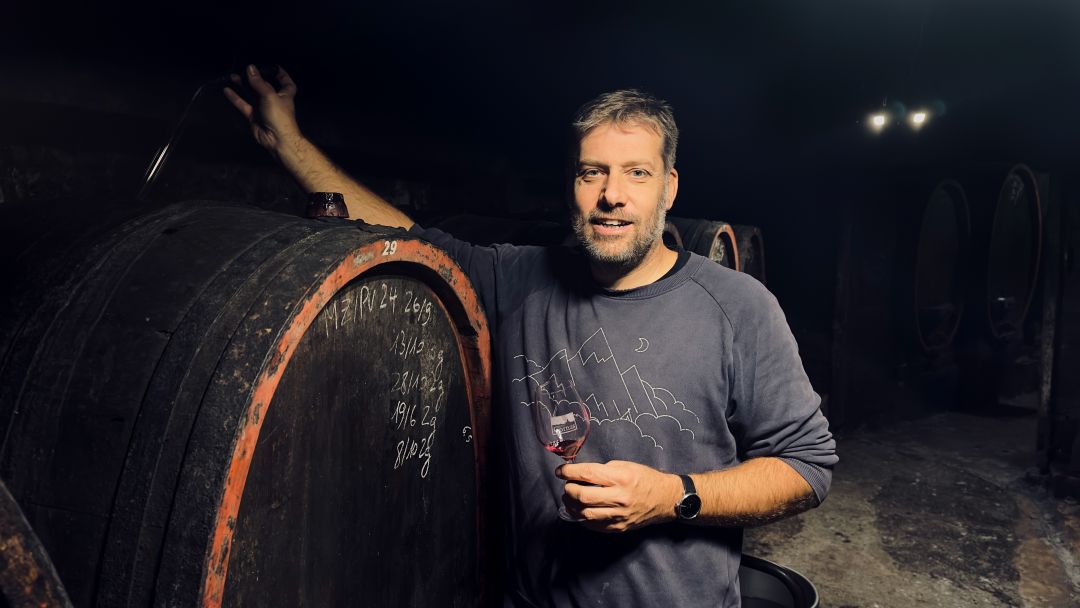
Olivier Clape pouring a delicious Cornas sample. Though his beloved father, Pierre-Marie, sadly passed away in June 2025, his presence was felt throughout the cellar.
Saint-Joseph
Mid-weight, fresh, elegant and peppery describe many red Saint-Josephs from the 2024 vintage, which stand in contrast to the more fruit-driven 2023s. Early results for 2024 are hit-and-miss, so buyers will need to select carefully. Nonetheless, skilled growers who were prepared to put in the hard work from the first to last day of the growing season achieved outstanding results, particularly in their white wines. Domaine Bernard Gripa, Domaine du Tunnel/Stéphane Robert, Domaine J. L. Chave, Domaine Pierre Gonon and Maison Chapoutier all belong on the shortlist for this appellation’s strongest performers.
Crozes-Hermitage
“Two thousand twenty-four is a vintage that was born in hardship,” Maxime Graillot reflected during my visit. Tasting through 52 Crozes-Hermitage samples highlighted the year’s prominent pepper tones and notable freshness. While heterogeneous like some of the other appellations, the 2024s in Crozes are more consistent than the preceding 2023 vintage (when harvest was interrupted by a single massive rainfall) and show greater overall precision and aromatic complexity. Like in Hermitage and Saint Joseph, however, the finest Crozes-Hermitage 2024s are white, led by the group of Emmanuel Darnaud, Laurent Fayolle, M. Sorrel, Yann Chave, Yves Cuilleron and Domaine des Hauts Chassis.
Condrieu
Condrieu aficionados will find much to love in 2024, a promising vintage that offers no trace of overripeness and just enough flavour concentration to maintain a high level of elegance. Compared with the 2023s and 2022s, the 2024s show greater poise. Average yields were 32 hl/ha, a reduction of about 20% compared to 2023, with several producers reporting final volumes below 30 hl/ha. E. Guigal, Maison Chapoutier, Yves Cuilleron, Rémi Niero and Domaine André Perret all produced standout 2024 Condrieus. Readers should note that Domaine Vernay’s 2024 Condrieu Coteau de Vernon will be available for tasting at the end of 2026, in keeping with the domaine’s new late-release regime that was introduced with the 2022 vintage.
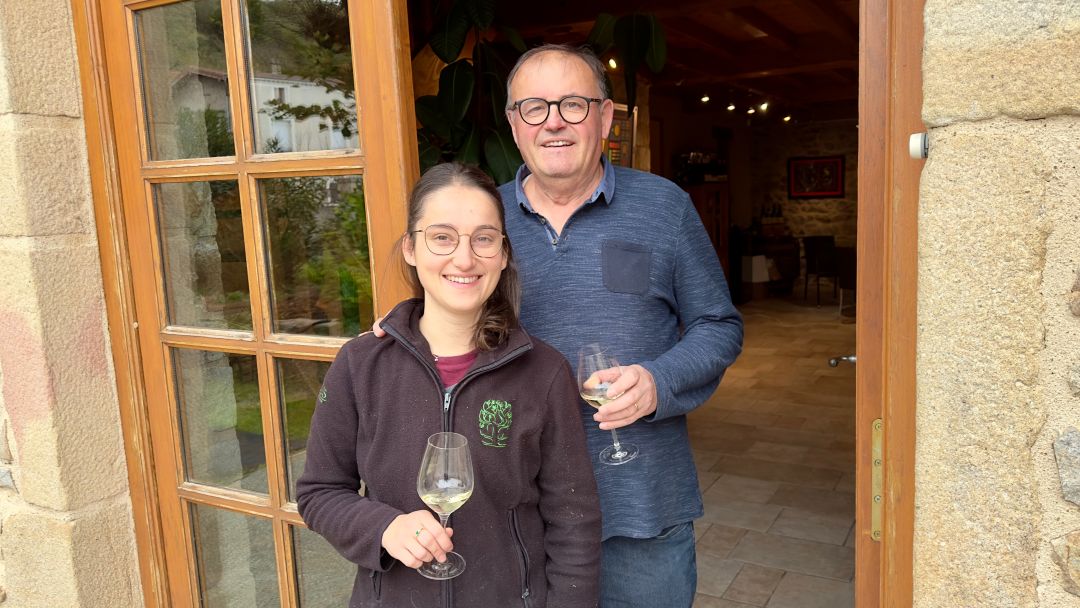
Marie and André Perret showcased their delicious Condrieus from 2024 and 2023.
Saint-Péray
This tiny white-only appellation remains in the shadow of all other Northern Rhône crus, yet its vineyard area has gradually expanded in recent years, now standing at 116 hectares. In 2024, Saint-Péray produced a mere 26 hl/ha, a decline of 25% from 2023. Tasting 25 different 2024s showed that the wines are a little more concentrated than the 2023s, though not necessarily marked by riper fruit profiles. Domaine Bernard Gripa, Domaine du Tunnel/Stéphane Robert and Maison Chapoutier crafted the top wines of the year.
A Final Word on 2023
Now in bottle, 2023 turned out to be a good to very good vintage in the Northern Rhône, with Côte-Rôtie performing the strongest and Crozes-Hermitage showing the weakest results. The reds are fruit-forward, lightly structured and immediately engaging. The best examples from Côte-Rôtie are superb, though perhaps not quite as compelling as those from the exceptional 2020 vintage. The whites include beautiful wines from Hermitage, Condrieu and Château-Grillet. One of the vintage’s key characteristics is its abundant freshness, in part thanks to generous yields that prevented excessive concentration. I doubt that the 2023 reds will ever shut down the way many 2020s or 2022s do right now, likely offering abundant drinking pleasure from the outset.
A First Glimpse at 2025 and a Potential New Cru
The upcoming 2025 vintage in the Northern Rhône is set to deliver even lower yields than 2024, the result of an early, very hot and extremely dry end of season that was capped by a prolonged August heatwave. Guillaume Sorrel reported a minuscule 17 hl/ha in Hermitage, while Olivier Clape managed 15 hl/ha in Cornas and Christine Vernay only 13 hl/ha in Condrieu. Several growers recorded the earliest harvest dates in their estates’ histories, bringing in the first white grapes by mid-August.
Finally, work is underway for Vienne-Seyssuel (the area just north of Vienne) to obtain official Côtes-du-Rhône designation in the near future. If all goes according to plan, this new appellation will eventually become the ninth official Northern Rhône cru alongside Côte-Rôtie, Condrieu, Château-Grillet, Saint-Joseph, Hermitage, Crozes-Hermitage, Cornas and Saint-Péray. This step would undoubtedly broaden the region’s narrative in a meaningful way, allowing it to showcase yet another side of Syrah.
I tasted the vast majority of the wines for this report during my visit to all Northern Rhône appellations in November 2025, with follow-up tastings at my office in Zurich.
© 2026, Vinous. No portion of this article may be copied, shared or redistributed without prior consent from Vinous. Doing so is not only a violation of our copyright but also threatens the survival of independent wine criticism.
You Might Also Enjoy
Northern Rhône 2023: The Art of Perseverance, Nicolas Greinacher, January 2025
Châteauneuf-du-Pape 2024: Dark Elegance, Nicolas Greinacher, October 2025
Châteauneuf-du-Pape 2005: The Grand Backbone Vintage, Nicolas Greinacher, December 2025
Gigondas 2024: The Birth of a Modern Classic, Nicolas Greinacher, November 2025
Vacqueyras: The Long Road to Recognition, Nicolas Greinacher, November 2025
Show all the wines (sorted by score)
- Alain & Emmanuelle Verset
- Cave de Saint Desirat
- Cave de Tain
- Château de Saint Cosme
- Château-Grillet
- Château Le Devay
- Clairmont
- Delas Frères
- Domaine A. Clape
- Domaine Alain Graillot
- Domaine Alain Voge
- Domaine Aléofane
- Domaine André Perret
- Domaine Bernard Gripa
- Domaine Burgaud
- Domaine Chambeyron
- Domaine Clusel-Roch
- Domaine Colombo
- Domaine Combier
- Domaine Courbis
- Domaine Coursodon
- Domaine de Bonserine
- Domaine de la Chapelle
- Domaine de La Ville Rouge
- Domaine Delhome
- Domaine de Saint-Clément
- Domaine des Combat
- Domaine des Entrefaux
- Domaine des Hauts Chassis
- Domaine des Lises
- Domaine des Louis
- Domaine des Pierres Sèches
- Domaine des Remizières
- Domaine du Chêne
- Domaine du Colombier
- Domaine du Murinais
- Domaine du Tunnel/Stéphane Robert
- Domaine Eric et Joël Durand
- Domaine Jasmin
- Domaine Jean-Paul, Corinne & Loïc Jamet
- Domaine J.L. Chave
- Domaine Johann Michel
- Domaine Jolivet
- Domaine Laurent Habrard
- Domaine les 4 Vents
- Domaine Les Alexandrins
- Domaine Les Hauts de Mercurol
- Domaine Lionnet
- Domaine Mathilde et Yves Gangloff
- Domaine Melody
- Domaine Mucyn
- Domaine Patrick et Christophe Bonnefond
- Domaine Pichat
- Domaine Pierre Gonon
- Domaine Roland Grangier
- Domaine Rostaing
- Domaine Saint Clair
- Domaine Vernay
- Domaine Vincent Paris
- Dumien Serrette
- E. Guigal
- Emmanuel Darnaud
- Equis
- Famille Levet
- Famille Ravoire
- Franck Balthazar
- François et Fils
- François Villard
- Gabriel Meffre
- Gilles Robin
- Hugo & Pauline Villa
- J. Denuzière
- Jean Esprit
- Laurent Combier
- Laurent Fayolle
- Lavau
- Léa Bonnefond
- Les Remizières
- Les Vins de Vienne
- Lionel Faury
- Louis Cheze
- Luyton-Fleury
- Maison Castel
- Maison Chapoutier
- Maison Les Alexandrins
- Mickaël Bourg
- Mouton Père et Fils
- M. Sorrel
- Paul Jaboulet Aîné
- Philippe et Vincent Jaboulet
- Pierre Gaillard
- Pierre-Jean Villa
- Pierre Le Grand
- Rémi Niero
- Saint Cosme
- Septentria
- Stéphane Ogier
- Thierry Allemand
- Vignoble De Boisseyt
- Vindiou
- Xavier Vignon
- Yann Chave
- Yves Cuilleron