
Browse using the new Vinous website now. Launch →
Printed by, and for the sole use of . All rights reserved © 2015 Vinous Media
Rethinking Umbria: A New Era of Balance
BY ERIC GUIDO | OCTOBER 15, 2026
Much has changed for the better in Umbria over the last few years, especially in Montefalco and neighboring appellations. In Orvieto, consistency remains elusive, but there are certainly wines worth seeking out. With a growing appreciation for Umbria’s diverse terroirs and a white wine revolution positioned to challenge Sagrantino’s reign, there’s plenty to talk about in this rapidly improving region.
Sagrantino: Taming the Beast
In previous reports, I’ve written at length about Sagrantino, Umbria’s best-known indigenous variety, and the difficulties it faces in the market. Possessing twice the concentration of polyphenolic compounds found in Cabernet Sauvignon, Sagrantino comes across as powerful and aggressive. Historically, Sagrantino’s tannins have required extensive aging in oak and/or bottle to soften. For many years, producers in Montefalco — Sagrantino’s birthplace and one of the few areas in the world where it is widely grown — faced significant challenges in taming this beastly variety. Today, much of that is changing through a variety of techniques. Gentle macerations, extended fermentations, neutral oak, concrete, amphora — each has a different effect, yet all seem to be achieving excellent results.
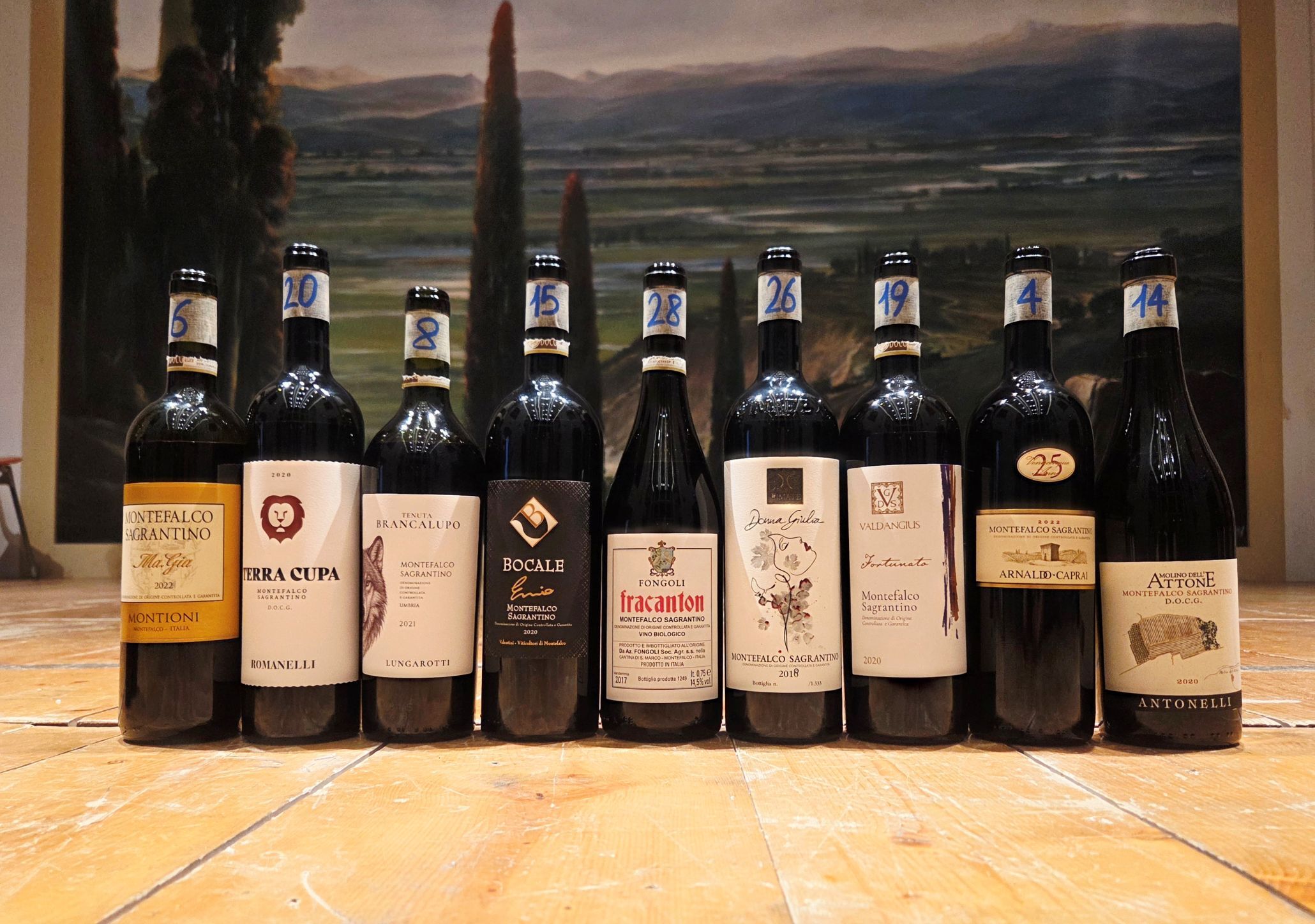
Recent Sagrantino vintages have shown a move toward more balanced structure.
The good news is that the old-school methodology of burying Sagrantino's fierce tannins with sweet fruit and new oak has largely evolved. Though there’s still plenty of new oak to be found throughout Montefalco, the integration is now more precise and harmonious. Sagrantino is still a tough sell for consumers, especially as tastes shift toward easier-drinking wines with lower alcohol and softer tannins, but I have never encountered as many balanced, approachable Sagrantinos across such a broad spectrum of producers as I did during my visit to the region this year. Montefalco Sagrantino has changed for the better. Hopefully, consumers will catch on.
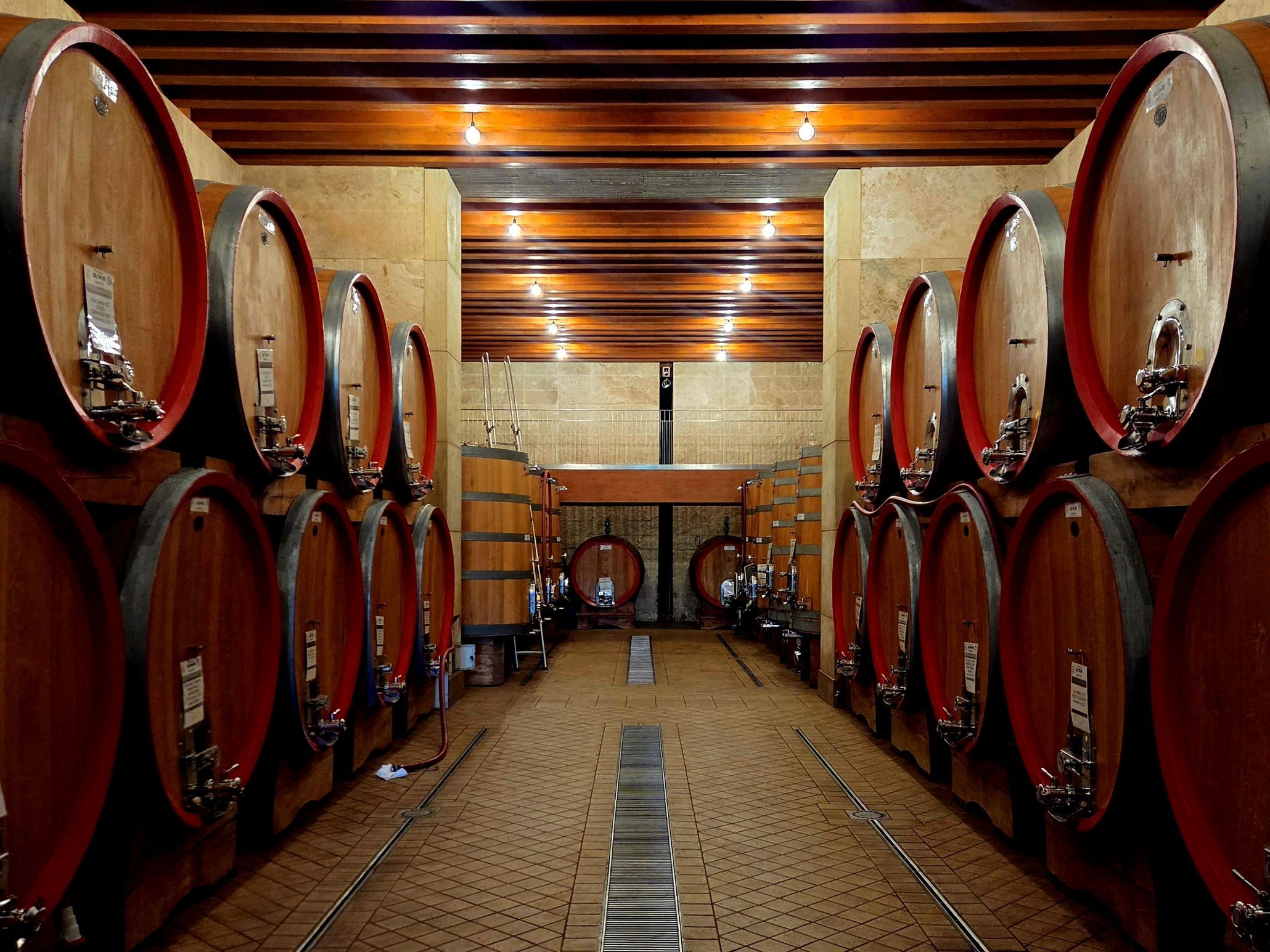
In the cellar at Paolo Bea.
Much like categories such as Taurasi and Amarone, the disparity between release schedules from one producer to another makes the Montefalco Sagrantino DOCG difficult to wrap your brain around. Regulations stipulate that Montefalco Sagrantino must mature in the winery for 33 months, 12 of which must be in oak. However, most producers choose to hold wines much longer, whether in barrel or bottle. This means consumers ultimately purchase a more mature wine with better tannin integration, but in tasting these wines, current releases can span as many as ten different vintages. At this time, the DOCG does not have a Riserva category, which would help to place these late-release wines in a separate tier. This idea is being discussed within the Consorzio Tutela Vini Montefalco, but it remains to be seen whether it will ever come to fruition.
Montefalco Rosso: Umbria’s Secret Weapon
Montefalco Rosso challenges the perception that Umbrian reds are invariably powerful, aggressively tannic and high in alcohol. These wines deserve to be taken seriously in their own right, rather than viewed simply as a lesser alternative to the region's flagship Sagrantinos. Above all, Montefalco Rosso makes a compelling case for Sangiovese's potential in Umbria.
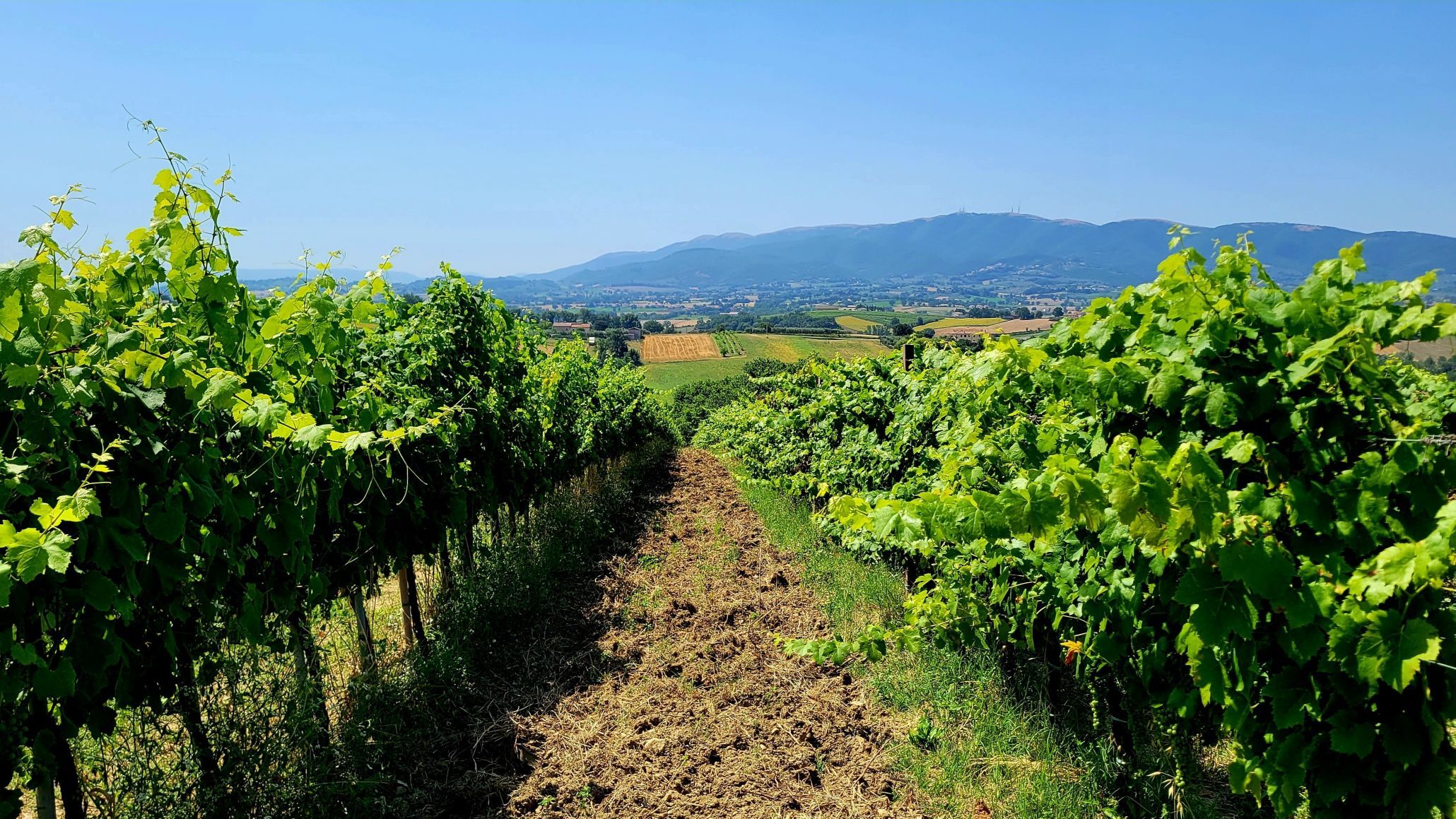
The biodynamically farmed vineyards at Fongoli.
Though most associate Sangiovese with Tuscany and, to a lesser extent, Emilia-Romagna, Umbria offers a completely different take on the variety. The only landlocked winegrowing region in central Italy, Umbria is surrounded by the Apennine Mountains. The region enjoys a continental climate largely unaffected by the Adriatic and Tyrrhenian Seas. Summer days are hot and dry, but temperatures cool quickly at night as cold air is drawn down from the mountains by an inversion effect. The soils are largely alluvial, with some pockets of clay mixed with limestone. In Montefalco, Sangiovese tends to deliver rounder, juicier and brighter expressions that still carry the variety’s hallmark acidity.
As I wrote in my previous report, many winemakers in Umbria continue to express a desire to change the rules for Montefalco Rosso, hoping to restrict the category to only indigenous varieties. In certain Italian regions, the push toward 100% indigenous blends has positively affected many wines, but when a DOC's historic character was established through the inclusion of international varieties, as in Umbria, stripping those varieties away risks losing what made the wines unique in the first place.
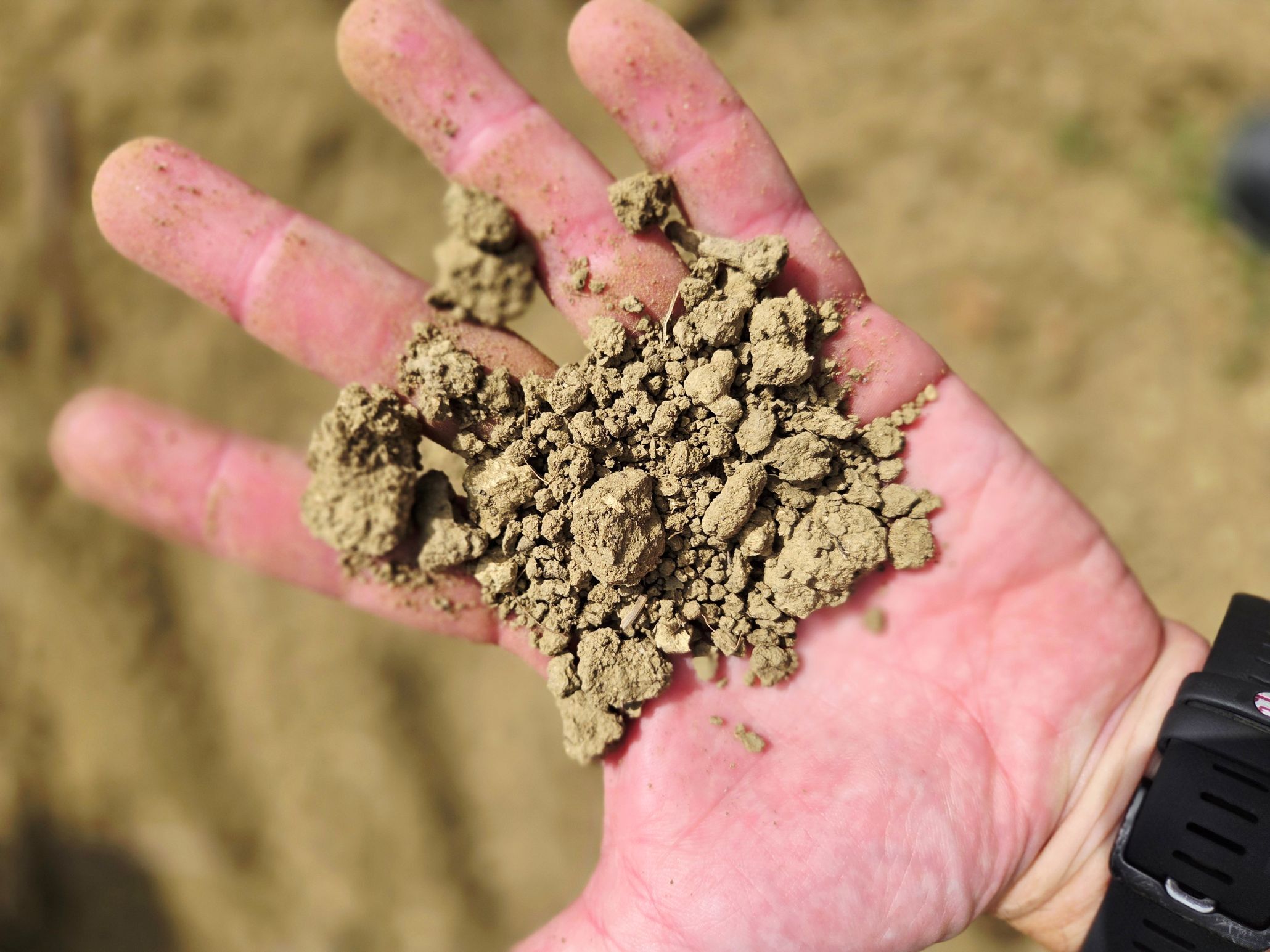
Calcareous clay soils are found throughout much of Montefalco.
The Consorzio Tutela Vini Montefalco took a more flexible approach when it recently revised the DOC regulations. Previously, Montefalco Rosso required 60-70% Sangiovese, 10-15% Sagrantino and 15-30% other red varieties, such as Montepulciano, Merlot, Barbera or Refosco. Under the revised rules, Sangiovese can account for 60-80% of the blend and Sagrantino 10-25%, while the remaining portion, up to 30%, can come from other authorized varieties. Crucially, that third component is no longer mandatory. Traditionalists can depend solely on indigenous varieties, while producers who have long built their blends with a bit of Merlot can still do so. Montefalco Rosso overdelivers in quality at a relative value. The wines age well, pair well with food and demonstrate an undeniable ability to communicate terroir. What more could we ask for?
Changing How We Think About Trebbiano
At last year’s Vinous Icons Miami, I stood next to Giampaolo Tabarrini of Tabarrini Winery, listening as he spoke with guests. In his usual enigmatic manner, Tabarrini explained that the word Trebbiano could be taken to mean "of the place." Hence, Trebbiano Abruzzese is of Abruzzo, Trebbiano Toscano is of Tuscany, and, of course, Trebbiano Spoletino is of Spoleto. I had never heard this explained so eloquently before. What much of the world doesn’t realize is that these varieties are all completely distinct from one another. That conversation led to an entire Masterclass on the topic at Vinous Icons: Italy this past May, as well as a vertical of Tabarrini’s Trebbiano Spoletino Adarmando, which I will cover in a separate article.
Giampaolo Tabarrini talks Trebbiano at Vinous Icons: Italy 2026.
Trebbiano Spoletino (the variety) plays an important role in Umbria’s shifting white wine landscape. Readers should toss aside any preconceptions about Trebbiano as a simple grape that makes only easygoing, fruity wines. While notably rich, sometimes even tropical, Trebbiano Spoletino possesses an inherent salty minerality and vibrant, high-acid backbone coupled with the balanced structure for aging. Producers in Umbria came to this realization years ago, setting in motion changes that have now upended the production rules and classifications surrounding Trebbiano Spoletino, with a new focus on where it can and should be planted.
The Spoleto DOC underwent significant changes in 2025. The Spoleto Bianco category was eliminated, along with the Superiore designation, while a new Trebbiano Spoletino Riserva category was introduced. Under the revised regulations, Spoleto Trebbiano Spoletino must contain at least 85% of the variety. However, good luck finding one in the following notes that isn't 100% Trebbiano Spoletino, given the pride these wineries have in the grape. For producers looking to add some Grechetto for structure or Chardonnay for an international flair, Montefalco Bianco DOC remains a good option. The new Riserva category, which I expect we'll see much more of in the years to come, requires a minimum alcohol level of 12%, restricts yields to 11 tons per hectare and mandates 18 months of aging before release, including at least three months in bottle.
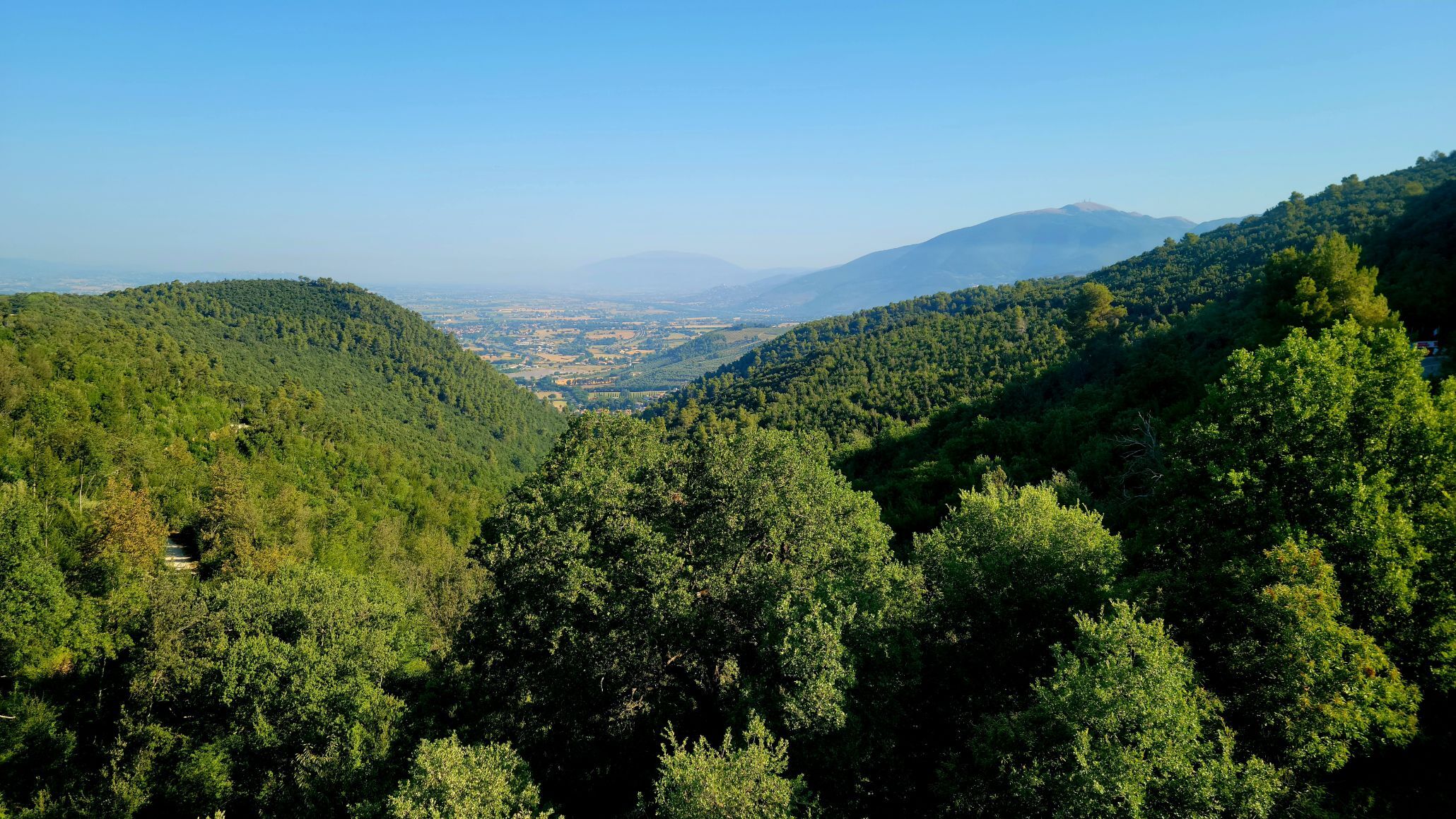
The surrounding mountains near the town of Spoleto.
Additionally, elevation regulations no longer stipulate a 400-meter cutoff, allowing producers to plant in higher, cooler locations to help preserve acidity. In keeping with many of the traditional methods around the region, the Spoleto DOC also permits skin-contact/extended-maceration wines, which can bring about the deep golden color many people associate with Trebbiano Spoletino.
For varietal Grechetto, readers can look to the longstanding Montefalco Grechetto DOC or IGT Umbria, which encompasses the variety throughout the region. This category deserves more attention, especially since Grechetto is among the most structured Italian white varieties. Given the momentum I’ve seen with Trebbiano Spoletino, I believe Grechetto will have its day.
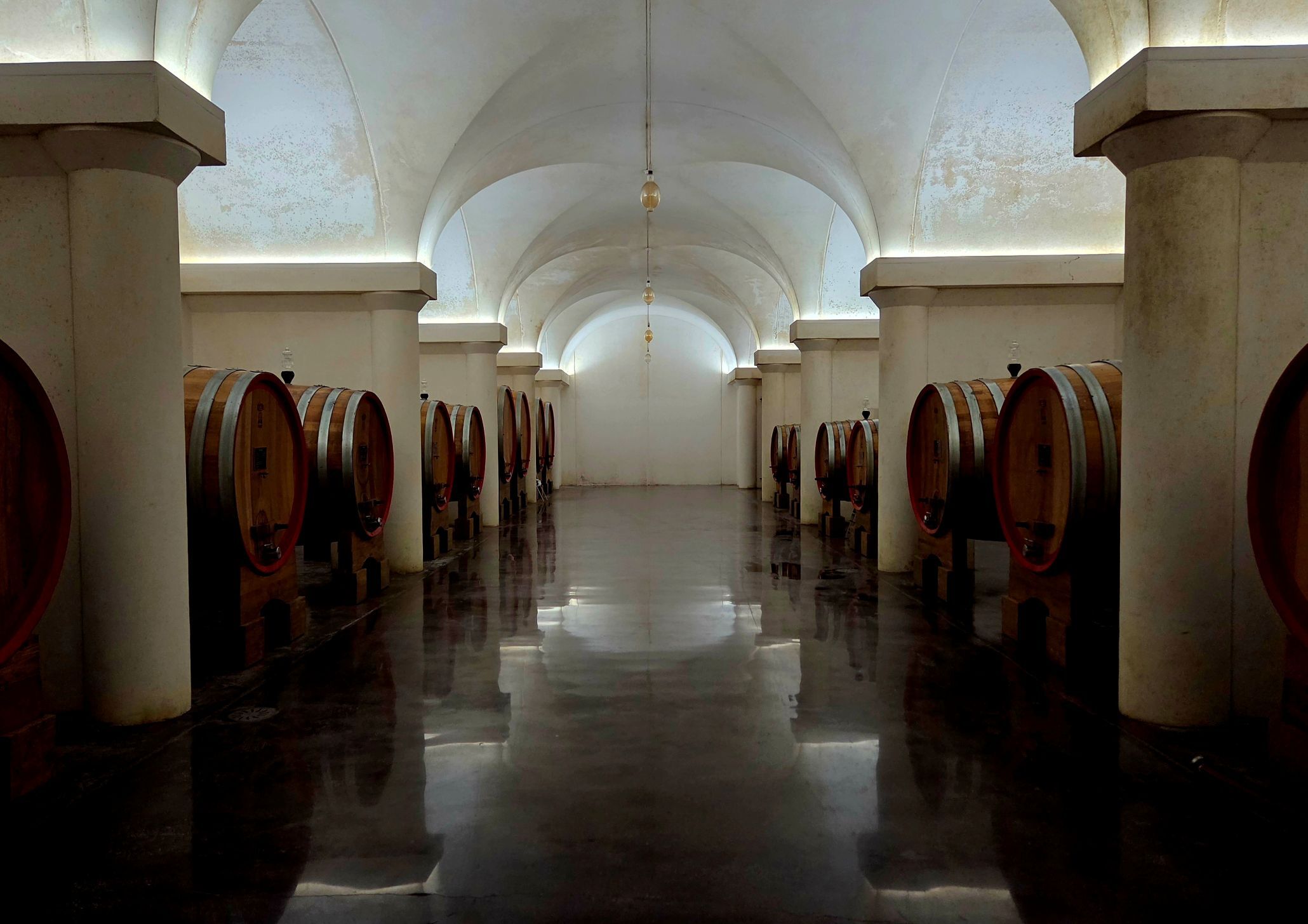
The voluminous cellar at the Tabarrini winery.
Grechetto takes the lead in the Orvieto and Orvieto Classico DOCs. There is a small loophole in blend requirements, as the rules stipulate 60% Grechetto “and/or” Procanico, also known as Trebbiano Toscano. The remaining 40% is left open for other white grapes, which often means Chardonnay or Sauvignon Blanc. Orvieto’s biggest challenge is a lingering bulk-wine mentality. There is great Orvieto, particularly from the Classico zone, but finding it requires careful selection. My go-to producers remain, in no specific order: Barberani, Decugnano dei Barbi, Argillae, Castello della Sala, and Plani Arche. Orvieto’s unique terroir, showcasing volcanic ash, pumice, and tufa alongside marine sedimentary and clay soils, positions the region for fine wine. I believe that, given time, the broader region will embrace this idea.
2023: When it Rains, it Pours
Sadly, each time I think my reporting on the challenging 2023 vintage is over, I come to another region that requires explanation. In Umbria, there’s both good news and bad news. The good news is that, through careful farming and proper selection during harvest, Umbria excelled with white varieties in 2023. The bad news is that both Sangiovese and Sagrantino suffered.
The 2023 growing season began with a mild, dry winter, but was quickly marked by continuous rain and overcast conditions from March through June. This resulted in an outbreak of Peronospora (downy mildew) that affected producers throughout the region, particularly those who use organic practices. What's more, the saturated ground made it difficult to move tractors in and out of vineyards in a timely fashion.
Budding was generally delayed, resulting in a slightly later harvest than in previous years. For red varieties, such as Sagrantino and Sangiovese, the mildew attack also interrupted flowering and fruit-set. Though the consistent rainfall helped build groundwater reserves for the summer ahead, those same water reserves also created extreme humidity in the rows. Canopy management and the removal of damaged bunches were the only ways to ensure that the remaining fruit stayed healthy through the arid summer. The saving grace in Orvieto was the large diurnal temperature swings throughout much of August, driven by the cooling nighttime effects of the surrounding mountains and Lake Corbara. Temperatures remained regulated through September as dry conditions persisted, followed by a refreshing rain in early October and warmer-than-normal conditions. This two-month window helped achieve balanced ripeness in later-ripening varieties like Sagrantino and Trebbiano Spoletino. Grechetto came in before the October rain.
Production was down around 20% across Umbria. Many of the most successful 2023s came from white varieties: high-acid, intensely mineral wines that benefited from the season's early cooler conditions and later harvest. The reds are atypical, with higher acidity and brighter fruit profiles than usual. Consistency from producer to producer remains unpredictable. The 2023 Sagrantinos are particularly enjoyable, with a lighter, racier feel and generally lower alcohol, but quantities are quite low.
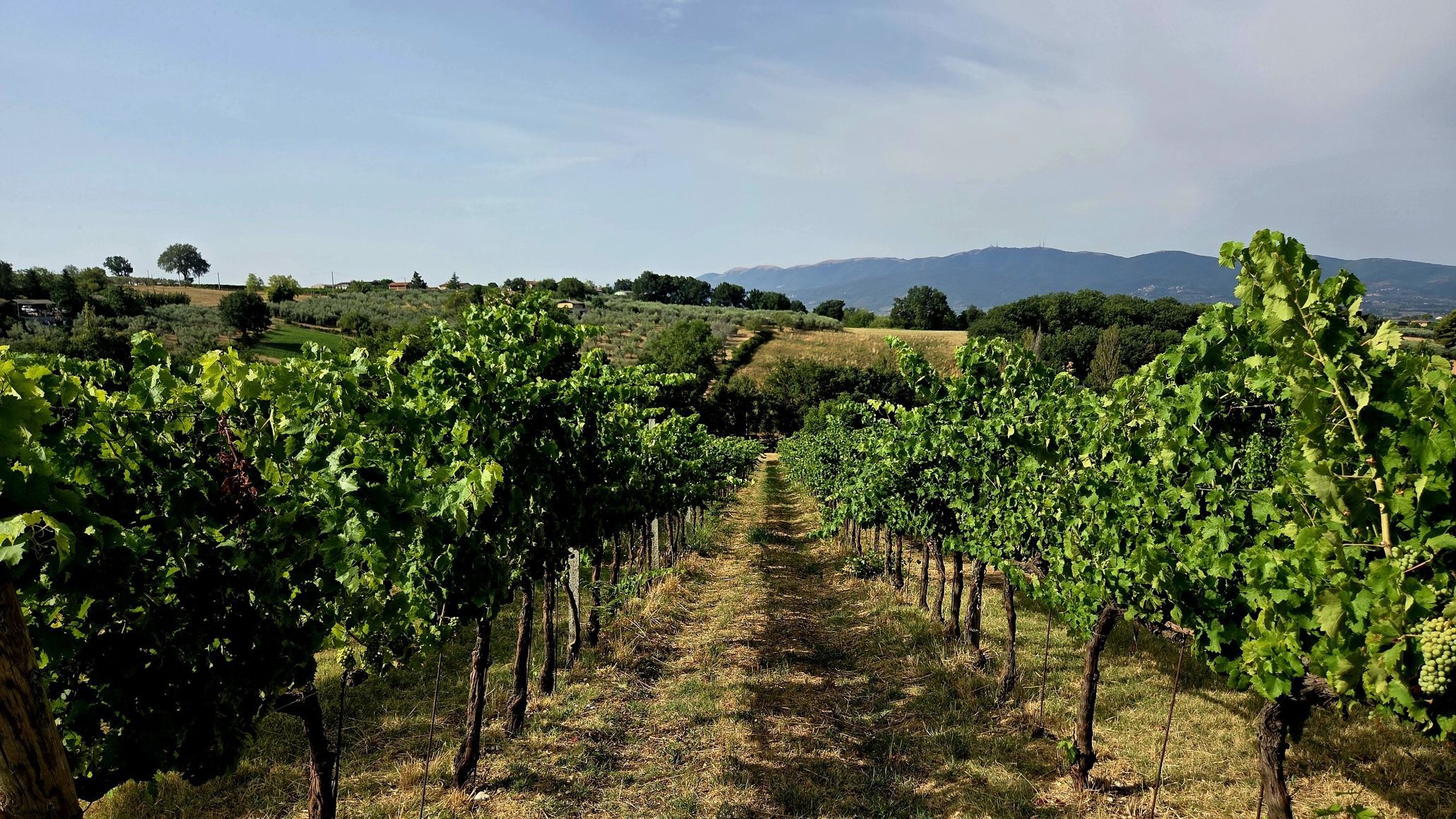
The Ma.Gia Sagrantino vineyard at Montioni.
Looking ahead to 2024, readers can expect a complete contrast to 2023. During the 2024 growing season, a lack of rain and unseasonably warm temperatures from winter through fall accelerated ripening and reduced berry size, while dry conditions kept vineyards healthy throughout. Rain and cooler temperatures during September and October helped restore some balance to the reds and later-ripening white varieties. Harvests generally took place a week earlier than in recent vintages. Expect ripe, rich styles from 2024, alongside a welcome boost in production volume across the board.
I tasted the wines for this report in Montefalco in July 2026.
© 2026, Vinous. No portion of this article may be copied, shared or redistributed without prior consent from Vinous. Doing so is not only a violation of our copyright but also threatens the survival of independent wine criticism.
You Might Also Enjoy
Umbria: Peeling Back the Layers, Eric Guido, October 2024
Tipping the Scales: New Releases from Umbria, Eric Guido, October 2023
Umbria: Taking It to the Next Level, Eric Guido, November 2022
Umbria & Lazio: Italy’s Underdogs, Eric Guido, August 2021
Show all the wines (sorted by score)
- Adanti
- Annesanti
- Antonelli San Marco
- Argillae
- Arnaldo Caprai
- Barberani
- Bocale
- Cantina Colle Ciocco
- Cantina Fratelli Pardi
- Cantina Roccafiore
- Castello della Sala
- Colpetrone
- Decugnano dei Barbi
- Di Filippo
- Dionigi
- Famiglia Cotarella
- Fattoria Milziade Antano
- Fongoli
- Giampiero Bea
- La Veneranda
- Le Cimate
- Leonardo Bussoletti
- Lungarotti
- Montioni
- Paolo Bea
- Plani Arche
- Romanelli
- Ruggeri - Tenuta Col Falco
- Scacciadiavoli
- Tabarrini
- Tenuta Alzatura
- Tenuta Bellafonte
- Tenute Lunelli-Carapace
- Valdangius