
Browse using the new Vinous website now. Launch →
Printed by, and for the sole use of . All rights reserved © 2015 Vinous Media
Vino Nobile di Montepulciano: Credit Where Credit is Due
BY ERIC GUIDO | MAY 12, 2026
Article Additions: August 25, 2026 - Salcheto
Change moves at a different pace in Italy. I can visit three years in a row and find the same construction project still dragging on thanks to bureaucratic pitfalls. The same is true of the wine industry. Over the years, I’ve written extensively about Montepulciano’s struggle to prioritize Sangiovese, distinguish itself from Abruzzo and make the Pieve designation a reality.
Today, the region has successfully accomplished two out of the three. The Consorzio has done a fantastic job establishing the importance of Sangiovese and bolstering the use of traditional Tuscan varieties. The days when international grapes were in nearly every blend are long gone. Furthermore, the kickoff of the Pieve project has been a smashing success. The 2021s are stunning, and my early preview of the 2022s is equally promising. With this zoning came a formal map of the DOCG, outlining subregional borders and the area's diverse terrain. Most importantly, the Pieve project has raised quality standards across the board, resulting in cleaner and purer expressions of place.
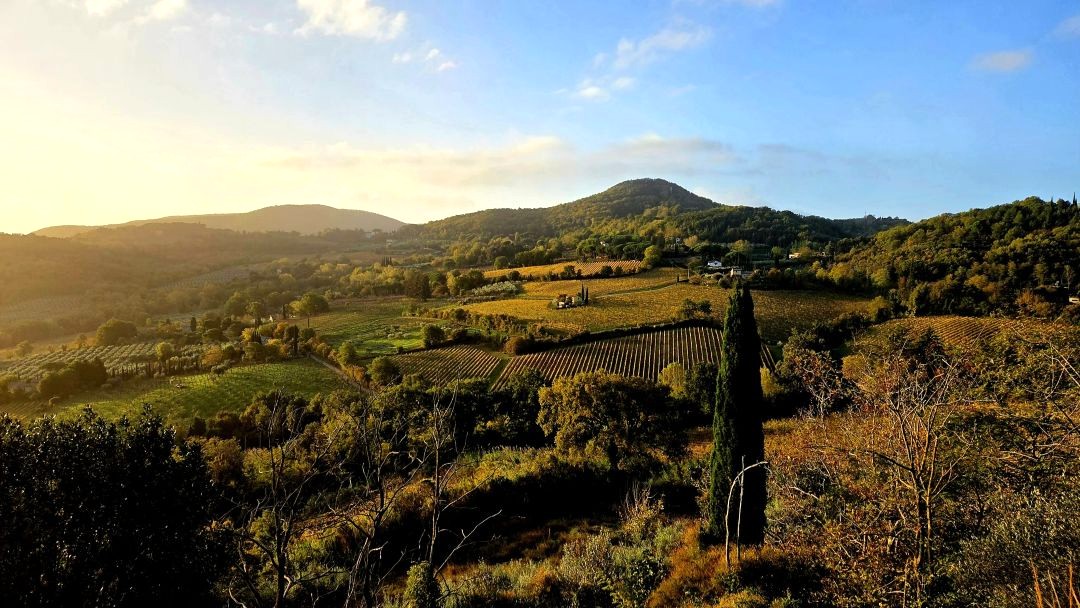
Pieve Valardegna, as seen from the walls of Montepulciano.
However, one issue continues to plague wineries and the Consorzio: the name “Montepulciano.” They have made attempts to fix the problem. As of the 2019 vintage, "Toscana" now appears on back labels to anchor the wine geographically. Still, confusion persists as winemakers mix and match words from "Vino Nobile di Montepulciano" in a desperate attempt to distance themselves from Montepulciano d’Abruzzo. This often does more harm than good, because consumers don’t know what to look for. A definitive decision must be made. Is the name Nobile, Vino Nobile or Nobile di Montepulciano? Frankly, any consistent choice would be better than the identity crisis the region faces today.
Even amidst much change, I must give credit where credit is due. Montepulciano is the most improved region in Tuscany over the last decade. While there is always room for improvement, especially with regard to cellar hygiene, the bottom line is clear: the wines from this region have never been a safer bet.
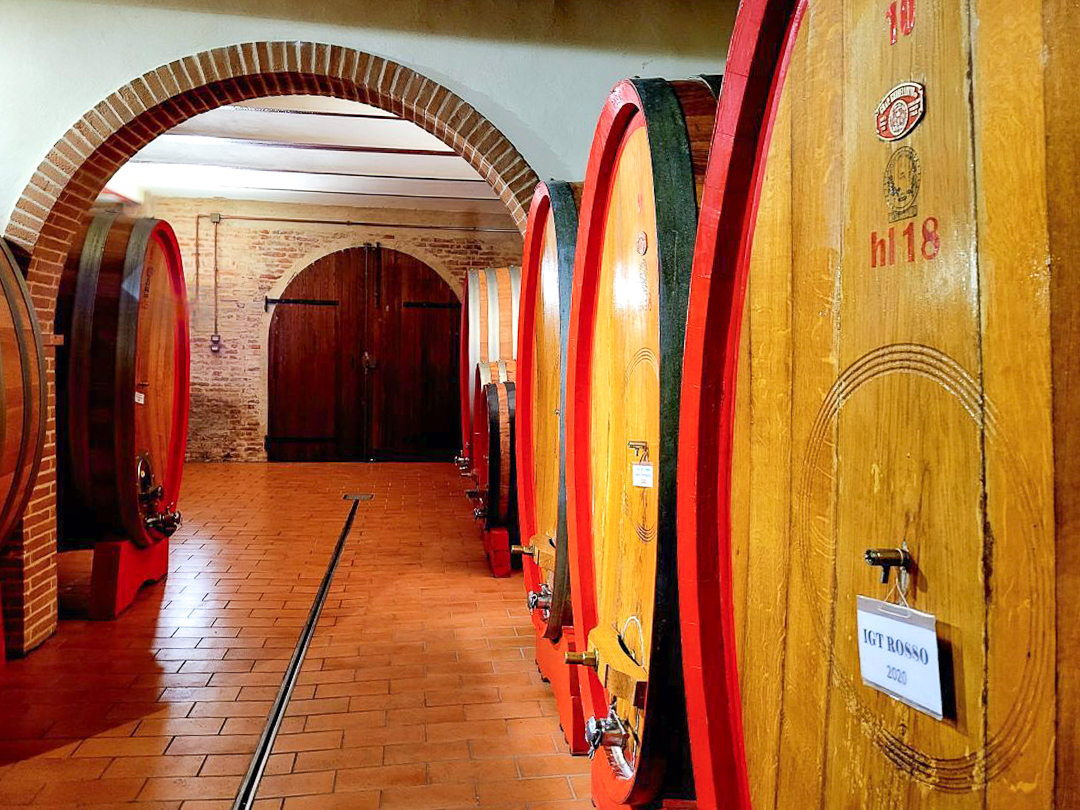
The cellar at Poderi Sanguineto I e II.
Rich 2022s, Non-Existent 2023s and Elegant 2024s
Vintages in Montepulciano often follow a similar trajectory to those in Montalcino, albeit with a few distinctions. Montepulciano is farther from the Mediterranean’s influence. Proximity to the Apennine Mountains provides a subtle regulating influence, with larger diurnal shifts than Montalcino, and lush vegetation. Montepulciano also receives slightly more precipitation than Montalcino, which, coupled with heavy clay soils, leads to greater water retention. This was a blessing in 2022 but proved disastrous in 2023.
The 2022s are dark and rich, reflecting the vintage's dry heat through masses of ripe fruit and balanced acidity. While I am less enthused by the Rossos and mid-tier Vino Nobiles, the top wines show remarkable harmony. The season was a scorcher, with intense heat and severe drought. When I visited in July of that year, arid conditions had cracked the heavy clay soils, exacerbating already low moisture levels. While some rain eventually arrived, it was not enough to alleviate stress in the vineyards. Nevertheless, the best producers pulled off a successful vintage.
It is telling that I only included seven wines from 2023 in this report. For all intents and purposes, the 2023 vintage was non-existent. Excessive spring rainfall and a lack of sunlight led to a devastating outbreak of downy mildew (Peronospora). Unseasonably hot temperatures followed in July, further stressing the already struggling vines. Most producers reported staggering losses between 50% and 70%. The organic practices on which the region prides itself offered little defense, as rain washed away treatments instantaneously. Many producers chose not to bottle red wine at all, declassifying their remaining fruit into Rosato or table wines. The few Rossos I encountered are atypical for the region, wiry and pleasantly fresh.
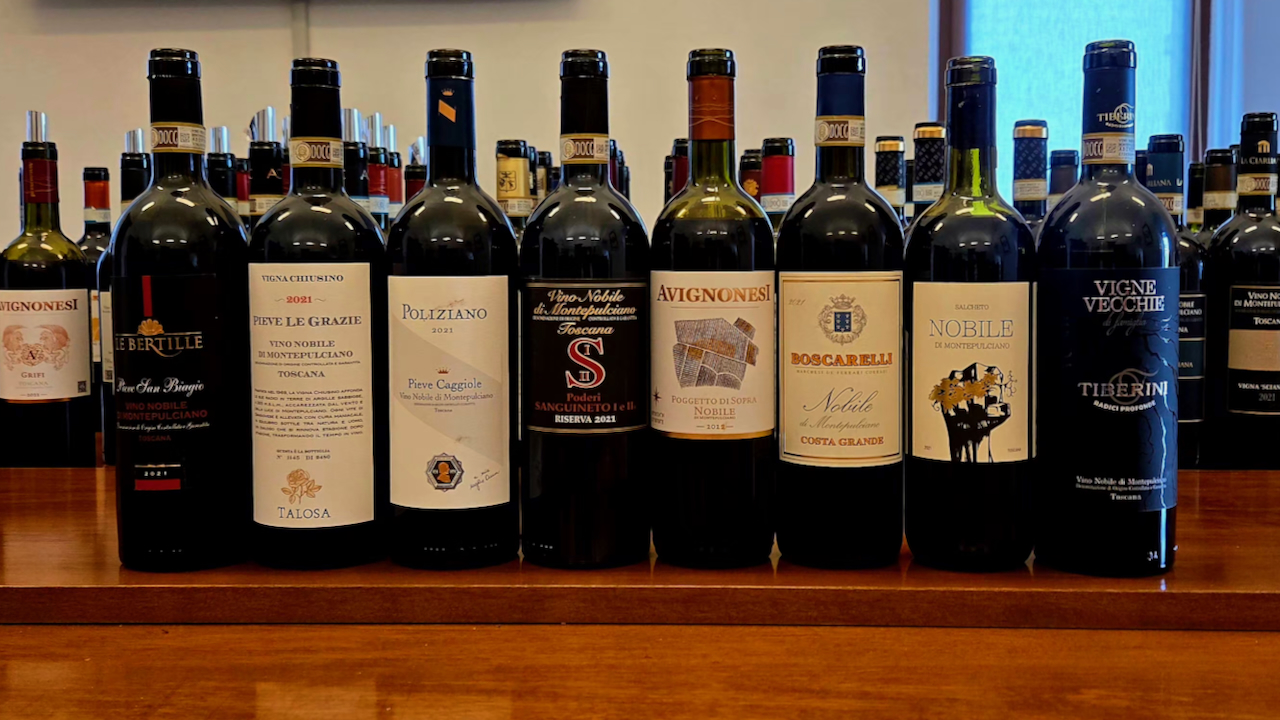
Montepulciano brought out its best for a massive tasting at the Consorzio.
The 2024 vintage may prove the finest of the last three years, but its success rests entirely on the skill and ambition of individual winemakers. From what I’ve tasted to date, the wines are elegant and refined, with beautifully balanced cool-toned acidity and vividly ripe fruit profiles. While 2024 saw more rainfall than 2023, timely dry spells in the spring prevented significant disease pressure. However, a different challenge emerged: budbreak and flowering were so successful that potential yields were off the charts. Managing these heavy crops required multiple green harvests to maintain quality. Conditions grew more complicated in August as heat waves halted vine development for weeks, though Montepulciano's heavy clay soils provided a critical water buffer. An unseasonably cold and rainy September pushed harvest into October. The potential for greatness in 2024 was high, assuming that winemakers rigorously controlled yields and dropped any substandard fruit.
Catching Up with the Pieves
Now in its second vintage, the new Pieve designation continues to show marked improvement across Montepulciano. Granted, I only tasted eight 2022s in total. Having also revisited several of the 2021s, I can attest that they continue to show beautifully. It’s certainly an exciting time for the region and those who love these wines, but I have also noticed a significant upward price swing. As of last year, the majority of Pieve bottlings fell within the $50 to $90 price range, but new releases range fall mainly between $90 and $140. I’m not sure whether the market will absorb this sizable of an increase. I think back to when Chianti Classico introduced its Gran Selezione designation in 2013. At the time, I was working in retail as a buyer, and moving those wines proved incredibly difficult. In the end, consumers saw value in Chianti Classico, the same way many now look to Vino Nobile di Montepulciano. Finding these Pieve wines on shelves for $100 or more will be jarring, to say the least, especially in today’s economic climate.
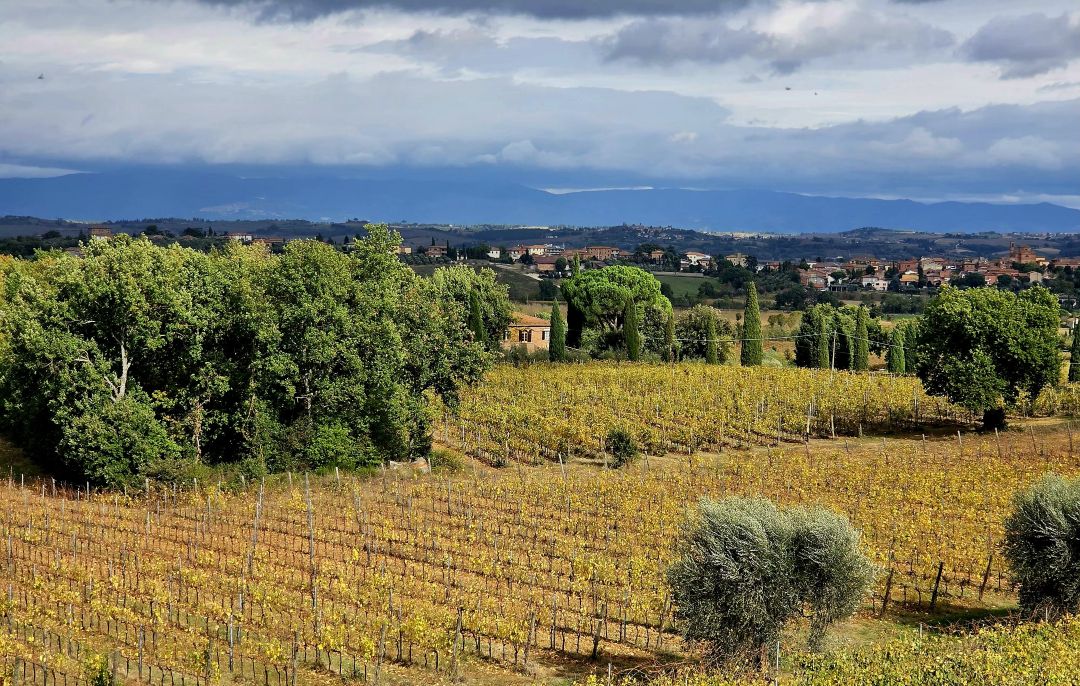
The Boscarelli vineyards and winery.
Another point to consider is that the 2023 vintage is a year of extremely low yields, during which many producers chose not to make any Vino Nobile; most made Rosato or simple reds. I expect there to be very few, if any, 2023 Pieve wines, which means we will have a long break between new releases. The good news is that the 2024s may be even more promising than the successful 2022s.
For reference, I’ve included a shortened version of the breakdown of the 12 Pieve that I shared last year, presented in a more diagrammatic form.
The Pieve Breakdown
The Pieve subzones divide Montepulciano into 12 historical areas based on local parishes. While these boundaries are based on 1765 land records rather than strict geological shifts, the classification successfully raises the region's quality ceiling by implementing the most stringent production rules in Montepulciano to date. Since sandy clay and silty calcareous soils are consistent across the region, the true differentiators are elevation and topography.
Varieties: Minimum 90% Sangiovese (Prugnolo Gentile). The remaining 10% must be traditional Tuscan varieties (Canaiolo, Ciliegiolo, Mammolo); Colorino is capped at 5%.
Estate Grown: 100% of the fruit must be estate-grown within the specific Pieve.
Vine Age: 15 years old or more.
Aging: 36 months total (matching Riserva but positioned as the new top tier).
The North: Lower Elevations and Sedimentary Soils
These subregions generally sit between 250 and 450 meters and are defined by their relationship to the valley floors and alluvial fans.
Valiano: The furthest northeast and most isolated. Low elevation (255–340 meters) with sandy clay and silt.
Badia & Ascianello: Lower-elevation sites with silty clay. Ascianello acts as a southern extension of Badia, influenced by the Salarco stream’s alluvial terraces.
Caggiole, Cerliana & Gracciano: The "hotbed" of activity. Caggiole reaches higher elevations (450 meters) with calcareous sands. Cerliana and Gracciano are lower, with a mix of clay, loam and pebbles.
Le Grazie: A higher-elevation continuation of Caggiole (up to 460 meters) with calcareous sandy clay.
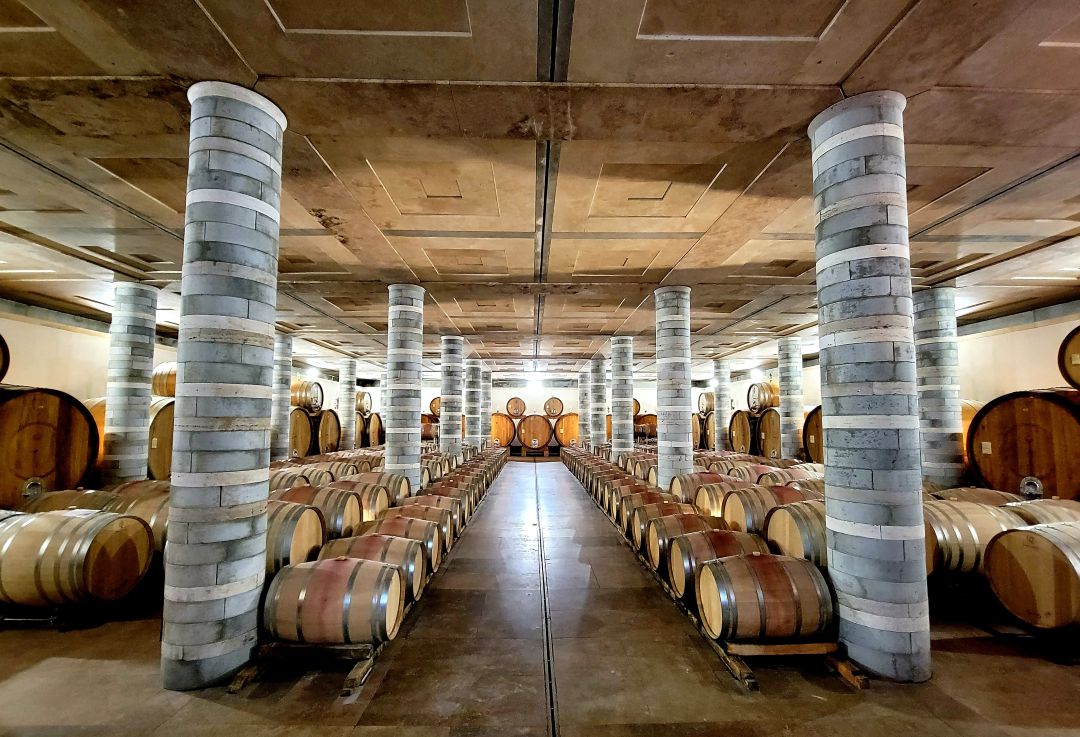
The barrel aging cellars at Cantine Dei.
The East: Slopes and Apennine Influence
These zones feel the cooling influence of the Apennine foothills more than the sea.
Valardegna: Characterized by extreme slopes and thick forests; silty clay in valleys and sandy loam on the crests.
Cervognano & Sant'Ilario: Running parallel to each other, these are the "powerhouses." Both feature calcareous sandy loam at higher elevations (350 meters or more), tapering into silty clay toward the flatlands.
The South: High Elevation and Maritime Influence
The most unique sector, due to elevations reaching 600 meters and a direct line to the d’Orcia River valley.
San Biagio: Directly south of the town; high elevations with calcareous sandy loam.
Sant'Albino: Rugged and intense. While technically outside the main DOCG cluster, its calcareous clay hills and pockets of rare blue clay produce some of the region's most brooding wines.
I tasted the wines for this report in Montepulciano in October 2025 and in our New York offices in March 2026.
© 2026, Vinous. No portion of this article may be copied, shared or redistributed without prior consent from Vinous. Doing so is not only a violation of our copyright but also threatens the survival of independent wine criticism.
You Might Also Enjoy
Vino Nobile di Montepulciano: An Unstoppable Force, Eric Guido, February 2025
Vino Nobile di Montepulciano: Making Wine in the New Normal, Eric Guido, October 2023
Terroir and Determination: Vino Nobile di Montepulciano, Eric Guido, February 2023
Decoding Emidio Pepe: 13 Vintages of Montepulciano d’Abruzzo Vecchie Vigne, Eric Guido, October 2022
Montepulciano, Carmignano and Montecucco: New Releases, Eric Guido, December 2021
Show all the wines (sorted by score)
- Antico Colle
- Avignonesi
- Avignonesi & Capannelle
- Bindella
- Boscarelli
- Canneto
- Cantina Chiacchiera
- Cantina del Redi
- Cantine Dei
- Carpineto
- Casale Daviddi
- Casa Vinicola Triacca
- Cecchi
- Contucci
- Fattoria del Cerro
- Fattoria Svetoni
- Godiolo
- Gracciano della Seta
- Icario
- Il Molinaccio di Montepulciano
- La Braccesca
- La Ciarliana
- Le Bèrne
- Le Bertille
- Manvi
- Marchesi Frescobaldi
- Montemercurio
- Podere Casanova
- Podere Lamberto
- Poderi Sanguineto I & II
- Poggio Stella
- Poliziano
- Salcheto
- Talosa
- Tenuta Poggio alla Sala
- Tenuta Trerose
- Tiberini
- Valdipiatta
- Vecchia Cantina di Montepulciano
- Villa S. Anna