
Browse using the new Vinous website now. Launch →
Printed by, and for the sole use of . All rights reserved © 2015 Vinous Media
2022 Barolo: Half-Full or Half-Empty?
BY ANTONIO GALLONI | JANUARY 20, 2026
Two thousand twenty-two is one of the most complicated vintages I have seen in the more than 25 years I have visited Piedmont on a regular basis. The 2022 Barolos are frustratingly erratic, wildly inconsistent wines, and yet some growers found a way to make the most out of the hand they were dealt by Mother Nature. It’s a vintage to approach with caution. There are some real gems in 2022, but they are very much the exceptions. This report focuses on the 2022 Barolos, but I have also included notes on some 2021 and 2020 late-release Barolos, plus reviews for entry-level wines from top estates, wines that form the backbone of a daily appreciation of what Piedmont has to offer.
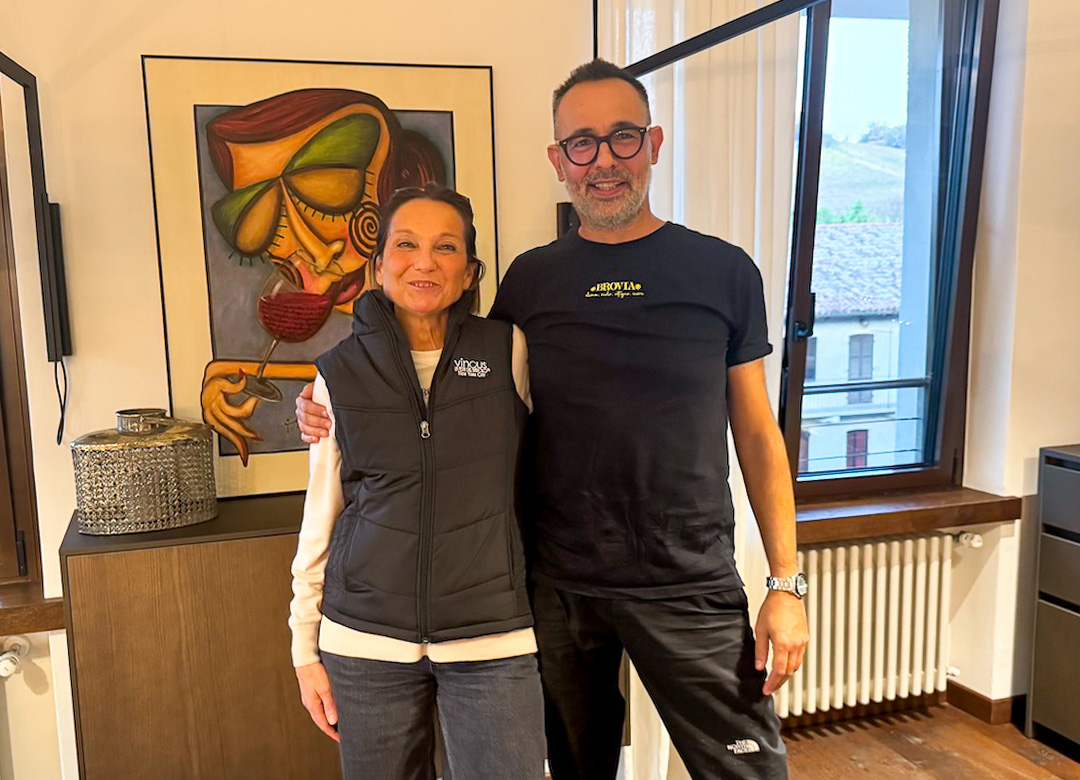
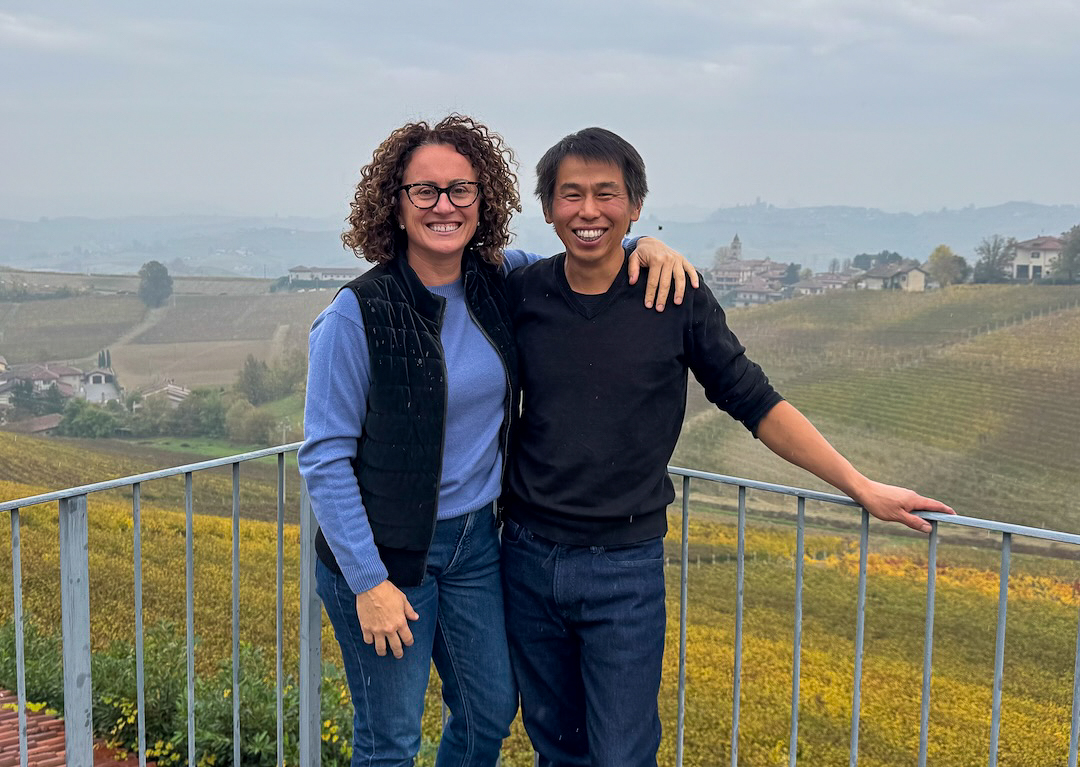
Elena Brovia and Alex Sánchez turned out some of the most successful Barolos of the vintage at Brovia.
In a way, 2022 is a stark reminder that not all vintages can be great, or even good. This is something that is easy to forget in a world where generally benign weather and vastly improved technology are playing a profound role in improving quality. It was not that long ago that an average decade might include two or three truly great years. In recent times, we have seen decades with six or seven very strong vintages and very few that might be considered poor. The preceding ten-year span in Barolo includes six strong to exceptional years: 2021, 2020, 2019, 2016, 2015 and 2013. I have long admired the best 2014s from the very beginning. Two thousand-seventeen has some good things to offer, while 2018 is mixed. That’s a very strong collection of vintages—certainly better than in any similar period during the 1960s, 1970s, 1980s, 1990s and maybe even 2000s. It’s only normal that a highly challenging year might eventually rear its head. Two thousand twenty-two is that vintage.
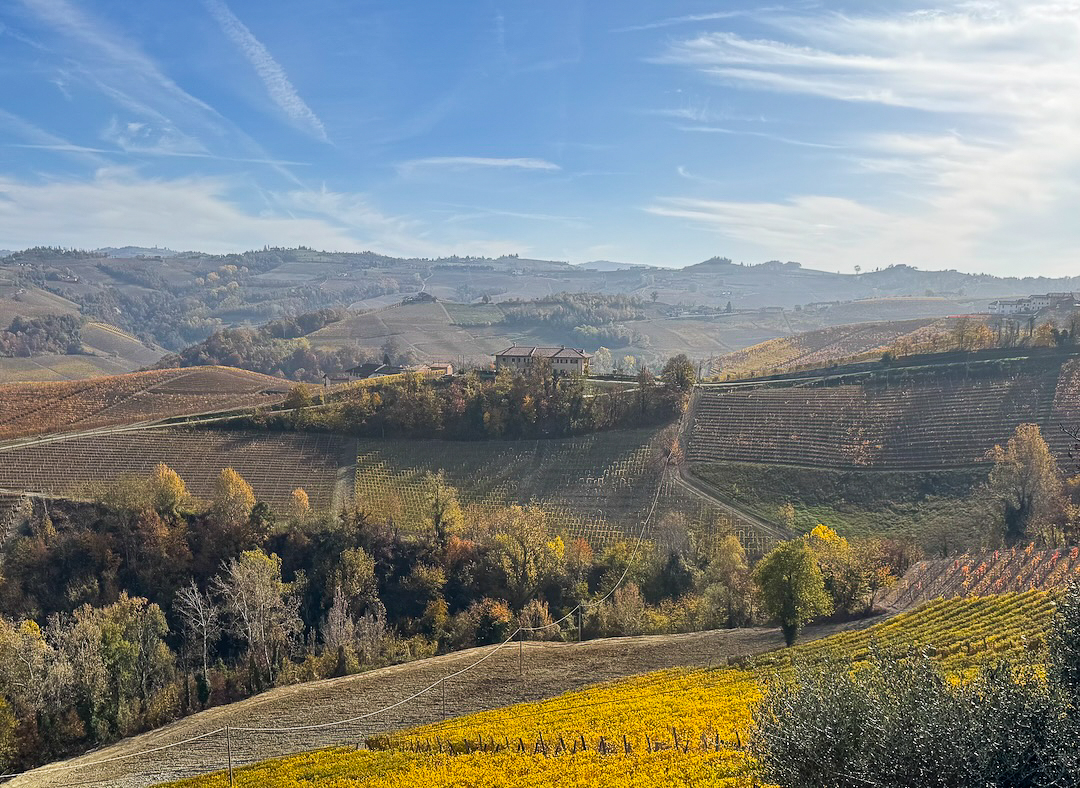
The hillsides of Monforte d’Alba on a late fall day, as seen from the terrace at Elio Grasso.
The 2022 Barolos are generally light-bodied wines that show elements of dilution. Site character, which I believe to be the single most essential attribute for vineyard-designated wines, is blurred. Only a few 2022s capture the visceral excitement Nebbiolo is capable of, and even those wines don’t reach the levels of top wines in truly great, important vintages. This is the glass-half-empty view. Although the 2022s are very much on the lighter side, most wines have good balance and not a lot of awkward edges. This suggests the best growers were able to respond to the challenges of the growing season in the vineyards and in the cellar. Technology, such as advanced sorting machines, can’t replace what Mother Nature is not willing to provide, but it can remove damaged fruit that would have penalized wines in the past. Many 2022 Barolos are very quiet, as if someone turned down the volume in a sound system to a whisper. The wines are recognizable, just very small in scale. There are a few wines that are especially of note, almost miracle wines sprinkled throughout one of the most challenging vintages in recent memory. This is the glass-half-full view.
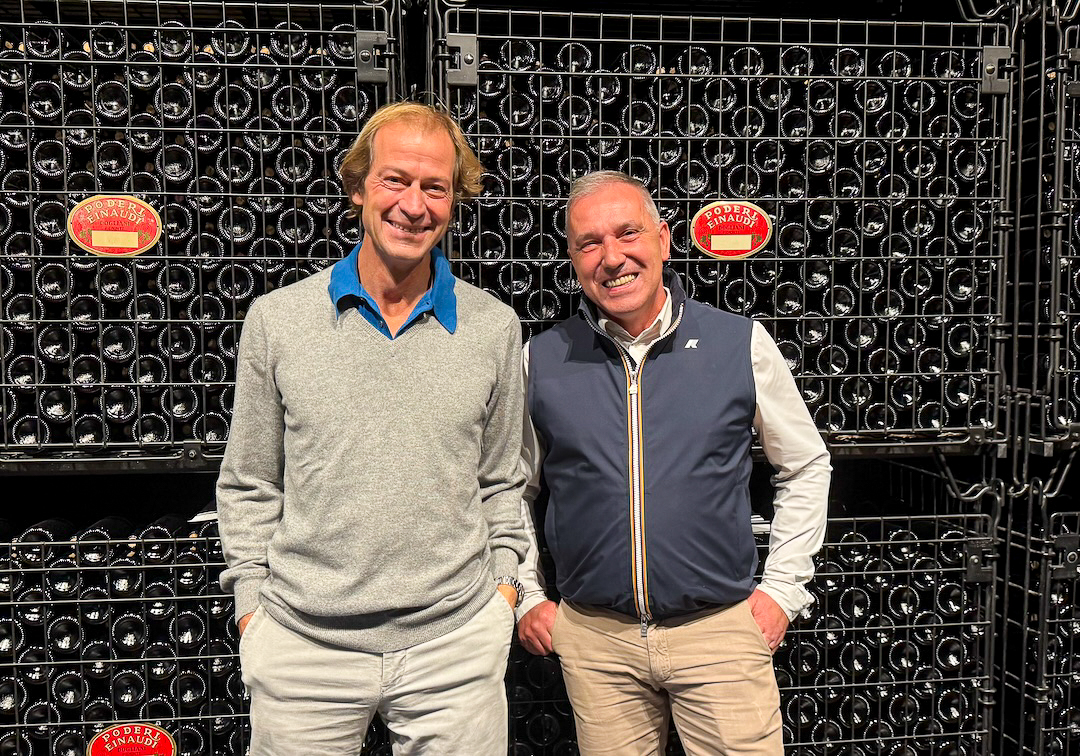
Proprietor Matteo Sardagna and his right-hand man, Zvone Jurkovic, presented a stellar set of 2022 Barolos at Einaudi. Jurkovic has been at Einaudi since 1999. He started driving a tractor and doing work in the vineyards, then worked his way up to Assistant Winemaker.
The 2022 Growing Season
The 2022 growing season got off to an early start because of a total lack of rain and snow the preceding winter for a period that lasted almost four months. Heat and a lack of water would prove to be some of the main themes of the year. Hail in June was an issue in some spots. Vajra reported losses of 20-40% in their Barolo vineyards.
Drought persisted throughout the summer. “We had just 300 millimeters [mm] of rain from April to October. It was the driest year in 60-70 years,” Alberto Cordero di Montezemolo explained. “In 2021, we had 360 mm of rain in the same period. That, too, was a big drop after the preceding years, where rainfall during the same period was 560-590 mm, but we did not notice, because 2021 benefited from hydric reserves from the previous winter. In 2022, we did not have the reserves.”
After early flowering in May, many vines went into stress. Young vines that have not developed deep root systems were especially vulnerable. Stunted canopies were visible everywhere. Most vineyards are set up with three levels of trellising wires that run perpendicular to the ground. As canopies grow, they are tied to those wines. In a typical year, canopies reach the third level. In 2022, many vineyards struggled to reach the second wire. Those sites were also marked by small leaves that had started to change color prematurely and small, very loose clusters, all signs of severe heat stress. Understanding when and how to green harvest was critical. “We dropped crop where we could to lighten the load for the vines,” Chiara Boschis explained. "By June and July, the plants were already heat stressed. Once that happens, photosynthesis stops and the vines go into survival mode," Luca Sandrone recounted. "We delayed green harvesting as late as we could to avoid over-concentration on the vine."
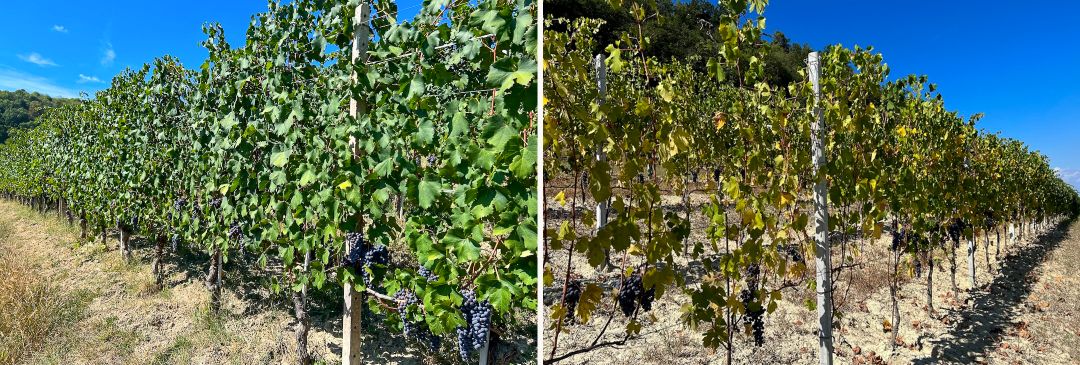
A tale of two plots in the same vineyard; older vines (left) withstood excessive heat and drought far better than younger vines (right).
Other vineyards fared better. Older vines, sites with moisture-retentive soils, cooler exposures and sites at elevation were all favored. De-leafing is largely a practice of the past in Piedmont. Instead, growers worked to keep grapes as shaded as possible. Some sites benefited from netting that was first adopted in Piedmont to protect vineyards from hail. Today, netting has the additional benefit of working double duty as shadecloth. Not all producers are convinced on shadecloth. Some believe netting restricts airflow and increases humidity within vines. Nevertheless, netting was clearly helpful in some cases. It’s an interesting discussion. Shadecloth is widely used in some regions, such as Napa Valley, but not allowed in others, such as the classic appellations in France.
Harvest took place in a relatively condensed period from late September to early October for most estates. “It was our second-earliest harvest. Only 1989 finished earlier,” explained Fabio Fantino at Conterno-Fantino. Most growers reported grapes with thin skins. Winemakers favored low temperatures in fermentation and shorter vatting times to avoid extracting bitter tannins. Approaches were quite varied from estate to estate. Maria Teresa Mascarello, who usually does submerged cap maceration in the best years, did not give her wines extended time on the skins, citing thin skins and fragile balance. Others, like Vittore Alessandria at Fratelli Alessandria, reported healthy grapes and vinified their wines as they do in most years.
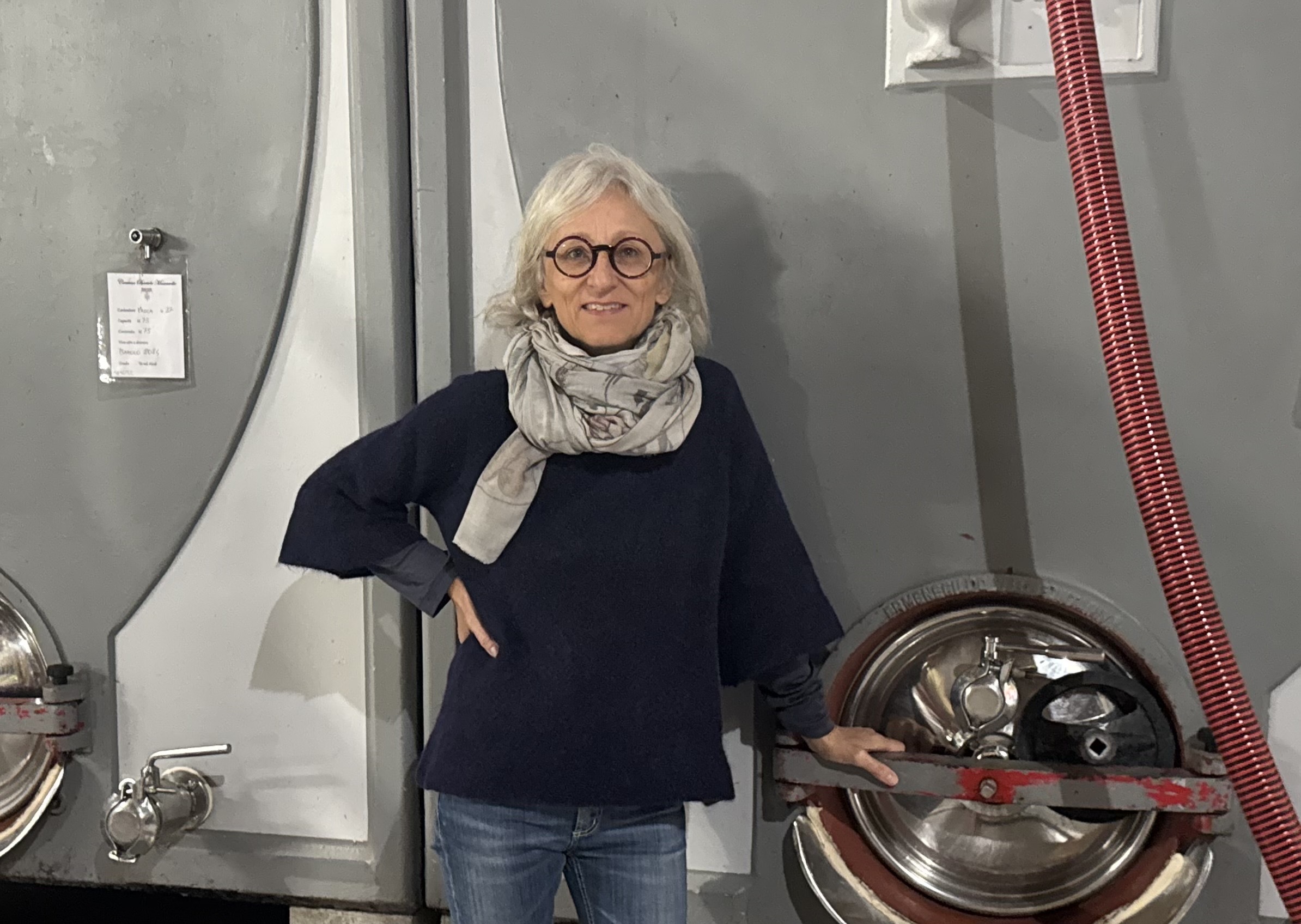
Maria Teresa Mascarello in front of her cement vats during the 2025 harvest.
A Critical Juncture…
As producers began tasting through their 2022s, some formed a view that their lots were more similar than they had hoped and that their single-vineyard wines were not distinctive enough to be bottled on their own. “We sat down as a family to taste the wines,” Fabio Alessandria told me at G.B. Burlotto. “The 2022 Barolos were good, but we just did not see the differences in the sites that we usually do, so we chose to make a single Barolo.” Alberto Cordero di Montezemolo echoed that sentiment. Other estates bottled some but not all of their vineyard-designates. These include Vietti, where the team led by Winemaker Eugenio Palumbo did not bottle the Brunate, Cerequio or Villero. At the other end of the spectrum, several growers turned out superb wines across their entire ranges. These include Elio Altare, Giacomo Conterno, Brovia, Massolino and Einaudi, who made some of their finest wines in recent memory.
Some produces reported lower alcohols than normal, but in other cases, alcohols are above 15%. Nebbiolo is a grape that can handle higher alcohol better than others. Some Barolos have been in the 14.5% range since the 1970s. In other words, intense heat and climate change have not impacted these wines to the degree seen in other regions such as Bordeaux or Burgundy, where wines can be quite a bit higher in alcohol than they once were. Still, finding the balance between achieving a degree of phenolic ripeness while keeping alcohols in check was a significant challenge.
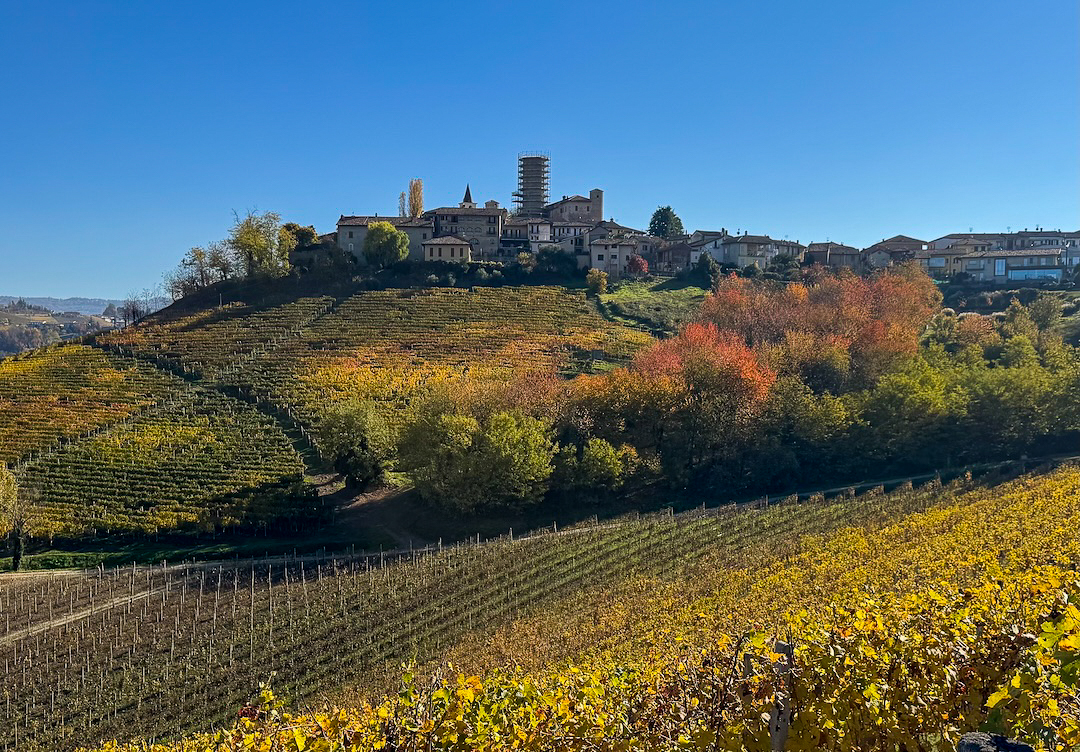
Castiglione Falletto on a late fall day.
How to Buy the 2022s
In many years, conventional wisdom would be “buy the producer and not the vintage.” That’s generally good advice, advice I have offered many times over the last 20+ years. But it’s not enough in this case. The 2022 Barolos can be quite variable, even within specific producers’ portfolios, which suggests the challenges of the growing season were formidable, even for the most diligent growers. It’s truly a wine-by-wine proposition in 2022.
The State of the Market
It’s no secret that the wine world is experiencing a correction. Quite simply, there is too much good wine in the market given current consumption patterns. How that develops in the coming years is anyone’s guess. I am more optimistic than most for the long term. Even so, it is impossible to ignore current events. Although stock markets are at record highs, the world is in a more fragile state than at any point I can remember in my adult life. Geopolitical events, along with tariffs, weigh heavily on the consciousness of both consumers and trade participants who must consider when and how to make significant purchasing decisions.
Having the benefit of surveying the world of wine, my view is that Italian producers in general are better off than those from other countries. Whereas making good to great wine was once enough, today those skills have become more common. Increasingly, the harder task is selling. This is not news to Italian producers, who are used to traveling the world over to promote their wines. The Italians have never been able to lean on the centuries-old pedigree of Bordeaux, the microscopic productions of Burgundy or the ability of wineries in the United States to sell directly to the end consumer. Instead, they have had to hustle to sell their wines. That skill is especially valuable today. Whereas producers from many other regions are being forced to adapt, producers from Italy have been putting in the miles for years and decades. So, I am reasonably optimistic for the fate of these wines in the market, even though 2022 is going to be a very hard sell.
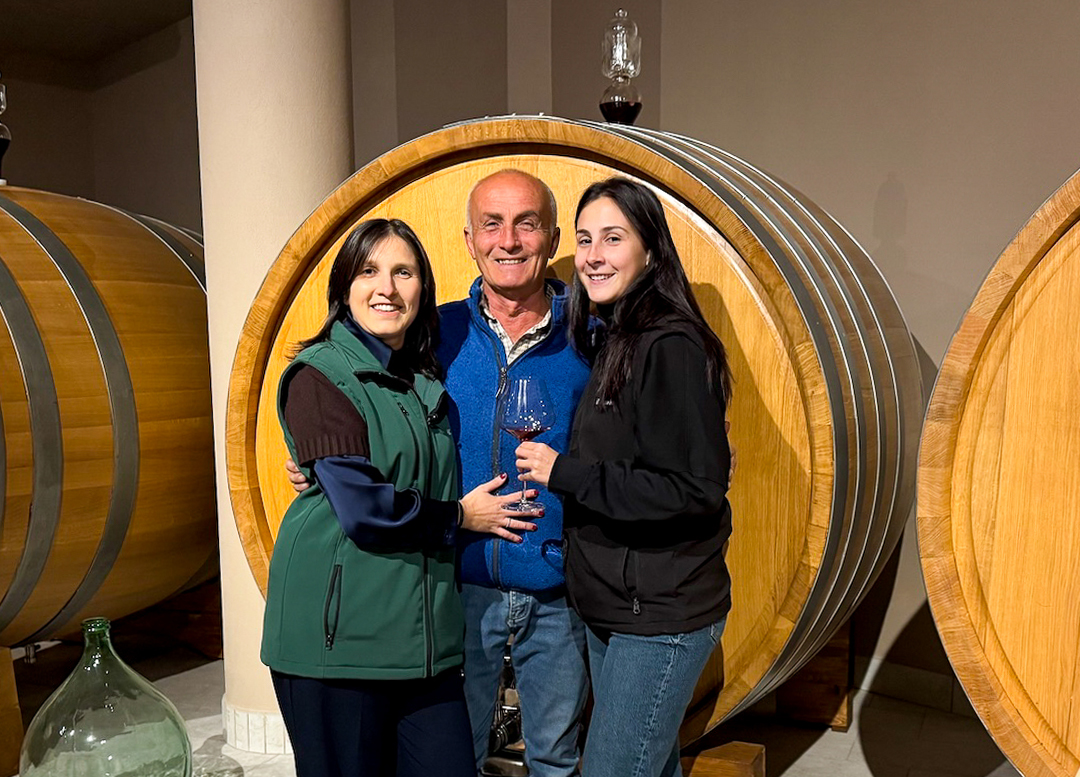
Family patriarch Bruno Pressenda, flanked by daughters Cristina and Alice, at Ca’ di Press.
Under the Microscope: What Makes a Great Barolo Vintage?
Over the last several years, I have shared my model of what makes a great Barolo vintage. It is the sum of everything I have learned from many people, organized in a way that pulls all that information together. Compared to Bordeaux, Piedmont has yet to establish a formal framework for evaluating vintages. Many people have views, but I have never seen them codified. What follows is my set of objective criteria necessary for a Barolo (or Barbaresco) vintage to be considered truly great. This framework is inspired by the late Denis Dubourdieu and the model he developed for assessing Bordeaux vintages. To that, I add my 25-plus years of visiting Piedmont and all the data I have collected in speaking with winemakers, agronomists and other professionals over that time, plus drinking more than my fair share of the wines. As with Dubourdieu’s model, this framework addresses the growing season and does not examine the actual wines.
Naturally, this model is created in the present day. It won’t apply as well to vintages from previous eras, especially vintages from the 1950s-1970s. At that time, warm weather was considered ideal because grapes struggled to ripen. The warmest vineyards, those that faced due south—the famous sorís—were the most coveted. Today, in our climate-change-challenged world, you would be hard-pressed to find a producer who believes that south-facing vineyards are the most ideal.
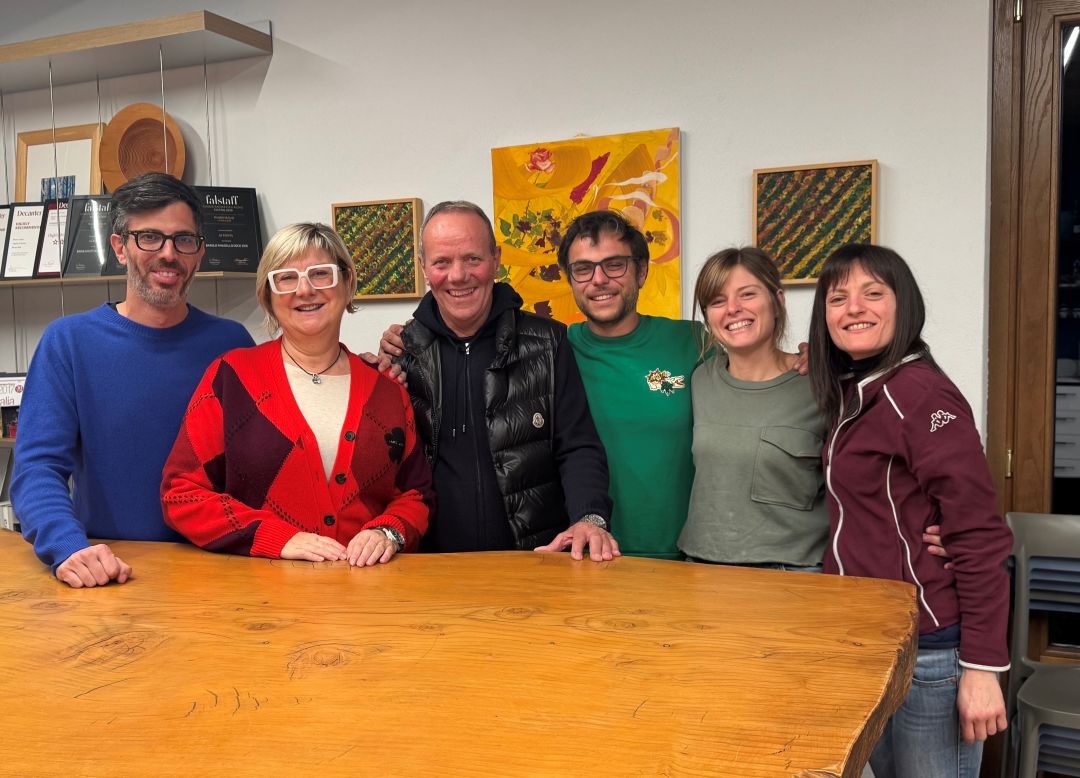
Emerging growers to watch. From left to right: Alessandro, Daniela and Mauro Veglio (Mauro Veglio); Erik Revello (Carlo Revello & Figli); Vittoria and Marta Alessandria (Gianfranco Alessandria).
A Deep Dive on 2022
1. A Long Growing Season – A long growing season, defined as the period from budbreak to harvest, is essential for achieving full physiological ripening of the fruit, skins and seeds. Since Nebbiolo is a highly tannic grape, less than full physiological ripeness is heavily penalizing. The 2022 growing season was defined by a short vegetative cycle. The first condition was not met.
2. Diurnal Shifts – The final phase of ripening must be accompanied by diurnal shifts, which are the swings in temperature from warm days to cool nights. Diurnal shifts create aromatic complexity, full flavor development and color. In 2022, evening temperatures moderated a bit, but not enough to make a material difference. Thus, the second condition was not met.
3. The Absence of Shock Weather Events – Frost and hail can severely and irreparably damage the crop. Similarly, periods of uninterrupted elevated heat can block maturation. In 2022, the season was punctuated by several shock events, from Spring frost to intense heat and a severe lack of water during summer and then through to harvest. Therefore, the third condition was not met.
4. Stable Weather During the Last Month – The last month of the growing season makes the quality of the vintage. Stable weather without prolonged rain episodes is essential for harvesting a healthy crop. In 2022, the final stages of ripening were accompanied by continued heat and drought, which caused further dehydration on the vine. The fourth condition was not met.
5. A Late Harvest – Harvest must take place in October (possibly late September in some areas), with the final phase of ripening occurring during the shorter days of late September and October, as opposed to the longer, hotter days of August. Although harvest did stretch into October, most estates picked in a condensed time frame under far less than ideal conditions. The fifth condition was not met.
In conclusion, 2022 does not meet any of the conditions required for a good-to-great harvest. In some vintages, some parameters can come close to meeting the necessary requirements in the model but fall a bit short. That’s not the case in 2022.
Proprietor Silvia Altare and Assistant Winemaker Tes Cyo. The Altare wines have long been beacons of quality from top to bottom.
Exploring Dolcetto, Barbera, Langhe Nebbiolo, Freisa and Piedmont’s Other Daily Drinkers
As much as Barolo (and Barbaresco) remains the most important wine in the Langhe, Piedmont’s entry-level wines are just as deserving of attention. These are the wines I often look for when I go to restaurants. Top estates put just as much care and attention into these wines, making them ideal bottles for consumers who may be new to Piedmont, or who are simply looking for delicious and affordable wines.
I tasted all the wines in this report during estate visits in November and December 2025, with follow-up tastings in our New York City offices. I tasted many wines more than once. As always, it is impossible to taste everything in one go. Readers can expect to see additional reviews shortly. I apologize in advance for the lack of reviews on Trediberri. I would like to say the dog ate my homework, but in reality, the reviews were lost to a computer glitch that thankfully only affected the wines from this visit. I will retaste these wines very soon.
© 2026, Vinous. No portion of this article may be copied, shared or redistributed without prior consent from Vinous. Doing so is not only a violation of our copyright but also threatens the survival of independent wine criticism.
You Might Also Enjoy
2021 Barolo Part Two: Restless Energy, Antonio Galloni, September 2025
2021 Barolo: Changing Times, Changing Wines, Antonio Galloni, January 2025
2020 Barolo: Selective Excellence, Antonio Galloni, January 2024
2020 Barolo: Part Two, Antonio Galloni, September 2024
2019 Barolo: Back on Track, Antonio Galloni, January 2023
Show all the wines (sorted by score)
- Alessandro e Gian Natale Fantino
- Andrea Oberto
- Armando Parusso
- Barale Fratelli
- Bartolo Mascarello
- Benevelli
- Borgogno e Carbone
- Boroli
- Bovio
- Brezza
- Brovia
- Ca' di Press
- Cappellano
- Carlo Revello & Figli
- Cascina Penna Currado
- Castello di Verduno
- Ceretto
- Chionetti
- Conterno-Fantino
- Coppo
- Cordero di Montezemolo
- Crissante Alessandria
- Diego Conterno
- Elio Altare
- Elio Grasso
- Elio Sandri - Cascina Disa
- Enzo Boglietti
- E. Pira (Chiara Boschis)
- Ferdinando Principiano
- Flavio Roddolo
- Francesco Clerico - Ceretto
- Fratelli Alessandria
- Fratelli Revello
- G.B. Burlotto
- G.D. Vajra
- Giacomo Conterno
- Giacomo Fenocchio
- Giacomo Grimaldi
- Gianfranco Alessandria
- Gian Luca Colombo
- Giovanni Canonica
- Giovanni Corino
- Giuseppe Mascarello & Figlio
- Giuseppe Rinaldi
- Guidobono
- Icardi
- La Briccolina
- La Spinetta
- Le Contrade di Sorano
- Luciano Sandrone
- Luigi Baudana
- Marcarini
- Marengo
- Margherita Otto
- Marziano Abbona
- Massolino
- Mauro Molino
- Mauro Veglio
- Nervi-Conterno
- Paolo Giordano
- Paolo Scavino
- Pecchenino
- Pianpolvere Soprano
- Pio Cesare
- Podere Rocche dei Manzoni
- Poderi Aldo Conterno
- Poderi e Cantine Oddero
- Poderi Luigi Einaudi
- Prunotto
- Renato Corino
- Roagna
- Roccheviberti
- Spirito Agricolo Ballarin
- Vietti