
Browse using the new Vinous website now. Launch →
Printed by, and for the sole use of . All rights reserved © 2015 Vinous Media
Bordeaux 2023 in Bottle: Coming Around Again
BY NEAL MARTIN | FEBRUARY 12, 2026
Left Bank: Saint-Estèphe | Pauillac | Saint-Julien | Margaux | Pessac-Léognan and Graves | Left Bank Satellites | Sauternes
Right Bank: Pomerol | Saint-Émilion | Right Bank Satellites
A year feels like a shrinking slice of time as you get older. Perhaps that is why I am still recovering from the last primeur as I pack my bags for the next. Such a quick tempo was never problematic when en primeur campaigns were successful and nascent vintages flew off the shelves. But as Bordeaux’s problems have mounted in tandem with unsold stock, there is a concertina of vintages all squashing against each other, akin to a motorway pileup where oncoming vehicles cannot brake in time to avoid another casualty.
What hurts, what frustrates winemakers the length and breadth of Bordeaux, is that this state of affairs is not connected to quality. This is no early-1990s nadir when the region was beleaguered by inclement seasons that poleaxed successive primeurs. Au contraire, quality is better than it has ever been. The problem for newborn vintages like 2023 is that they must immediately jostle for attention against “toddlers” that remain on merchants’ shelves and—disquietingly for proprietors—inside châteaux’s own cellars as allocations are finally being refused by Bordeaux négociants.
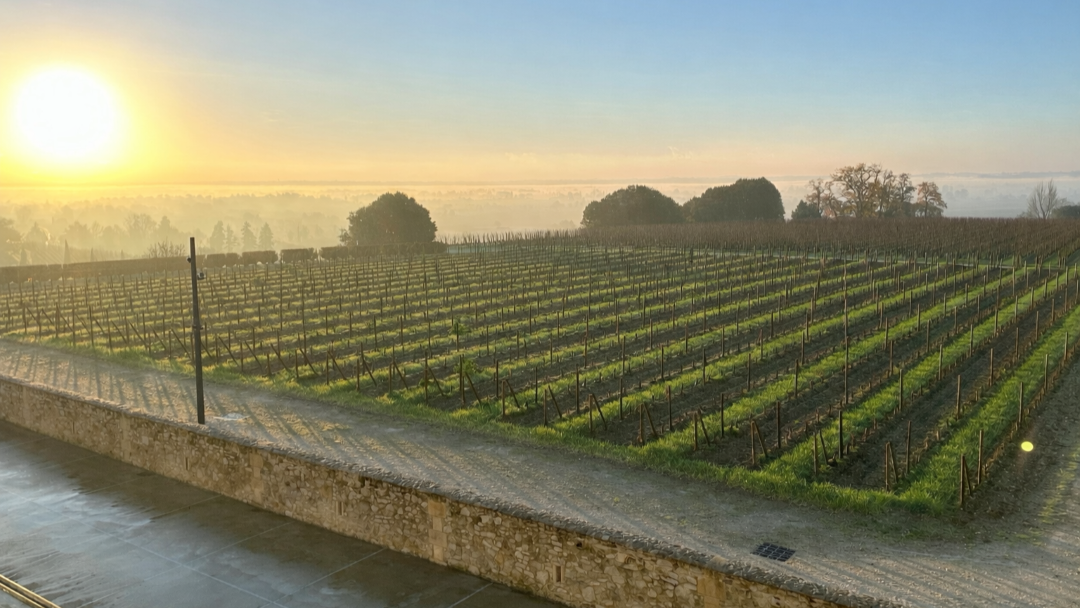
The view from the balcony at Bélair-Monange.
Consequently, you could argue that appraising the latest bottled vintage is unnecessary. By the same token, you could argue that it is more important than primeur. After all, here we inspect the finished article, not to mention that everything is available, from First Growths down to Cru Bourgeois. Moreover, many of these wines can be enjoyed with little cellaring, even though I have made my views clear that great Bordeaux always requires patience and time. The fact is that many wines can be purchased for less than they can en primeur, postponing buying decisions for many until the wines are physically released (or later). Who knows the trajectory of prices in coming months? Consumers rightly berate châteaux for their avarice in recent years, yet a vast proportion of 2023s are less expensive than many Village Crus from the Côte d’Or. Is that a reflection of Bordeaux being underpriced, or Burgundy being overpriced?
I write all this to explain why, despite the brickbats thrown towards the Gironde Estuary, there are valid reasons to examine the latest bottled vintage. Though I pull no punches where it is underwhelming, 2023 still has much to offer.
The Growing Season
A quick primer on the growing season. For an unexpurgated version of events, I advise readers to peruse my en primeur report.
As I reported then, there was no thematic arc to the growing season. The vines’ growth cycle was early due to warmer temperatures, though fortunately, 2023 was unafflicted by any frost episodes. Thereafter, temperatures remained relatively warm, fitting in with the growing cadre of solar vintages: May was 1°C above average at 17.1°C, while June was 2.4°C above average at 21.7°C. But there was no drought. Indeed, June was damp and saw 83 millimetres (mm) of rain, which predicated outbreaks of mildew that disproportionately affected the Merlot. The acuteness of mildew pressure depended on the level of rainfall, higher on the Right Bank than in the Médoc, though these appellations escaped unscathed compared to the Entre-Deux-Mers, which was decimated by mildew. Variances in mildew pressure also depend on mesoclimate, soil type, rootstock and vine age, as well as the use of cover crops. It was vital for vineyard managers to spray pre-emptively, because once mildew takes hold, then you are playing catch-up—a lesson many learned in 2023.
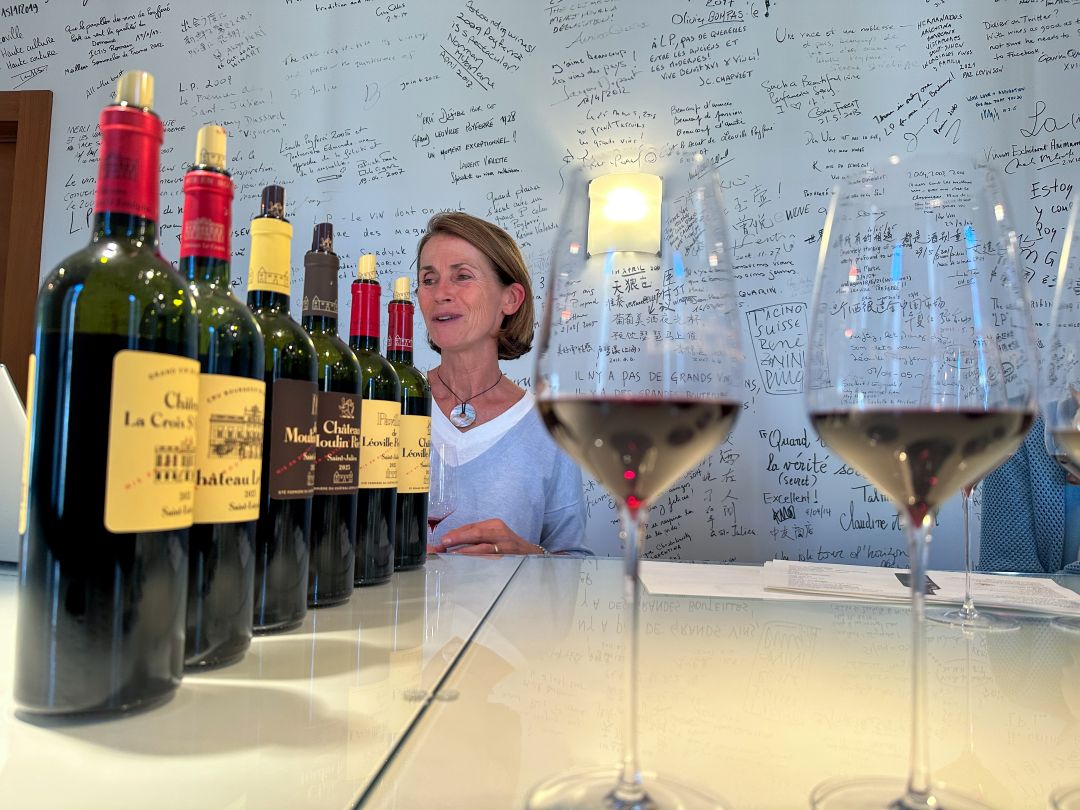
Sara
Lecompte Cuvelier in the graffitied tasting room at Léoville Poyferré.
Flowering was slightly later than usual, but that was no bad thing, as it coincided with a spell of clement weather that spawned a voluminous crop. July and August saw warm temperatures close to previous growing seasons, at 21.1°C and 21.8°C, respectively. This helped to halt the spread of mildew, though, by that time, some berries were bloated after rain in June, prompting green harvesting to reduce yields and enhance concentration. July was dry but unseasonably cloudy with fewer sunlight hours than average, dampening expectations. Two heatwaves from August 18 to 24 and September 3 to 10 came as a jolt, especially for younger vines, as temperatures soared to 38°C. Consequently, despite average lower temperatures, vines could still shut down, a factor more prevalent than some winemakers admit. This altered perceptions of the season, as average temperatures in September were a balmy 21.3°C. Bunches were able to reach phenolic maturity without similar sugar levels to 2022 due to lower average temperatures throughout the growth cycle, thus leading to lower alcohol levels.
Down in Sauternes, the humid environment that seemed to dog the Left and Right Bank actually fomented perfect conditions for the creation of noble rot. Many went out in early September to pick shrivelled, non-botrytized berries and passerillage, to have lots that would impart acidity. Then, botrytis infection rushed across the appellation following 75 mm of rain on September 11. So, instead of several small tris, most estates conducted just a couple of large tris, which formed entire blends during 20 days of warm, dry weather from September 23 to October 18. By that time, practically everything was picked. There was just a bit of grape-worm that affected some of the Sauvignon Blanc in Sauternes and Bommes, but it was only a minor problem that could be dealt with easily.
The Harvest
The whites were harvested beginning mid-August, which is becoming the norm. Sauvignon Blanc was picked from August 12, three days later than in 2022, and the Sémillon a couple of days later. This lasted until around the second week of September, depending on the property.
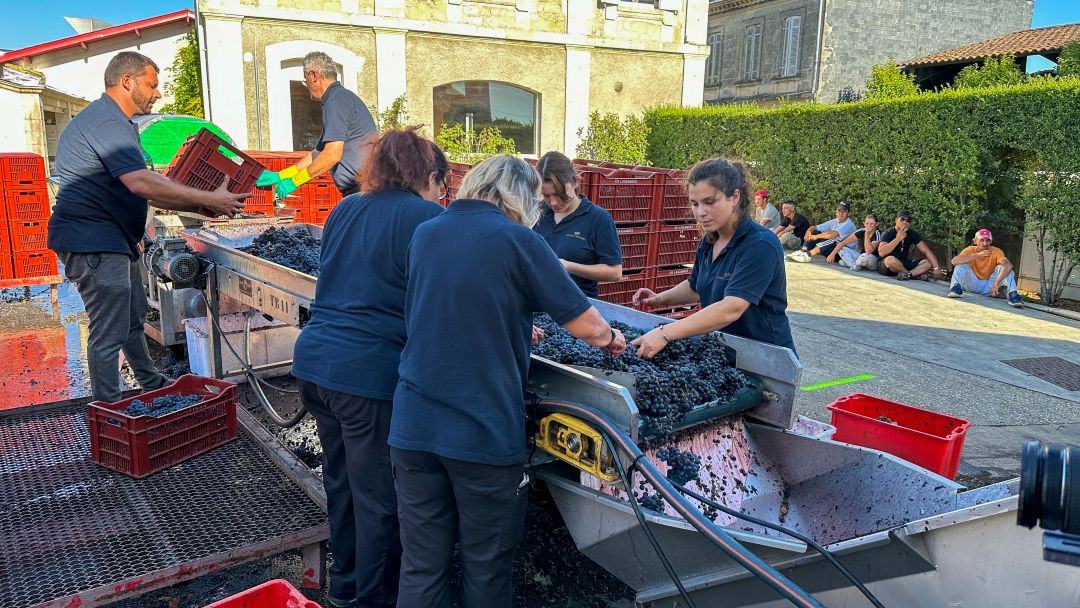
Sorting the 2023 harvest at Château Lascombes.
The reds kicked off with the early-ripening Merlot around the first week of September, though harvest clicked up a few gears in the week commencing September 11. It was full speed ahead in mid-September until French weather forecasters threw a spanner in the works and predicted rainy weather on September 20, expediting picking. However—not for the first time—the forecast proved inaccurate. The 100 mm of rain never materialised. It was more like 20 mm, which was actually beneficial, enough to push the Cabernets to full maturity. Dry and sunny conditions allowed picking to continue and permitted teams to pick à la Sauternes, conducting sorties in and out of the vines—precision picking.
It was a healthy crop rather than a bumper. Official figures for AC Bordeaux show that the harvest totalled 3.84 million litres, 13% above 2022, though, within the context of the last decade, 2023 is the third “small” vintage in a row. However, there are significant inter-appellation differences, and I refer readers to my original report for specifics. Essentially, the Left Bank saw a bountiful crop, for example, 51.6 hl/ha in Saint-Estèphe, 62% more than the previous vintage. These decline as you move towards the Right Bank.
How I Tasted the Wines
I assessed the 2023s over three separate weeks of tasting in September, October and December, with a few stragglers dispatched to my home office in the first days of January. Appointments comprised the usual blend of château visits and tastings at négociants and consultants. I tasted many of the top wines, the Grand Cru Classés, on multiple occasions. At the time of writing, I am awaiting samples from the Cercle de Rive Droite, which I will add forthwith, along with two additional shipments of samples.
The Wines
Revisiting the 2023 Bordeaux, the wines generally vindicated my original assessment, with the inevitable recalcitrant that either surpassed or failed to meet my original projections. It is a sporadically great vintage with virtues that will tickle the fancy of those seeking more classically styled claret. It is not a consistent vintage, for there are shortcomings that cannot be overlooked, but point your wallet in the right direction and trust me, 2023 Bordeaux will tick a lot of boxes.
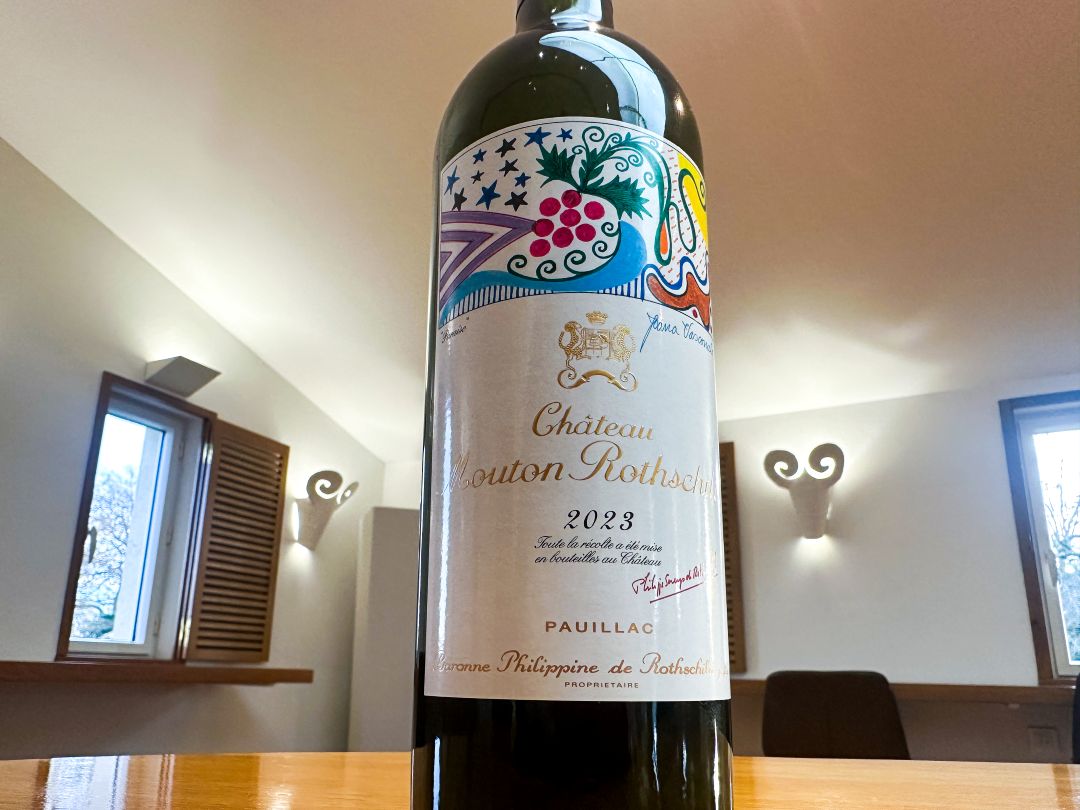
I
visited Mouton-Rothschild a couple of days after they revealed the label
for the 2023 vintage, by Portuguese artist Joana Vasconcelos.
I titled my primeur report “The Dalmatian Vintage” because spots of astounding quality are scattered from Bordeaux’s head to toe. The caveats I observed then have not miraculously vanished. Sometimes the wines are afflicted by hard, rough-edged tannins and—perhaps even more so in bottle—dry finishes. As I wrote at the time, the aromatics are often delightful, but sometimes they fail to transfer onto the palate, raising and dashing hopes in one swig of the glass. Some wines are occasionally beset by overripe fruit, possibly due to de-leafing in July to improve air circulation, only to be caught out by the August heatwaves. That is the gamble you take. Hindsight is a valuable thing. Sometimes finishes seem to just drift away so that the wines lack grip: signs of over-cropping, or occasionally taking infusion-like maceration too far and not obtaining sufficient body and density.
Too many Bordeaux “experts” gloss over shortcomings. Not the done thing these days. That does the region no favours, least of all to anyone reading reports written through rose-tinted spectacles or by those prone to score inflation. I tasted some unequivocally faulty wines deemed close to perfection elsewhere. I would love to see those critics reassess the wines blind.
With that out of the way, let me state for the record, hand on heart: I have great appreciation for the 2023 vintage. No, it does not quite belong within the pantheon of unequivocal greats such as 2010, 2016 or 2022. But 2023 deserves to be ensconced within the notional second tier. Many wines are blessed with magnificent perfumes that are very seductive, intensely floral and pure. Crucially, the 2023s are more classic in style than the 2022s: less opulent, stricter, sometimes quite saline in style, all facets I appreciate. The 2023s rarely achieve the snow-capped peaks of the previous vintage, but there is definitely a stylishness to the best that will stand them in good stead for ageing.
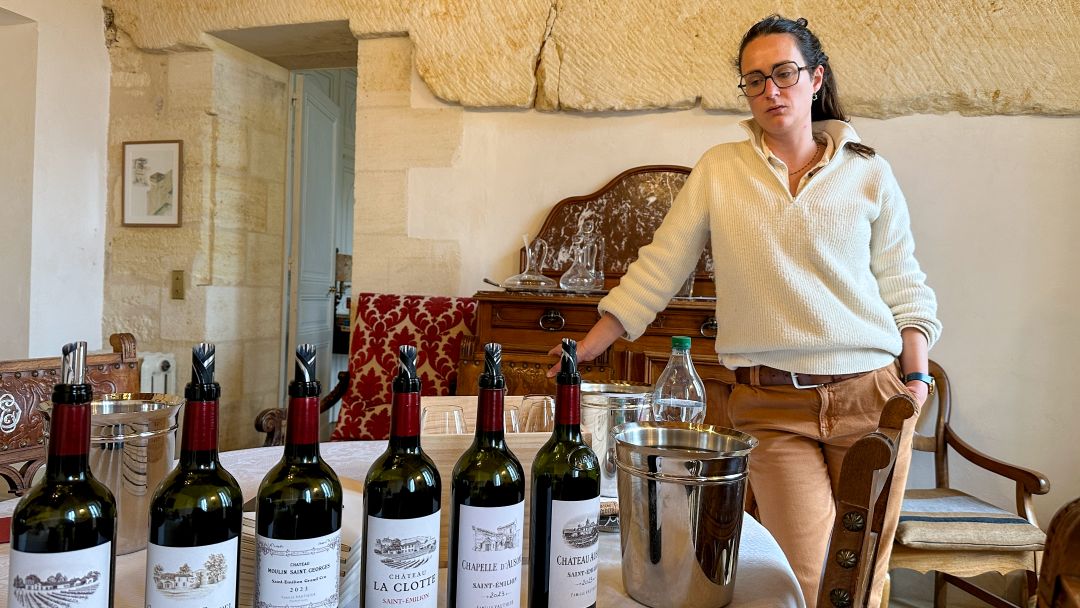
Constance
Vauthier guides me through the 2023s at Ausone.
Initially, I suspected that 2023 leaned towards a Left Bank vintage, though as my tasting visits progressed, I found myself appreciating the Right Bank Saint-Émilion and Pomerols, plus the top performers in satellite appellations. The likes of Lafleur, Le Pin, Troplong Mondot and Cheval Blanc are unequivocally magnificent and may well challenge the supremacy of their 2022 counterparts in the future. The dry whites, as I mentioned in my en primeur report, are well worth investigating. Check out the whites from Olivier, Domaine de Chevalier, Lune d’Or, Smith Haut Lafitte, Les Champs Libres and Valandraud. I only tasted a dozen or so Sauternes, though what I did encounter looks extremely promising, crowned by a brilliant Suduiraut. (Readers should note that I will taste the 2023 Yquem in New York soon.)
Below, I present a dozen wines, not necessarily the highest scoring, but those that I think represent sound value in today’s market…
Bourgneuf (Pomerol)
Branaire Ducru (Saint-Julien)
Clos Cantenac (Saint-Émilion)
Clos des Lunes – Lune d’Or (Bordeaux Blanc)
German-Marbuzet (Saint-Estèphe)
Lamolière (Fronsac)
Château des Laurets (Puisseguin Saint-Émilion)
Poesia (Saint-Émilion)
La Pointe (Pomerol)
Soutard (Saint-Émilion)
La Tour Figeac (Saint-Émilion)
Trottevieilles (Saint-Émilion)
Final Thoughts
Remember when everything revolved around en primeur? It was a critical few days that shaped a vintage’s reputation. It created stars. Its ripples were felt for the rest of the year. It underpinned the region’s economy through the network of distributors from château to consumer. Income generated from primeur sales could subsidise less profitable but worthy regions and benefit winemakers beyond Bordeaux.
The spotlight has partially shifted to the same wines in bottle because plenty still seek homes. And why shouldn’t that be more important? Conjecture from the finished product is less prone to deviation than that based on prenatal scans. It begs the question whether a tepid reaction to wines at primeur predicates a similar reaction in bottle, or whether it mirrors a shift in buying habits, with consumers foregoing primeur and simply waiting for bottling before deciding whether to open their wallets.
The 2023 vintage is full of wonderful wines. The one vital question is: If quality is no longer sufficient to entice consumers to buy, then what is? If you could snap your fingers and the backlog of unsold stock suddenly vanished, would that make a difference? I am certain that it would. As long as this wine lake exists, it will act as a drag on subsequent primeur campaigns, irrespective of quality. The 2023s will drink earlier than the richer and denser 2022s, and the vintage does not deserve to be overlooked simply because of these challenging times for the region. As the lyrics to Carly Simon’s classic 1970s hit go…
"I
know nothing stays the same
But if you're willing to play the game
t’s coming around again.”
© 2026, Vinous. No portion of this article may be copied, shared or redistributed without prior consent from Vinous. Doing so is not only a violation of our copyright but also threatens the survival of independent wine criticism.
You Might Also Enjoy
Event Horizon: Bordeaux 2024 Primeur, Neal Martin, May 2025
2024 Bordeaux En Primeur: The Razor’s Edge, Antonio Galloni, April 2025
A Place Beyond Praise: Bordeaux 2022, Neal Martin, February 2025
2022 Bordeaux in Bottle: Living in the Present, Antonio Galloni, January 2025
The Dalmatian Vintage: Bordeaux 2023, Neal Martin, April 2024
Bordeaux at the Crossroads: 2023 En Primeur, Antonio Galloni, April 2024
Show all the wines (sorted by score)
- Alcée
- Angélus
- Anthonic
- Argilius
- Ausone
- Bad Boy
- Badette
- Balestard de Tonnelle
- Barbe Blanche
- Barde-Haut
- Barrail Saint André
- Barreyres
- Bastor-Lamontagne
- Batailley
- Beaumont
- Beau Secret
- Beauséjour
- Beauséjour Duffau-Lagarrosse
- Beau-Site
- Beauvillage
- Bel Air
- Bel Air Eiffel
- Bel Air Gloria
- Bélair-Monange
- Belgrave
- Bellefont-Belcier
- Bellegrave du Poujeau
- Berliquet
- Bernadotte
- Bernon Bécot
- Bertrand Braneyre
- Beychevelle
- Beynat
- Blaignan
- Bourgneuf
- Bournac
- Bouscaut
- Boyd-Cantenac
- Branaire-Ducru
- Branas Grand Poujeaux
- Brande-Bergère
- Briston-Brillette
- Brown
- Cadet-Bon
- Calon Ségur
- Canon
- Canon Chaigneau
- Canon La Gaffelière
- Canon Pécresse
- Cantelys
- Cantemerle
- Cantenac Brown
- Cantin
- Capbern
- Cap du Moulin
- Cap Léon Veyrin
- Carbonnieux
- Carcanieux
- Cardinal
- Carignan
- Carlmagnus
- Caroline
- Carteau Côtes Daugay
- Castera
- Certan de May
- Chante Alouette
- Charmail
- Chasse-Spleen
- Château des Sabines
- Chauvin
- Chemin Royal
- Cheval Blanc
- Cissac
- Clarisse
- Clarke
- Clauzet
- Clement-Pichon
- Clerc Milon
- Clinet
- Clos Badon
- Clos Beauregard
- Clos Cantenac
- Clos de Boüard
- Clos de la Molénie
- Clos de la Vieille Église
- Clos de l'Oratoire
- Clos de Sarpe
- Clos des Jacobins
- Clos des Lunes
- Clos Dubreuil
- Clos du Marquis
- Clos du Roy
- Clos Floridene
- Clos Floridène
- Clos Fourtet
- Clos Haut-Peyraguey
- Clos La Bohème
- Clos l’Eglise
- Clos les Grandes Versannes
- Clos l'Hermitage
- Clos Lunelles
- Clos Manou
- Clos Marsalette
- Clos Puy Arnaud
- Clos René
- Clos Romanile
- Clos Saint-Julien
- Clos Saint-Martin
- Clos Vieux Taillefer
- Corbin
- Corconnac
- Cos d'Estournel
- Cos Labory
- Côte de Baleau
- Côte Montpezat
- Coufran
- Couhins-Lurton
- Coutet
- Croix Cardinale
- Croix de Labrie
- Croix de Rambeau
- Croix de Trale
- Croizet-Bages
- d'Agassac
- d'Aiguilhe
- Dalem
- Dallau
- D'Anglade
- d'Arcins
- d'Armailhac
- d'Arsac
- Dassault
- de Brondeau
- de Camensac
- de Chambrun
- de Chantegrive
- de Clotte
- de Cruzeau
- de Fieuzal
- de Fonbel
- de France
- de Haut Coulon
- de la Croix
- de la Dauphine
- de La Dauphine
- de Lamarque
- de la Rivière
- de Laussac
- de Marsan
- de Millery
- de Pez
- de Portets
- de Pressac
- de Ricaud
- de Rochemorin
- des Laurets
- Desmirail
- Destieux
- de Valois
- de Veyres
- de Viaud
- Deyrem Valentin
- d'Issan
- Doisy-Daëne
- Domaine André Leclerc
- Domaine de Cambes
- Domaine de Chevalier
- Domaine de la Solitude
- Domaine de l'Eglise
- Domaine Les Sadons
- Domaine Virginie Thunevin
- Domeyne
- Doyac
- du Bois Chantant
- du Cartillon
- Duhart-Milon
- du Moulin Noir
- du Moulin Rouge
- du Petit Puch
- du Retout
- du Tertre
- Dutruch Grand Poujeaux
- Enclos de Viaud
- Enclos Tourmaline
- Escot
- Fage
- Faizeau
- Fayat
- Ferran
- Ferrande
- Ferrière
- Feytit-Clinet
- Figeac
- Finegrave
- Fleur Cardinale
- Fleur Haut Gaussens
- Fleur la Mothe
- Fleuron de Liot
- Fombrauge
- Fonbadet
- Fonréaud
- Fonroque
- Fontenil
- Fourcas Dupré
- Fourcas Hosten
- Franc La Rose
- Franc Mayne
- Franc Pipeau
- Gazin
- German Marbuzet
- Giscours
- Gloria
- Goudichaud
- Grand Barrail Lamarzelle Figeac
- Grand Corbin
- Grand Corbin-Despagne
- Grand Destieu
- Grand Jean
- Grand Mayne
- Grand-Puy Ducasse
- Grand-Puy-Lacoste
- Grand Village
- Graves de Pez
- Greysac
- Gruaud Larose
- Guiraud
- Haut-Bacalan
- Haut-Bages Libéral
- Haut-Bages Monpelou
- Haut-Bailly
- Haut-Bana
- Haut Barrail
- Haut-Batailley
- Haut-Bergeron
- Haut-Bergey
- Haut-Bernat
- Haut Bertinerie
- Haut-Breton Larigaudière
- Haut-Brion
- Haut Brisson
- Haut-Chaigneau
- Haut Condissas
- Haut Coteau
- Haut de la Bécade
- Haut-Lagrange
- Haut-Madrac
- Haut-Maillet
- Haut-Marbuzet
- Haut Maurac
- Haut-Simard
- Hennebelle
- Hosanna
- Hyon La Fleur
- JCP Maltus - Teyssier
- Jean Faure
- Kirwan
- Labégorce
- La Bessane
- La Brande
- La Branne
- La Bridane
- La Cabanne
- La Chandellière
- La Chenade
- La Clare
- La Clémence
- La Clotte
- La Commanderie
- La Communion
- La Conseillante
- La Cour d'Argent
- La Couronne
- La Création
- La Croix
- La Croix Bellevue
- La Croix de Pez
- La Croix des Moines
- La Croix du Casse
- La Croizille
- La Dominique
- Lafite Monteil
- Lafite Rothschild
- Lafleur
- La Fleur d'Arthus
- Lafleur-Gazin
- La Fleur-Pétrus
- La Fleur Pourret
- La Fon de Berger
- La Fon du Berger
- Lafon-Rochet
- Lafont-Fourcat
- Laforge
- La Fortune
- La Gaffelière
- La Garde
- La Grâce Fonrazade
- Lagrange (Pomerol)
- Lagrange (Saint-Julien)
- La Grave
- La Gurgue
- La Haye
- La Lagune
- Lalaudey
- La Louvière
- La Marzelle
- L'Ambroisie
- La Mission Haut-Brion
- Lamolière
- La Mondotte
- Lamothe Vincent
- L'Amour
- Landat
- Langoa-Barton
- Laniote Saint-Émilion
- L'Annonciation
- La Patache
- La Pointe
- L'Archange
- Larcis Ducasse
- Larmande
- Laroque
- La Roque de By
- La Rose Brana
- La Rose Brisson
- La Rose Perrière
- Larrivaux
- Larrivet Haut-Brion
- Larruau
- Lascombes
- La Sergue
- La Serre
- Lassègue
- La Tonnelle
- Latour
- Latour à Pomerol
- La Tour Blanche
- La Tour Carnet
- La Tour de By
- La Tour de Mons
- La Tour Figeac
- Latour-Martillac
- L'Aurage
- La Vaisinerie
- La Valière
- La Vieille Cure
- La Violette
- La Voûte
- Le Bon Pasteur
- Le Borderon
- Le Boscq
- Le Clos du Beau-Père
- Le Coteau
- L'Ecrin de Couleys
- Le Crock
- Lécuyer
- Le Dôme
- Le Gay
- L'Eglise-Clinet
- Le Nardian
- Léognan
- Léoville Barton
- Léoville Las Cases
- Léoville-Poyferré
- Le Pin
- Le Prieuré
- Leroy-Beauval
- Lescalle
- Les Carmes Haut-Brion
- Les Champs Libres
- Les Cruzelles
- Les Gravières
- Les Ormes Sorbet
- Lesparre
- Lespault-Martillac
- Les Perrières
- Lestage
- Lestage-Darquier Grand Poujeaux
- Lestage Simon
- Les Trois Croix
- Les Valentines
- Le Thil
- L'Évangile
- Leydet-Valentin
- L'Hêtre
- L'If
- Lilian Ladouys
- L'Indécise
- Linot
- Liot
- Livran
- Loudenne
- Lousteauneuf
- Lurra
- Lusseau
- Lynch Bages
- Lynch-Moussas
- Lynsolence
- Maillet
- Malartic Lagravière
- Malescot St. Exupéry
- Mangot
- Mareil
- Margaux
- Marpaout
- Marquis d'Alesme Becker
- Marquis de Terme
- Martin
- Martinho
- Maucaillou
- Maucamps
- Maurac
- Mauvesin Barton
- Mazerat
- Mazeyres
- Méjean
- Meyney
- Meyre
- Milens
- Monbousquet
- Monbrison
- Moncets
- Montaiguillon
- Montlabert
- Montlandrie
- Montlisse
- Montrose
- Montviel
- Moulin de Blanchon
- Moulin de Grandère
- Moulin de la Rose
- Moulin du Cadet
- Moulin du Canhaut
- Moulin-Galhaud
- Moulin Haut-Laroque
- Moulin Riche
- Moulin Saint-Georges
- Mouton Rothschild
- Murat
- Nairac
- Nenin
- Noaillac
- Olivier
- Ormes de Pez
- Pabus
- Pagus de Lagrange
- Palmer
- Paloumey
- Panigon
- Pape Clément
- Pas de l'Ane
- Patris Querre
- Pauillac par Pascale Peyronie
- Pavie
- Pavie Macquin
- Pédesclaux
- Perrin d'Hoge
- Petit Bocq
- Petit Faurie de Soutard
- Petit Gravet Ainé
- Petit Landon
- Pétrus
- Pey La Tour
- Peymouton
- Peyredon Lagravette
- Phélan Ségur
- Pibran
- Piche-Leibre
- Pichon Baron
- Pichon-Longueville Comtesse de Lalande
- Plagnac
- Plince
- Poesia
- Poitevin
- Pontet-Canet
- Pontey
- Porte Chic
- Potensac
- Poujeaux
- Prieuré-Lichine
- Prieuré Saint-Anne
- Puyblanquet
- Puy Castéra
- Puygueraud
- Quintus
- Rahoul
- Ramage La Batisse
- Rauzan Gassies
- Rauzan-Ségla
- Rayne-Vigneau
- Réaut
- Reignac
- Reynon
- Reysson
- Ripeau
- Roc de Bécot
- Roc de Cambes
- Rollan de By
- Rol Valentin
- Ronan de Clinet
- Roudier
- Rouget
- Rouillac
- Roylland
- Saamlong
- Saintayme
- Saint-Bonnet
- Sainte-Marie
- Saint-Pierre (Saint-Julien)
- Saint-Robert
- Samion
- Sansonnet
- Saransot-Dupré
- Seguin
- Ségur de Cabanac
- Sénéjac
- Sénilhac
- Séraphine
- Sérin
- Siaurac
- Sigalas Rabaud
- Sigognac
- Simard
- Siran
- Smith Haut Lafitte
- Sociando-Mallet
- Soudars
- Soutard
- Soutard-Cadet
- St. Georges St. Emilion
- Suduiraut
- Taillefer
- Talbot
- Tauzinat L'Hermitage
- Tayac
- Tertre Roteboeuf
- Tessendey
- Teynac
- Thieuley
- Toumalin
- Tour Baladoz
- Tour des Termes
- Tournefeuille
- Tour Prignac
- Tour Saint Christophe
- Tour Saint-Fort
- Tour Seran
- Trocard
- Tronquoy-Lalande
- Troplong Mondot
- Trotanoy
- Trotte Vieille
- Tutiac
- Valandraud
- Verdignan
- Vieux Château Certan
- Vieux Château Landon
- Vieux Château Palon
- Vieux Château Saint André
- Vieux Gabarey
- Villemaurine
- Vrai Canon Bouché
- Vray Croix de Gay
- Yon-Figeac