
Browse using the new Vinous website now. Launch →
Printed by, and for the sole use of . All rights reserved © 2015 Vinous Media
Burgundy 2024: The State of Play
BY NEAL MARTIN | MARCH 5, 2026
Aubert de Villaine gazes down upon the packed courtyard where rappers hype a bushy-tailed crowd sprinkled with celebrated winemakers and palpable positivity. Attending my first Vin et Hip-hop at the Clos Vougeot, this mise-en-scene feels emblematic of a wine region that has it good. It is a perfectly executed nexus of history, youth culture, hedonism and fine wine that defies handwringing about Gen Z’s apathy towards alcohol. Can we bottle this euphoria and infectious reverie and share it around? Other regions need it badly. There are places where ancient vines are being bulldozed, prices are stagnating and livelihoods are imperilled.
Unencumbered by large volumes, the diminished amount of Côte d’Or’s 2024s neatly folds into the narrative of minuscule quantities, conjuring a tantalising veil of elusiveness and scarcity. Red yields can be counted on fingers. Meanwhile, demand for white Burgundy seems impervious to upheaval. Despite the risk of its reputation being derailed by premature oxidation, that blight was not the kryptonite some predicted. Sure, it has not escaped my attention that other countries conjure exquisite Chardonnay, occasionally doppelgängers for top-notch Burgundy; the only trouble is that these wines are not born in Meursault or Puligny-Montrachet.
The three most commonly heard words at January’s London tastings were “Burgundy. Is. Expensive.” Expletive optional. Merchants should have posted a warning sign in big red letters as customers thronged inside the tasting rooms. Whilst I do not dispute that fact, it is a far more complex picture. Examining why Burgundy prices remain high, the purview must expand to the changing anatomy of the Côte d’Or, since it underlies almost everything, figuratively and literally. A useful analogy I recently heard is to look at the Côte d’Or as a motorway. Cars travel at different speeds. Some overtake on the outside, and cheeky buggers overtake on the inside.
Let’s undertake a road survey…
There are the elite, coveted before the region’s ascension and fought over thereafter, the handful of A-listers. People dream about direct allocations—kings’ ransoms paid to merchants, often multiples of reasonable cellar-door prices. Peruse the list of a French bistro that buys direct from say, Coche-Dury or Raveneau, do the math, and feel aggrieved at the margins you are swallowing. Against expectations, in recent months, these hallowed polestars have not been immune to secondary market forces. There is a point beyond which markups are so cynical that even the wealthiest oenophiles balk. Nobody likes being taken for a fool. As a result, in recent months, prices did not fall off a cliff but deflated. Wines stopped flying off shelves. That is all moot for those producers who remained prudent, never cashed in, resisted the temptation for egregious price hikes. Even secondary market prices for Domaine de la Romanée-Conti softened from their peak by about 25% to 30%, though that is still above what you pay from official agents.
Secondly, there are the arrivistes seeking to join the highest echelon. In Bordeaux, that is rendered impossible thanks to the immutable 1855 Classification (though the garagistes gave it a shot). It is much easier to ascend in a region that operates more opaquely, which I’ll come to later. The pricing strategy is simple. Instead of painstakingly and organically growing your reputation over years, take a shortcut and launch your wines with prices in lockstep with the greats. That implies pedigree, chimerical or not. You do not even have to slog away in the vineyard. Just buy grapes or must like the plethora of négociant-éleveurs. Or if self-mythologising on social media eats up too much of your precious time, take the ultimate shortcut: forget the éleveurs bit and buy finished wines. It's perfectly legal, as it has been since time immemorial, though a couple of reputed merchants clearly bristle at seeing their own wines repackaged and resold under a different guise with a hefty wedge on top. Label and glue do not cost that much, do they?
Is it fair? Maybe not, but it’s just a free market working. Capitalism. Nothing stops that merchant from raising their own prices except rectitude.
As I stated in my January report, “Burgundy 2024: One Battle After Another,” I choose not to chase the shoal of micro-négociants. In any case, some of them must be allergic to independent professionals who, God forbid, might give an objective opinion. In 2026, some are finding the going tough. It is not an insurmountable task to inveigle a few affluent consumers or sommeliers who are keen to demonstrate that they’re ahead of the curve. However, the litmus test is an active secondary market. That is the meaningful way to validate premium ex-cellar prices and dispel doubt amongst direct buyers, which is faintly farcical since wine is made to be drunk, not flipped. A combination of economic headwinds and “wising up” has punctured this market to varying degrees depending on the grower. If you are a big spender planning to splash out on a nice Burgundy, then you’re better off going with an established name who earned their spurs than chancing it with the latest hotshot.
As I say, it is complicated. Micro-négociants come in different forms. While some might simply repackage finished wines, at the other extreme, others insist upon control at every stage from tending vines to bottling and deserve as much respect as those who own vines. There is a sliding scale between those poles. Many négociant-éleveurs could never afford to buy land themselves, and/or this could be the only means of sustaining a living. Under current EU legislation, producers must state nutritional information on each bottle, but not information that might shed light on what wine lovers are actually paying for.
Quality is not correlated to the extent of winemakers’ responsibilities; after all, you could theoretically demand total control but lack the wherewithal or work ethic. Talent is never equally dispersed. Wonderful wines most certainly come from new blood, though minute volumes, inaccessibility and unaffordable prices conspire to impede writers like me from sorting the wheat from the chaff. The preponderance of high prices gives the impression that it is a vast field of wheat. Furthermore, perspicuity can be skewed. It would be galling to discover you invested in what turned out to be the emperor’s new clothes, so you avoid losing face or denting your ego by feigning satisfaction whilst speed-dialling your merchant to offload as soon as possible. I prefer my Burgundy to bear the stamp of the person who crafted it, in the same way that I penned this piece myself rather than using ChatGPT. To each their own.
Some micro-négociants are willing to accept extortionate prices for purchasing fruit in the foreknowledge that they can be covered by selling wine for extortionate prices. This fuels an upward spiral, each side leveraging their position, not least for Grand Crus—Corton-Charlemagne is often name-checked since landowners feel particularly emboldened by their postcode. This mirage of quality distorts reality and wines’ true value. Yet it cannot be denied that this strategy has been successful and has generated a proliferation of cult names. The ruse unravels when a sluggish secondary market casts doubt on whether a premium is justified by quality or simply to connote superiority. This sows discontent among those reliant on purchased fruit who do apply restraint and do not zealously chase the bucks. I know several who forego even a prestigious cuvée rather than hike prices if no alternative source can be found.
Is this message getting through to the more unscrupulous sellers of Pinot Noir, Chardonnay or, given some of the insane sums occasionally asked, Aligoté?
A little. Probably not enough.
Burgundy prices defy gravity and will resist coming down unless there is some seismic crash in demand, some force majeure. That has not happened. There is still bullishness, however misplaced in some quarters. Ergo, despite what is considered generally to be a vintage of less quality (2024), sellers of fruit hold their positions, ready and primed for the next opportunity to lever up prices.

One aspect I touched upon in my main article is the extent of fermage (rental) contracts that many aficionados are unaware of. Many portfolios comprise a mixture of owned and rented vineyards. Rents need to be paid no matter the yield, another factor that applies upward pressure on prices. Virgile Lignier was one of several who mentioned this.
Over the last decade, outside investors have actively—some might say ravenously—bought vineyards. You could posit that the unintended firing gun came in 2017 when American billionaire Stanley Kroenke became the fourth owner of Bonneau du Martray in over a millennium. Someone ingeniously compared the ensuing buying frenzy to Pac-Man. Our circular friend exited the maze and now chomps his way through the Côte d’Or, offering to buy anything with a sniff of a sale. More accurately, imagine half a dozen Pac-Mans working their way around the same slither of a maze. Demand and prices increase exponentially as you ascend the pyramid. The sums offered change lives forever or put your new enterprise on solid financial footing. The trend is for these parcels to be leased to blue-chip winemakers, names whose wines command high prices yet cannot afford to expand their holdings. The transaction is a win-win in the sense that these winemakers can add a choice cuvée to their existing portfolio whilst the landlord takes their annual stash (concurrent with land prices ticking upwards). This keeps prices moving up and simultaneously favours the favoured.
Outside investors in real estate, that is to say non-residents in the region, have changed the landscape of the Côte d’Or. The luxury conglomerates Groupe Artémis and LVMH are the most prominent. The former is perhaps now the most ambitious following their acquisition and reorganisation of Bouchard Père & Fils in 2022, now presiding over 130 hectares of prime vineyard. (One can speculate whether the slowdown in the luxury goods/fashion sector has paused further plans for expansion.) FICOFI essentially began as an exclusive club for wealthy individuals to buy rare Burgundy. However, they have reputedly invested 120 million euros in purchasing some of the Côte d’Or’s most coveted parcels in partnership with winemakers, which enables greater control of supply and prices. The difference is that whilst Groupe Artémis and LVMH are open about their holdings, I only learn what FICOFI “owns” when it’s mentioned by winemakers (who, I must add, are always complimentary about the relationship).
The losers are those who are suddenly denied a top cru, perhaps one they farmed for years in the hope that it would someday be theirs. But money talks, even among billionaires. Clos de Tart was whisked from Alibaba co-founder Jack Ma’s hands just when he thought the deal was done. In France, it is wiser to accrete portfolios by stealth or become a silent partner without attracting attention. I remember chatting with a friend in a café in Hong Kong, who nonchalantly mentioned they were a major shareholder in one of my favourite Burgundy domaines. I did not have a clue. It was like discovering two close friends are secretly dating. The general trend is price repositioning that pivots established cuvées towards monied clientele. Prices have remained unchanged after such a change in hands.
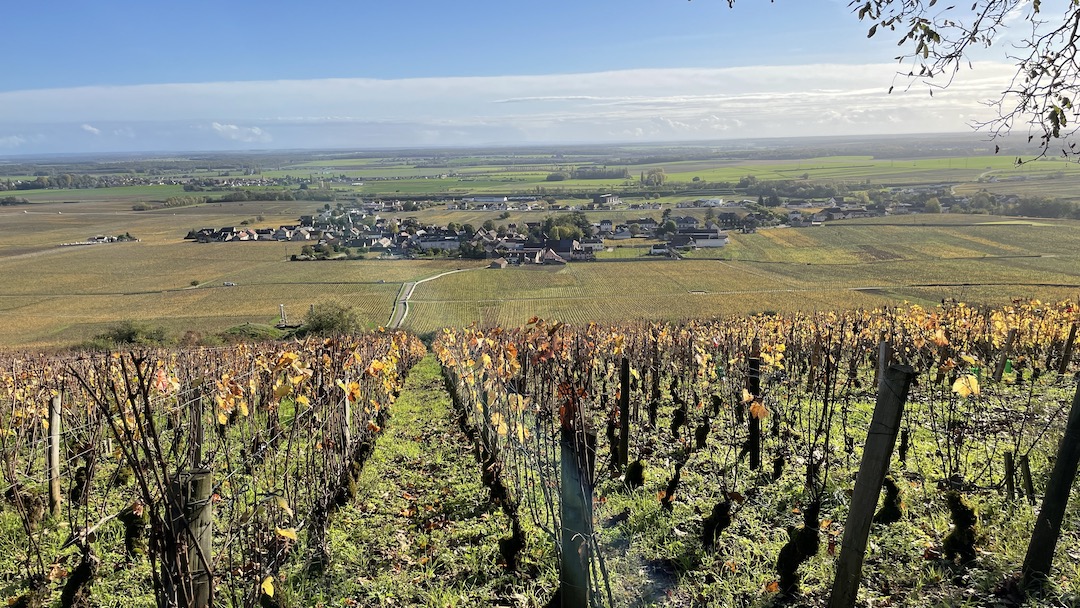
The vast sums paid for the land impact inheritance taxes that do not give a hoot if your family toiled over the same patch of beloved vines over generations. Overnight, a family member with a minor share can become a paper millionaire. Selling out becomes more lucrative as family members realise that the value on the table is too much to refuse. Though onlookers might voice disapproval and decry corporatisation, hey, would you refuse it if the offer landed in your lap? I was told how some siblings, upon taking over a domaine, make verbal pacts never to sell out, virtually an oath to remain committed to their endeavour. In other cases, some argue that high prices are a means to accumulate sufficient money to buy out any shareholder who decides to sell their stake.
There is also investment in terms of exploiting blue-chip Burgundy for returns. The algorithm on my Facebook feed means I am blasted by advertisements for “glowing returns” on a “diversified portfolio” that ironically is nearly always accompanied by bottles of Domaine de la Romanée-Conti forlornly wondering if they will ever be enjoyed. I must admit that these promotions stick in my craw because these wines’ raison d’être is not “X” percent over “Y” years. Such wines were within reach of Burgundy lovers at the start of my career, including myself. Now they are unaffordable, unattainable for nearly everyone. Even if you can indeed afford them, then it is nigh impossible to extricate these wines from their prices or, more accurately, opportunity cost. The decline of Bordeaux as an investment vehicle has only sharpened focus upon the same Burgundian notional elite.
With prices going up and up, there is also the psychological aspect of keeping up with your neighbours. The metric for quality in the Côte d’Or became price instead of the intrinsic virtues of wine, hence unrelenting pressure not to let yours slip behind others, lest you cast your wine in an inferior light—even if that is not the case. The internet’s transparency has accelerated this upward spiral and, depending on the person, feeds the egotistical side of winemaking. Boasting an expensive cuvée reserved for the exorbitant end of restaurant lists sometimes seems to be the only goal. Of course, the real question is whether it actually sells for that price or is just a bauble to gawp at, like a Ferrari in a showroom.
There has been a divorce between the realm of the winery and the consumer. Ask Burgundy winemakers—and trust me, I asked dozens—and they agree that the region’s wines are too expensive. Meanwhile, as Burgundy buyers are priced out, potential consumers are whittled down to the super-wealthy, a subset of a subset, besieged by offers of similarly priced and interchangeable wines not just from Burgundy but around the world. Trouble is, many of their cellars are already overflowing. The latest vintage is the last thing they want or need. This began affecting Bordeaux a decade ago and now Burgundy, gathering momentum as the wealthy move their interest from luxury physical goods such as art, watches or wine to experiences such as a VIP box at the Super Bowl or a meet and greet with Taylor Swift. That is why there are still stocks of 2022s and 2023s hanging around, enfeebling demand for 2024s as that backlog builds.
There exists a more direct relationship between winemaker and merchant in Burgundy than in Bordeaux. Parties often meet face to face, which obliges frank exchanges. Uncomfortable as it might be, this can foster constructive discussion and forge a mutually beneficial way forward. Part of the reason for Bordeaux’s predicament is the creaking structure of the Place that was unable to address falling demand when they could have acted. Burgundy has already priced itself beyond the younger generation of drinkers, thus breaking the crucial bond between region and consumer. Do not underestimate how difficult that is to repair, if it can be repaired at all. Resentment lingers. At least, stylistically, Burgundy creates wines that chime with current tastes, plus unlike many places, this ambidextrous region is a dab hand at whites and reds.
Of course, this presupposes that every Burgundy buyer is someone who adores drinking the wines. Speculators nimbly shifted their focus from Bordeaux to Burgundy, where it is easier to corner markets. Some winemakers abhor this, look on aghast. It is not why they make wine. Others covet and use speculation for reasons explained earlier. Established winemakers, the old guard, question their motives and ask newcomers: are you in this game to make wine or become a celebrity? That is a question germane to everyone, including sommeliers and, yes, wine writers. For me, it circles back to whether you have the talent, if you are prepared to maintain humility.
The mantra behind excessively priced Burgundy is one of quality at any cost. No corners cut. It works the business model backwards, every step of the process validating the high price. You find this ethos in every wine region to differing extents, though it is rare in places such as South Africa and Germany. State-of-the-art wineries, deluxe tasting rooms, vineyard sculptures and renowned architects? You know what, drinkers do not care. They just want a delicious wine to drink with their friends.
Sure, there are those who want to flaunt the fact that they can afford expensive wine. But they tend to be fickle. Not so long ago, prestige had to be earned. For it to have currency, it must be bestowed by the consumer, not the proprietor. Whether it is Burgundy, Bordeaux, California or Champagne, those who got away charging excessive prices are now finding themselves in a pickle. Either they maintain high prices and see demand wither away, or they reduce prices and damage brand perception, render back vintages mispriced and leave consumers feeling duped. Burgundy is not exempt.
I want to end on one quote that really struck home. In Santenay, David Moreau uttered a sentence rarely heard…
Discussing the use of non-organic sprays in the tumultuous 2024 vintage, Moreau offered that he could convert to organic or biodynamics, but that costs would increase and yields would fall, forcing him to increase prices. He told me that he would rather keep his loyal customers by supporting relatively affordable prices and not price them out. At a time when too many winemakers chase the affluent elite, this was refreshing to hear. Every region must offer consumers good wines and all price points. I mean, imagine if every restaurant wanted to have three Michelin stars. There is room for a handful to cater to deep pockets and pursue excellence at any cost, but that space is already overcrowded, even before factoring in the broader economic frailty and pervasive pessimism.
Burgundy is an organism with multitudes of interdependent factors. You cannot examine one in isolation. But I hope that this essay gives reasoning as to why the wines are relatively expensive. The expected smaller crop in 2025, though not as diminished as 2024, means that upward pressure is maintained. Therefore, volumes in 2026 could dictate the trajectory of the following ten years. We will inevitably see more vineyards falling under the ownership of outside investors, though there is already a simmering feeling that prices have reached their limit. Though unsold stock is an immediate problem—and let me confirm that there is unsold stock of 2024s—in the long term, winemakers must understand perceived obduracy in terms of maintaining high prices fosters consumer resentment, no matter how aspirational the wines. The younger generation of wine lovers will feel that most acutely. Bordeaux is discovering this to its detriment, a grudge they will not forget.
Returning to where I started, I depart Vin et Hip-Hop. Stars twinkle in the night sky above Clos de Vougeot in all its fairytale glory. Perhaps this has been a microcosm of the Côte d’Or’s economic environment: a lucky few partying within these medieval walls, the rest outside only able to enjoy vicariously. The challenge for the Côte d’Or is to find an equilibrium where there is less frenetic pursuit of a tiny cluster of top labels, a flatter pyramid that acknowledges prestige without demonising other wines as somehow “inferior” by dint of price tag, lest Burgundy become a rich wine region populated by rich winemakers who make rich wine for rich people. That is a reductive and false phrase, but that is how many Burgundy lovers feel.
© 2026, Vinous. No portion of this article may be copied, shared or redistributed without prior consent from Vinous. Doing so is not only a violation of our copyright but also threatens the survival of independent wine criticism.
You Might Also Enjoy
Burgundy 2024: One Battle After Another, Neal Martin, January 2026
The Lord Giveth…Burgundy 2023, Neal Martin, January 2025
Burgundy 2023: The State of Play, Neal Martin, January 2025
Fair Warning: Burgundy 2022 - The Market, Neal Martin, January 2024
Now, For My Latest Trick: Burgundy 2022, Neal Martin, January 2024