
Browse using the new Vinous website now. Launch →
Printed by, and for the sole use of . All rights reserved © 2015 Vinous Media
Joy in Repetition: Burgfest 2022 Reds
BY NEAL MARTIN | NOVEMBER 6, 2026
I felt trepidation leading up to the September Burgfest tasting that would feature the 2022 reds. That might surprise you. Feted from barrel, whites having surpassed expectations the previous May, what fuelled my apprehension?
Well, Pinot Noir is as sensitive as a teenage poet, fickle as a Pacific breeze. The variety has a multitude of virtues; however, it is less adept at shrugging off excessive heat like its protean opposite number — Chardonnay. Too much sun and Pinot Noir suffers an existential crisis, loses its signature precision and tension. Lumbered by high sugar and alcohol, it can waddle instead of skip. The pessimist inside began to wonder if the reds would match the quality I found in barrel. After all, they say that Burgundy never tastes as pristine after it is imprisoned in glass. There is truth in that.
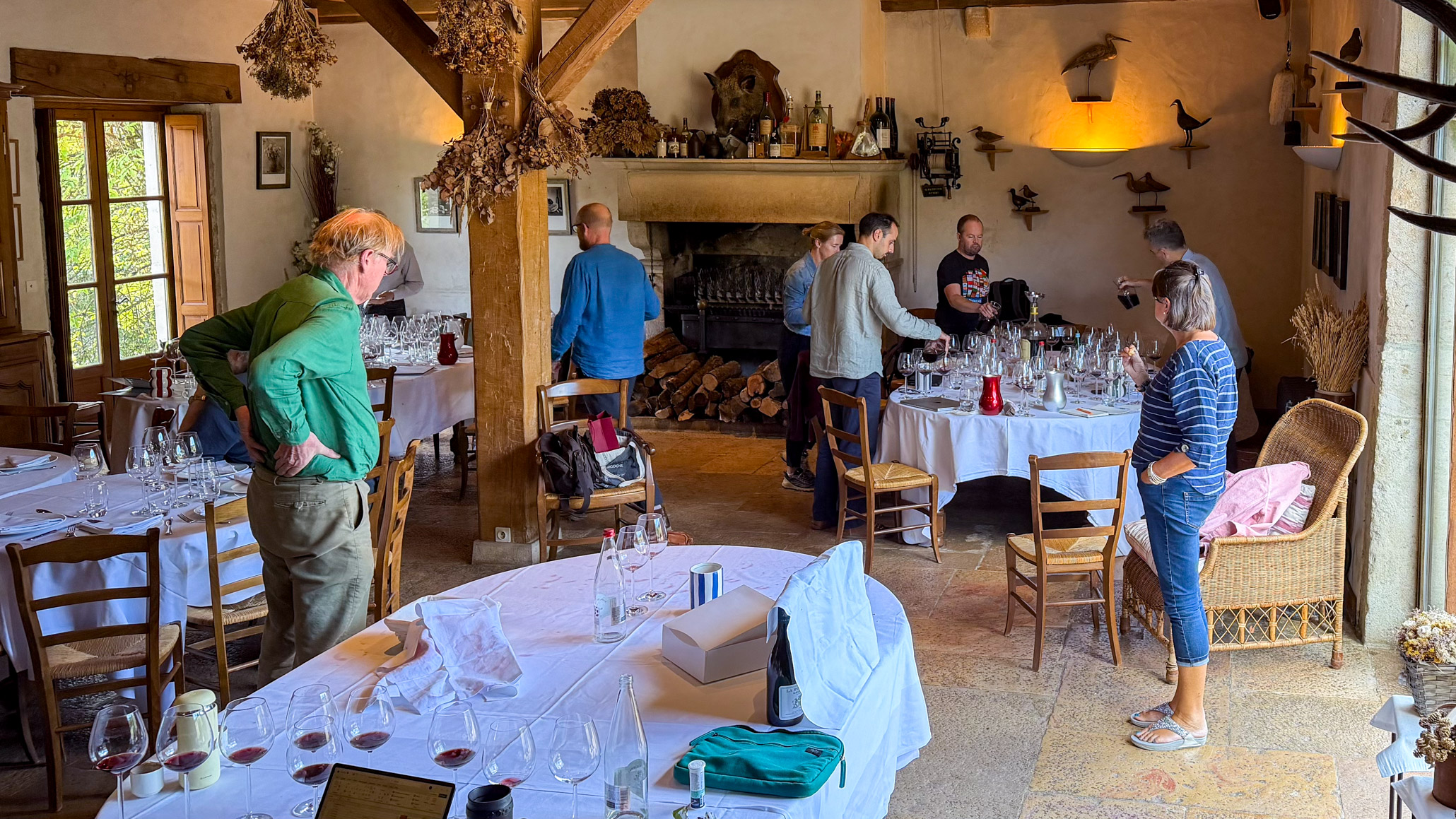
Hameau du Barbaron has been the venue for Burgfest for several years. Its seclusion does help focus the mind.
This edition of Burgfest put some 270-odd Premier and Grand Cru reds through their paces. Village Crus were refused entry by the metaphorical bouncer at the door, not by dint of status, but simply due to our capacity to taste and discuss flights within each day. Indeed, the exchange of views between members of the group is an invaluable aspect of the Burgfest tasting. Put your tasting prowess to one side and listen to opposing views. See if you missed a virtue or a fault. Burgfest gives your senses a rigorous assessment, forcing you to fine-tune and recalibrate if necessary. I always leave a better taster.
The format was unchanged this year, with wines poured blind per climat. Each wine was analysed without pulling punches, which is refreshing since Burgundy’s hallowed names wallow in hagiography. No wine is beyond criticism, even if some wines believe they are. By the same token, praise should be lavished when deserved. For the first time in 14 years attending Burgfest or its sister Southwold blind tastings, I anointed one wine with a three-figure score. Easy when you can see the label; totally different if you crown an unknown.
There are important takeaways from this year’s Burgfest, though there is one I wish to highlight before broaching the wines. This tasting reinforced the fact that winemaking is a holistic process, from first budbreak to the final cork in the bottle. The contemporary narrative is bent towards the idea that geology and viticulture are the be-all and end-all, and vineyard work can sometimes seem like a recipe. Tressage your vines. Rent a horse. Raise the trellising so you can barely reach. Increase planting densities so insects can barely squeeze through. Make sure all of this is documented on social media. Sure, I am being facetious. For the record, there is nothing wrong with any of those practices. They may enhance quality. But they can never guarantee it.
The mantra that “wine is made in the vineyard” is quixotic. The last time I looked, grapes are made in a vineyard. Wine is made in a winery.
Perhaps winemaking is more mundane, less photogenic, less clickbait-worthy than viticulture? I agree with the maxim that you cannot make good wine without quality fruit. Lest we forget, every stage of winemaking is a bear trap, a chance to make a wrong decision that chips away at or scuppers what could have been. It begins with choosing the moment of picking, now more difficult than ever, especially in 2022. Then come decisions about the proportion of whole bunch, avoiding spoilage during fermentation, optimal pressing and skin maceration, judging the use of new oak, the cooperage and toast levels, and finally, bottling with diligence, the last stage that can trip a wine up just before crossing the finish line.
Burgfest exposes all of these factors. It may fly in the face of received wisdom, but decisions made in the winery influence a wine’s fate more than braiding your vines or trooping a horse between rows. Since so much Burgundy is regrettably consumed before reaching its drinking plateau, the imprimatur of vinification shapes both the wine and the attendant opinion, especially manipulated reduction in whites and whole-bunch in reds. This year’s tastings of both colours in May and September brought that idea home.
The 2022 Growing Season
I will not repeat the 2022 growing season for a third time; readers should refer to my Burgfest report on the whites or, for more detail, my original in-barrel report. Suffice it to say that 2022 falls into the category of hot, solar vintages. With four heat waves in July and August, 2022 was the second-hottest year on record since 1947. Water was a precious commodity since some parcels received 40% less than normal. Faster ripening cycles can pose two problems. Firstly, a compressed season bunches (no pun intended) optimal picking dates together, which can be a logistical nightmare if you have a diaspora of parcels and may oblige some compromises. Secondly, it can create disparity between high sugar levels and physiological ripeness, presenting winemakers with a dilemma. Wait and risk overripeness, or pick early and risk greenness.
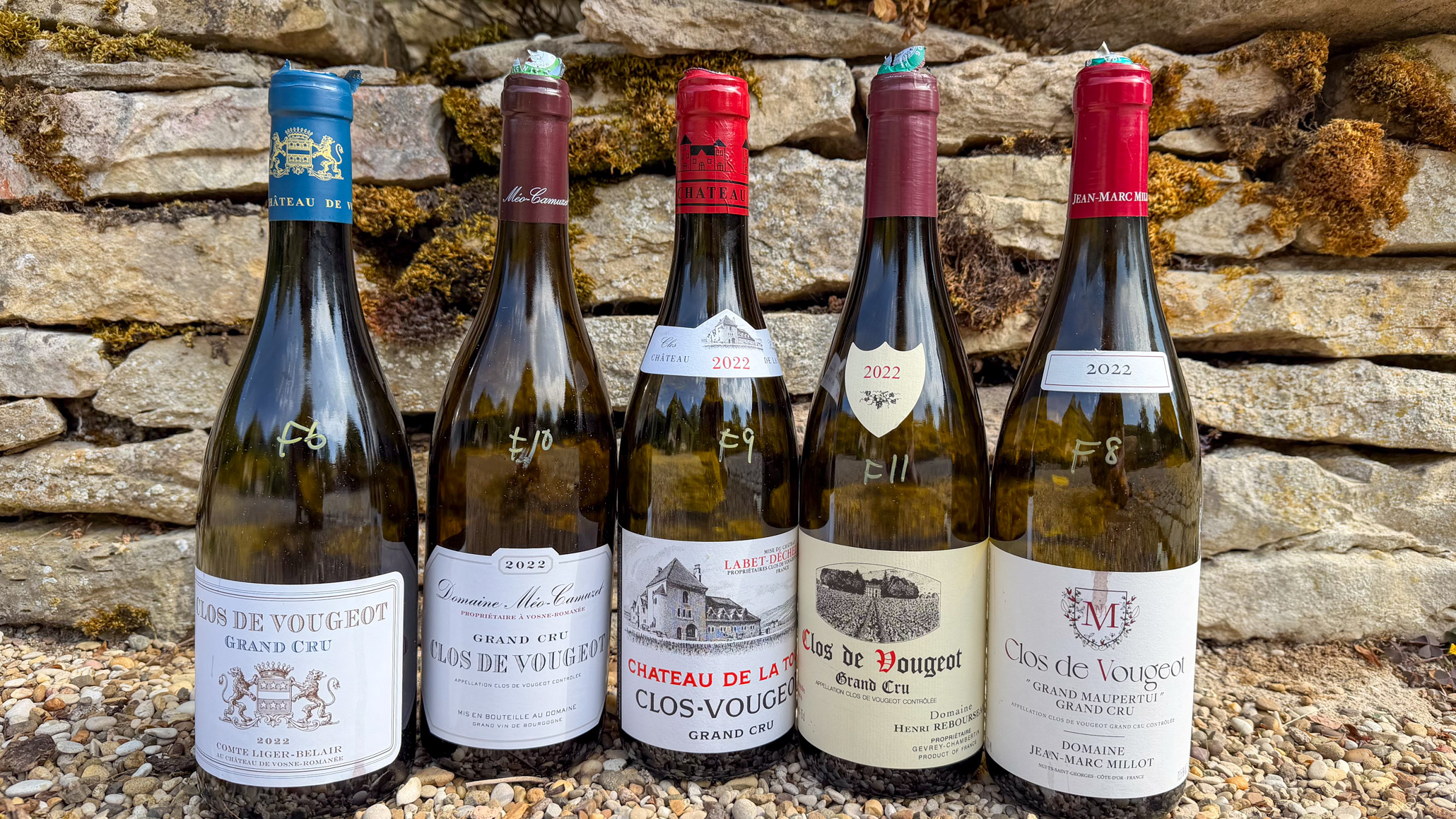
The Wines
To sum it up: 2022 is a great vintage for the reds, with caveats that should not be ignored.
As you would expect, the overriding style is one of opulence. Expressive aromatics that burst from the glass, ripe red fruit that requires little coaxing. I observed few blowsy or exotic bouquets, yet the aromatic profiles almost have no choice but to translate the warmth of the growing season. Thankfully, vineyard management and winemaking techniques ensured that aromatics remained vibrant and faithful to what is expected from Pinot Noir, though this assessment is skewed by a tasting limited to the notional crème de la crème. Descend down the hierarchy and you will find increasing percentages of wines that did succumb to the heat.
On the palate, the 2022s present ripe, juicy tannins and impressive purity of fruit that would have been impossible in the 1990s or 2000s. There is a plushness to these wines that is seductive, even sensual. In barrel, the fruit profiles leaned more black than red, though in bottle many veer back towards red fruit. Strawberry, raspberry, cherry. That is what I seek.
The most crucial aspect of the 2022s — and one that drew consensus — is that acidity levels are not as low as many initially feared. That is partly because higher volumes mitigated sugar levels, distributing the energy between more bunches, keeping alcohol levels a bit lower and retaining more natural acidity than a hypothetical lower-yielding vintage. A silver lining of successive warm seasons is that winemakers have been on the fast-track program learning how to capture whatever acidity Mother Nature makes available, whether that is through canopy management, picking dates or picking times. They are essentially rewriting the rules. Given the retention of acidity, my confidence in the 2022 reds’ ability to age has risen.
Which appellation stood out? Well, I should emphasise that the 2022 reds translate the growing season more than terroir and/or appellation. That is not surprising. Cooler vintages tend to amplify the nuances between locales, subtleties that are “painted over” by opulence. The finest appellations are those that err towards more structured and austere expressions of Pinot Noir: Pommard and Corton in the Côte de Beaune, and (step forward and take in the applause) Morey-Saint-Denis in the Côte de Nuits. Factoring in value, the Beaune appellation is superb in 2022, with wonderful examples from Tollot-Beaut and Rapet Père et Fils. At their best, the wines have attributes of flair, vibrancy, fluidity and seduction.
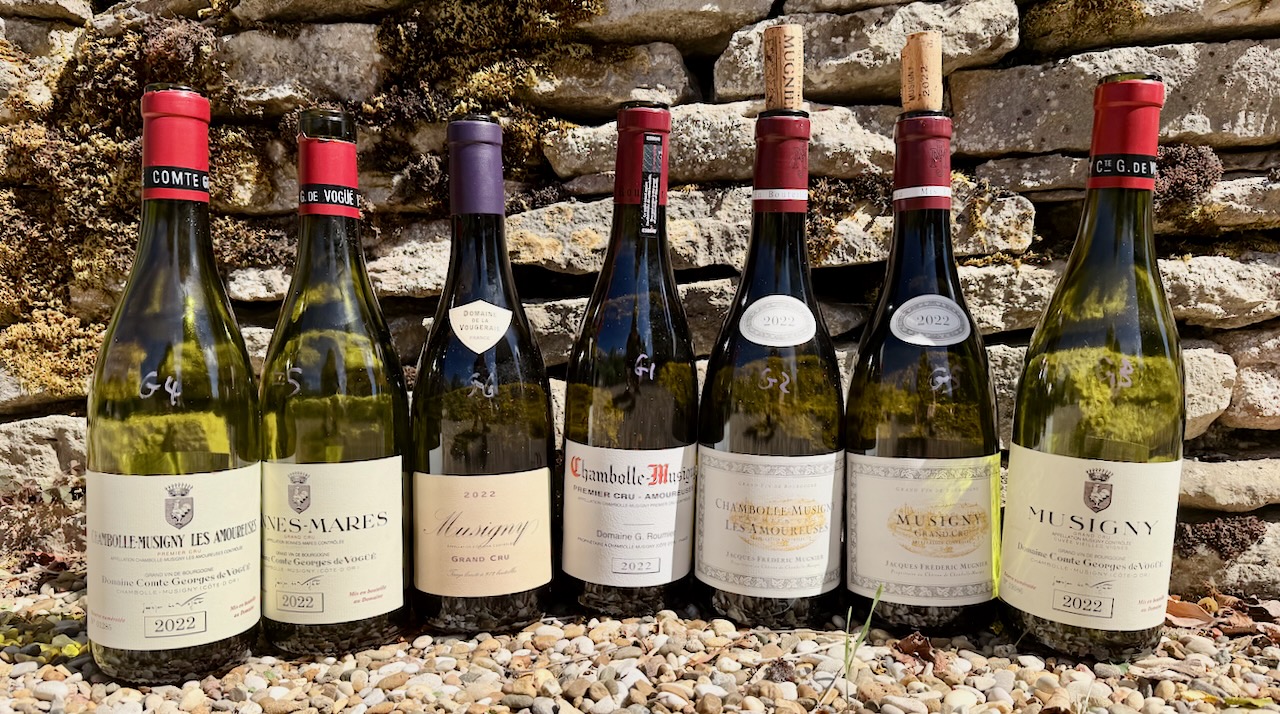
The best 2022s combine the classicism of their terroirs with a firm-handed and controlled translation of the season’s precocity. That clearly manifested in the most eagerly-awaited flights of Chambolle-Musigny Amoureuses and Musigny, as well as the flight of Vosne-Romanée Grand Crus.
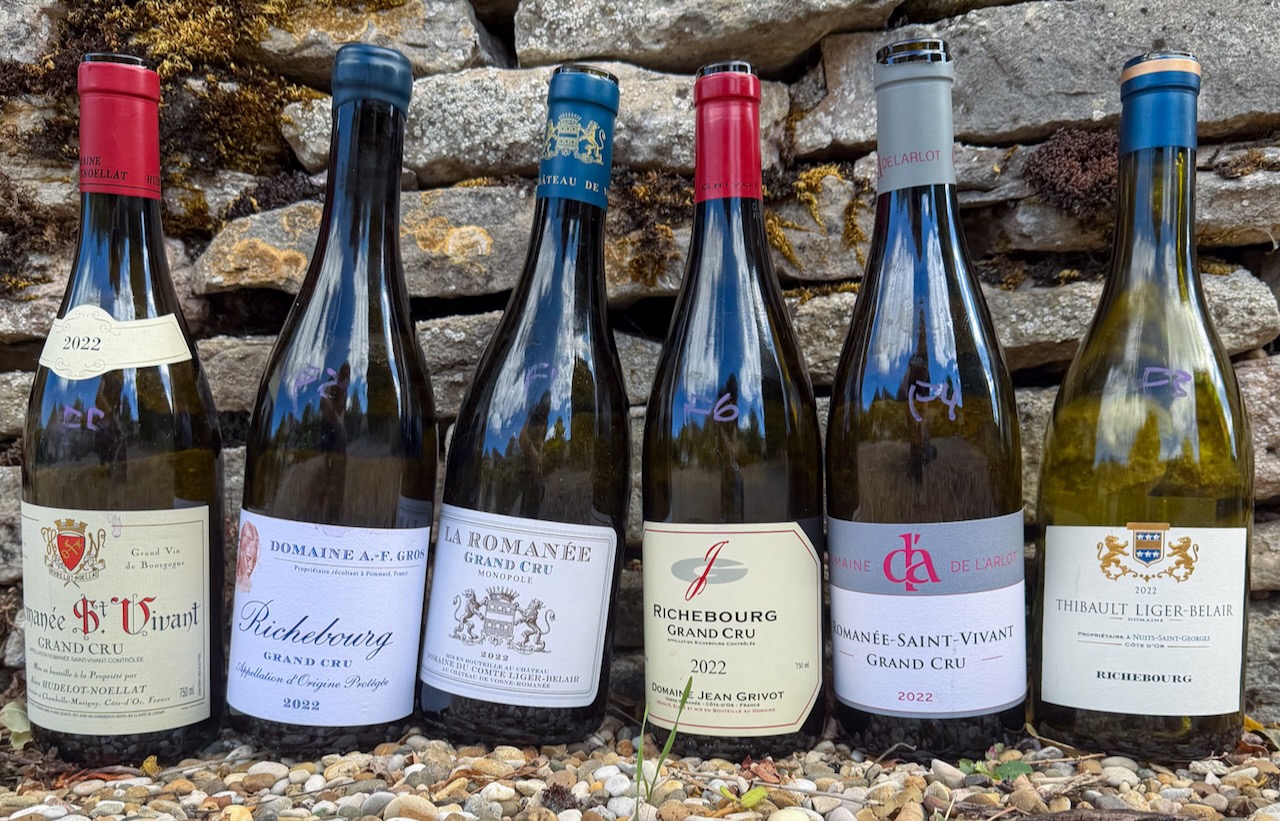
The latter yielded the aforementioned 100-point score. I do not wish to reduce the 2022 Romanée-Saint-Vivant from Domaine de l’Arlot to a number, but that score does telegraph my sentiments with utmost clarity. I rarely give perfect scores. One prerequisite is the complete absence of doubt. The 2022 is unequivocally spellbinding. Bravo to winemaker Géraldine Godot for conjuring this elixir. Though in tasting, I divined it was a Romanée-Saint-Vivant thanks to its lace-like tannins, I confess that I did not envisage it was from Domaine de l’Arlot, which made the reveal all the more satisfying. At least there is more than one barrel — five to be exact — so the wine is not impossible to find, even if it might cost you a few bob.
So everything is fine ‘n dandy?
Don’t get me wrong, overall, I thoroughly enjoyed the 2022 reds, but there are caveats. In this tasting, appellations that err towards a more voluptuous style risked tipping over the line into overripeness. It was no surprise that 2022s from both Volnay and Chambolle-Musigny flirted with overripeness more than Pommard and Morey-Saint-Denis, in line with previous warm growing seasons.
I did wonder about the effect of the hailstorms in Gevrey-Chambertin. See my original report for photographs depicting the severity of flash flooding. Perusing my notes, it was not disastrous in terms of compromising fruit. You could argue that the main problem was soil erosion, forcing some to manually transport topsoil back up the incline in extreme cases.
We must mention the “b” word. By the final day, I wished there was a button on my laptop, a shortcut to type “Brettanomyces,” as it was certainly evident in a higher-than-usual percentage of bottles this year. Again, not entirely unexpected given the favourable conditions for contamination (relatively higher pH levels and residual sugars). Nothing new. Maybe I am less sensitive to Brett than other tasters, but I did not feel it was quite as widespread as others did. Additionally, I encountered instances of oxidation that, as I have discussed before, might be down to the combination of lower SO2 use and not being able to keep wineries spotlessly clean. That does not imply lackadaisical practices, nor is minimal use of sulfur something I oppose, but it does come with risks that might not be apparent when tasting wines from barrel.
If you seek Pinot Noir with transparency and poise, then 2022 is not going to be your cup of tea. In fact, stick to tea. Working through a large tranche of 2022s was a more laborious task than the 2021s last year, and I did start missing the piquancy that gives Pinot its electricity. Some argue that this more opulent style of Pinot Noir is the new norm. They could be right. Arguably, part of the problem is that such vintages are being consumed prematurely, evidenced by many of the restaurant wine lists around Beaune. I have seen many 2022 reds offered for martyrdom, denied time to shed their puppy fat, polymerise their tannins and quell their infantile exuberance. If you are lucky enough to taste richer vintages like 1947 with age, you can see what marvels they can become.
Domaine By Domaine
Burgfest is always a test of a domaine, an exercise that can govern a vast number of buying decisions. Like many, I would rather purchase an entry-level cuvée from a top grower than a Grand Cru from a mediocre one. I will make a few points.
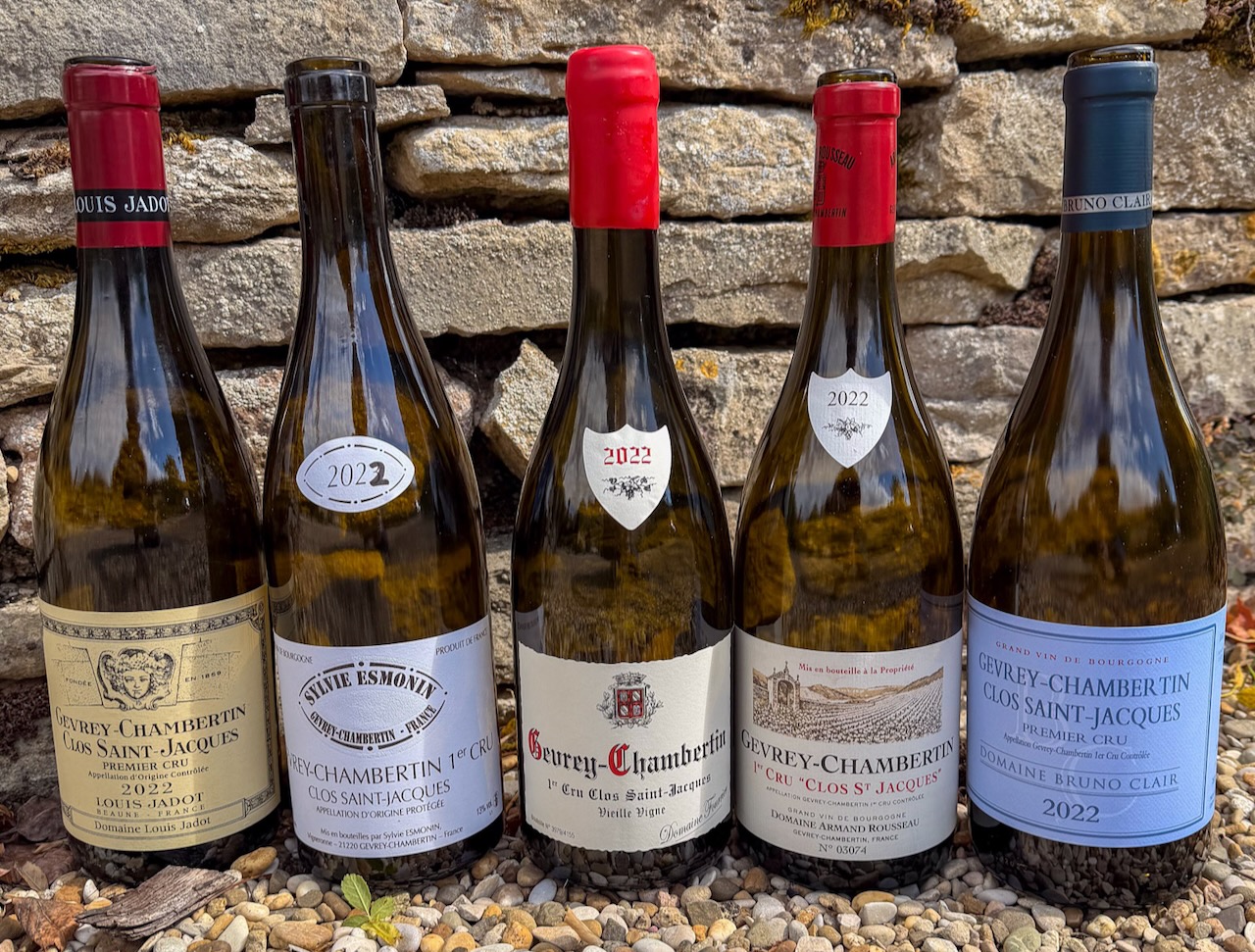
1. Generally, the top names deliver, including Domaine Armand Rousseau. Six wines, all made by Winemaker Cyrielle Rousseau, were poured blind and showed extremely well. The Les Cazetiers is the hidden gem. Rousseau rules. Period.
2. The biggest positive surprise was Domaine Henri Rebourseau. Littered across several flights, these wines showed consistently well. I reviewed them favourably from barrel but did not foresee them going up a level. These 2022s were overseen by Bastien Giraud, who came from Faiveley a few months earlier. He did a splendid job, though his shoes have since been filled by Sylvain Pabion, formerly at Château de Marsannay.
3. Additionally, some less-well-known names caught my eye: a couple of excellent showings from Domaine Denis Carré based in Meloisey, and Domaine Jérôme Castagnier. Sure, this might be skewed by solely focusing upon Grand Crus, but they rated highly across the board.
4. Other producers that had a “good Burgfest” include Domaine Berthaut-Gerbet, Y. Clerget, Pierre Girardin, Domaine des Lambrays, Méo-Camuzet, Denis Mortet, Rossignol-Trapet, Tawse and a strong performance from de Vougeraie.
You can have a “good Burgfest,” or you can have a “bad Burgfest.” Reputation or adoration for a domaine cannot influence the outcome, for blind tasting is ruthless. I sometimes feel treacherous assigning low scores to wines that I praised in the past. There are always ups and downs.
1. I admire winemakers with strong tenets. For example, Jean-Pierre Guyon uses 100% whole bunches and minimal sulfur. I have visited the domaine, and their intention is clearly to make the best wine possible, yet tasted blind, the wines were wildly unpredictable. The four wines presented were united in translating technique instead of terroir, the opposite of what was intended. They were easily spotted blind, and for the wrong reasons. I dislike writing this because I respect what the domaine is trying to achieve, but their 2022s kept ringing the alarm bell.
2. I did not score two of Pierre Duroché’s wines, as they displayed too much Brettanomyces: the Gevrey-Chambertin Lavaut Saint-Jacques and Latricières-Chambertin. I did not discern the trait when I tasted these wines from barrel. Thankfully, Duroché's Clos-de-Bèze was firing on all cylinders.
3. Another that left me scratching my head was from one of my favourite producers, Frédéric Mugnier. Make no mistake, the Musigny and Chambolle-Musigny Les Fuées deliver everything that makes these wines so coveted. However, the Les Amoureuses, often my favourite cuvée, was having a bad day, with around half the attendees choosing to opt out of scoring. I mean, it’s not exactly cheap as chips. [Postscript: a 2017 Les Amoureuses from Mugnier tasted as I filed this report will rank among my wines of the year.]
4. Similarly, there were a couple of errant showings from Domaine Bouchard Père et Fils. Incidentally, 2022 was the year the domaine was acquired by Artemis Domaines. Normally I find these wines reassuringly consistent, so this showing might be down to the growing season.
Final Thoughts
In my original in-barrel report, I wrote: “I cannot remember a Burgundy vintage that elicited so much joy from barrel.” I have no reason to change that statement. For the most part, the 2022s represent outstanding Pinot Noir, moulded in a more opulent style by Mother Nature but lent restraint by winemakers. The two work in tandem. Interestingly, collating all the attendees' scores and comparing them to the previous Burgfest, the averages were higher in nearly every appellation.
As I forewarned from barrel, these 2022s deserve time in bottle, more so than most vintages. The best need a decade to reach their drinking windows and will certainly be worth the wait. This tasting also exposed some of the vintage’s shortcomings. Whether Bordeaux or Burgundy, to name two regions under my charge, received opinion is cemented by initial reports made prior to bottling. Monitoring wines’ evolution after bottling is just as crucial, if not more so, often revealing issues imperceptible in barrel. Whilst my personal belief is that Brettanomyces is not as pervasive as others believed, it cannot be denied that it was evident in a greater number of examples than with the 2021s. All I can do is to report the findings.
In retrospect, there was no harm in my initial trepidation. It foregrounds an open mind. There is nothing wrong with questioning even the most coveted or expensive wine, so long as it is respectful. Such questioning should be taken as constructive criticism, a launch pad for debate. Burgfest might expose some shortcomings; likewise, there are plenty of moments when there was an audible intake of breath at a wine’s quality. Guess that’s Burgundy for you.
© 2026, Vinous. No portion of this article may be copied, shared or redistributed without prior consent from Vinous. Doing so is not only a violation of our copyright but also threatens the survival of independent wine criticism.
You Might Also Enjoy
Made of Titanium: 2022 Burgfest Whites, Neal Martin, June 2026
A Vintage with Issues: Burgundy 2021, Neal Martin, October 2025
Now, For My Latest Trick: Burgundy 2022, Neal Martin, January 2024
Show all the wines (sorted by score)
- Albert Bichot
- Albert Bichot (Domaine du Clos Frantin)
- Albert Bichot (Domaine du Pavillon)
- Benjamin Leroux
- Camille Giroud
- Château de la Commaraine
- Château de la Tour
- Château de Meursault
- Christophe Roumier (Domaine Georges Roumier)
- Cyprien Arlaud
- Derey Frères
- Domaine A.F. Gros
- Domaine Alain Hudelot-Noëllat
- Domaine Arlaud
- Domaine Armand Rousseau
- Domaine Berthaut-Gerbet
- Domaine Bitouzet-Prieur
- Domaine Bouchard Père et Fils
- Domaine Bruno Clair
- Domaine Cécile Tremblay
- Domaine Clos de la Chapelle
- Domaine Comte Armand
- Domaine Comte du Liger-Belair
- Domaine Comte Georges de Vogüé
- Domaine de l'Arlot
- Domaine de la Vougeraie
- Domaine de Montille
- Domaine Denis Carré
- Domaine Denis Mortet
- Domaine des Comtes-Lafon
- Domaine des Croix
- Domaine des Lambrays
- Domaine d'Eugénie
- Domaine Drouhin-Laroze
- Domaine du Clos de Tart
- Domaine du Comte Liger-Belair
- Domaine Dujac
- Domaine Duroché
- Domaine Eric Boigelot
- Domaine Faiveley
- Domaine Fourrier
- Domaine François Buffet
- Domaine Génot-Boulanger
- Domaine Georges Glantenay
- Domaine Georges Nöellat
- Domaine Georges Roumier
- Domaine Gérard Mugneret
- Domaine Ghislaine-Barthod
- Domaine Henri & Gilles Buisson
- Domaine Henri Gouges
- Domaine Henri Magnien
- Domaine Henri Rebourseau
- Domaine Heresztyn-Mazzini
- Domaine Hubert Lignier
- Domaine Hudelot-Baillet
- Domaine Jean Chauvenet
- Domaine Jean et Jean-Louis Trapet
- Domaine Jean Grivot
- Domaine Jean-Marc et Thomas Bouley
- Domaine Jean-Marc Millot
- Domaine Jean-Pierre Guyon
- Domaine Jean Tardy
- Domaine Jerôme Castagnier
- Domaine J-F Mugnier
- Domaine J-M Boillot
- Domaine Joseph Drouhin
- Domaine Launay-Horiot
- Domaine Leymarie-Ceci
- Domaine Louis Boillot
- Domaine Louis Jadot
- Domaine Mark Haisma
- Domaine Méo-Camuzet
- Domaine Michèle & Patrice Rion
- Domaine Michel Lafarge
- Domaine Michel Mallard
- Domaine Mugneret-Gibourg
- Domaine Rapet Père & Fils
- Domaine Robert Chevillon
- Domaine Rossignol-Trapet
- Domaine Stéphane Magnien
- Domaine Sylvie Esmonin
- Domaine Taupenot-Merme
- Domaine Tawse
- Domaine Thibaut Liger-Belair
- Domaine Tollot-Beaut
- Domaine Violot-Guillemard
- Domaine Y. Clerget
- Dominique Lafon
- Jane Eyre
- Louis Jadot (Domaine)
- Louis Jadot (Domaine des Héritiers Jadot)
- Mark Haisma
- Olivier Leflaive
- Pierre Girardin
- Stéphane Magnien