
Browse using the new Vinous website now. Launch →
Printed by, and for the sole use of . All rights reserved © 2015 Vinous Media
Ygrec: Where Have You Been All This Time?
BY ANTONIO GALLONI | NOVEMBER 4, 2026
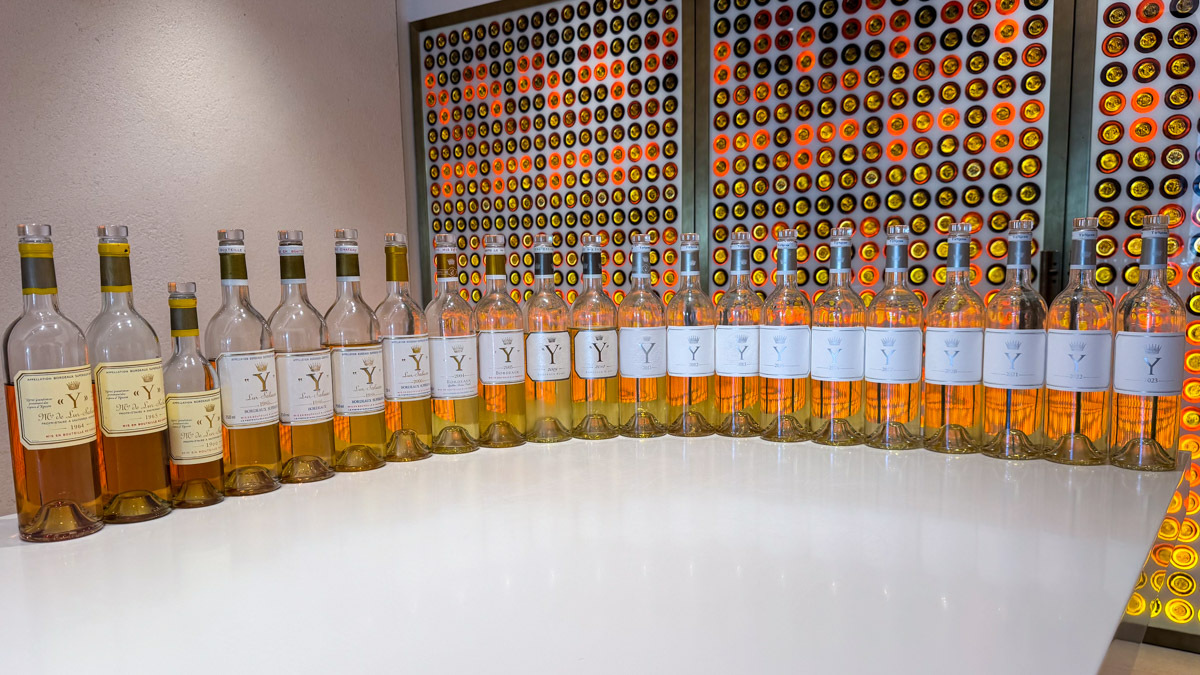
It was the 1964. That’s the wine that did it. I had tasted Ygrec before, but only sporadically. A bottle of the 1964 at a recent Vinous event really opened my eyes to how Ygrec ages. The 2000 and 2023 that followed in that evening’s program were just as arresting, in different ways. I was completely blown away. A few months ago, I visited Yquem to learn more and taste through a wide collection of vintages. That tasting reinforced my view that Ygrec is one of the world’s greatest and most singular white wines.
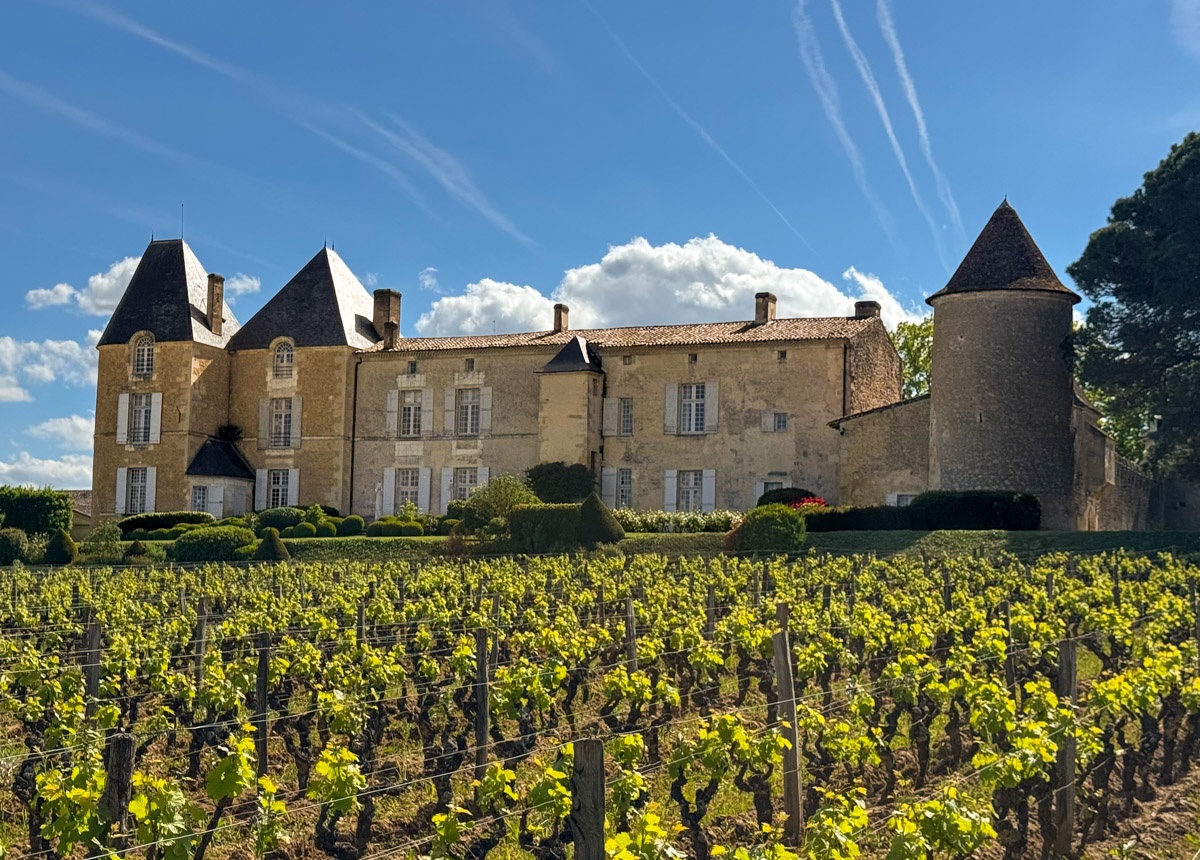
Château d’Yquem and its bucolic setting.
Y d’Yquem
Yquem occupies a rarefied spot in the world of wine. Its appearance at any lunch or dinner immediately elicits the kind of attention that is reserved for just a few wines. Yquem represents luxury, pedigree and exceptionally good taste. By comparison, its sibling Y d’Yquem, colloquially referred to as Ygrec (from i grec, French for the letter “Y”), is much less well known. That’s not entirely surprising given that for many years Ygrec was a sort of afterthought, bottled in some vintages, but not all. Detailed harvest records show varying approaches to making the wine each year. Consequently, Ygrec’s personality was often quite different from vintage to vintage. This retrospective back to 1964 provided an extraordinary opportunity to see the evolution of Ygrec over many decades and periods of thinking.
First produced in 1959 Ygrec lives in a world of its own from a stylistic perspective. In the 1960s, Ygrec was a Sémillon-based wine, often with 15 grams per liter of residual sugar that amplified Sémillon’s natural richness, making Ygrec a sort of mini-Yquem. Today, Sémillon and Sauvignon Blanc are more evenly balanced, while residual sugar is in the range of 5-6 grams per liter. Because of its residual sugar, Ygrec ages more along the lines of fine German Riesling or Champagne than dry white Bordeaux or other top-tier dry whites. That is especially evident in wines that are 20-30 years old or more. The local peer group has started to change now that many châteaux in Sauternes are making quality dry whites, although it’s too soon to know for sure because those wines don’t yet have established track records.
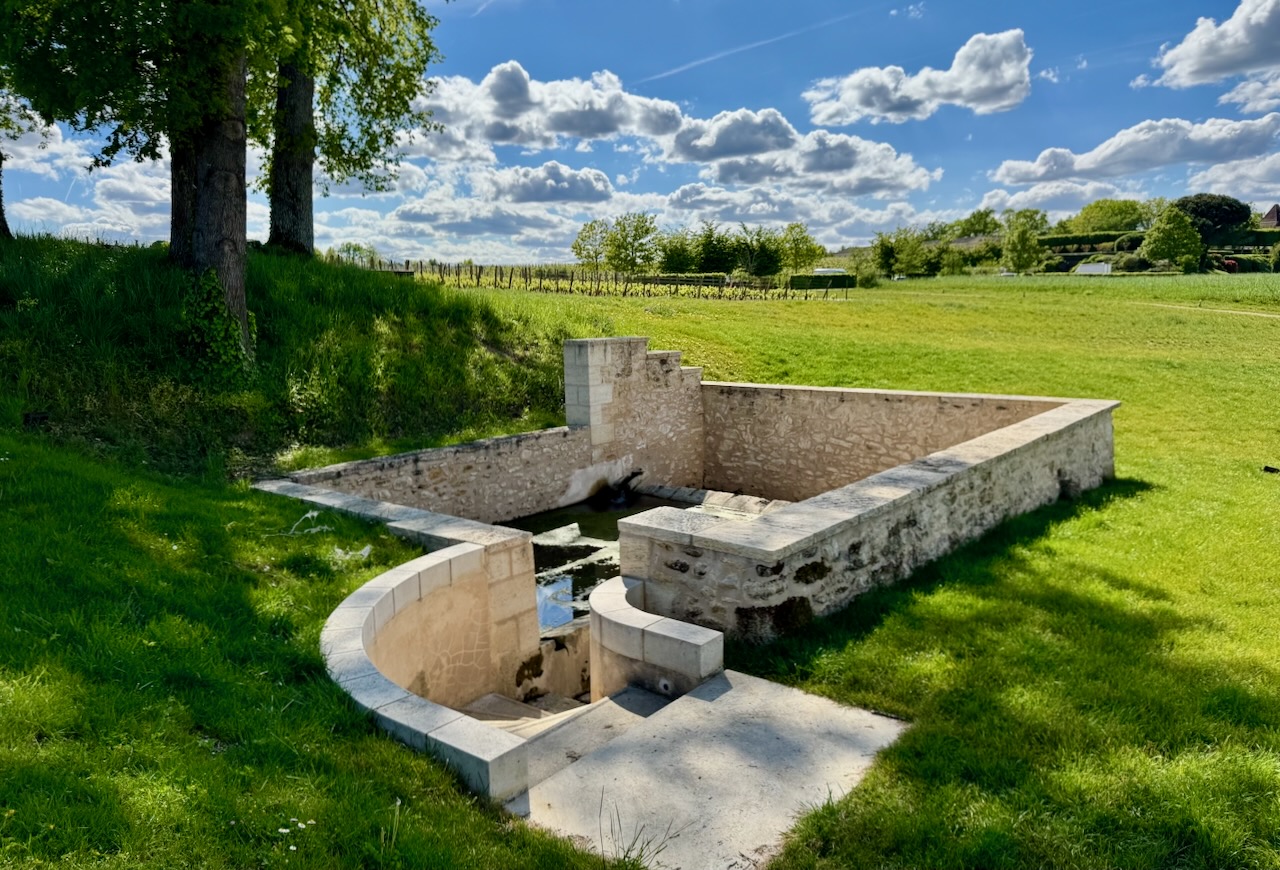
One of five natural springs on the property.
Château d’Yquem – A True Icon
One of the most striking estates anywhere in the world, Château d’Yquem is perched atop a gently sloping hill that provides stunning views of the neighboring Sauternes First Growths that dot an open, expansive landscape stretching as far as the eye can see. The bucolic grounds are impeccably maintained, inside and out. The oldest parts of the château date back to 1593. The cellar, built in 1826, is still used today. Readers who want to learn more about Château d’Yquem’s rich history will want to check out the Vinous Article Archive. Neal Martin’s article, “Unrivalled/Unequalled: Yquem 1921-2019,” is packed with historical detail.
In the Vineyard
Soils at Yquem are often described as a mix of gravels, clays and sand, but the reality is much more complex than that. Yquem’s 100 hectares of vineyards feature a stunning and wildly diverse collection of terrains that run through the property. Deep gravels recall the Left Bank. Clay soils of various types are more prominent in other spots. Sandier, colluvial soils are found on the lower slopes. This combination of elevations, soils from several different geological eras and the natural complexity derived from a property planted to all four exposures starts to explain much of what makes Yquem so unique.
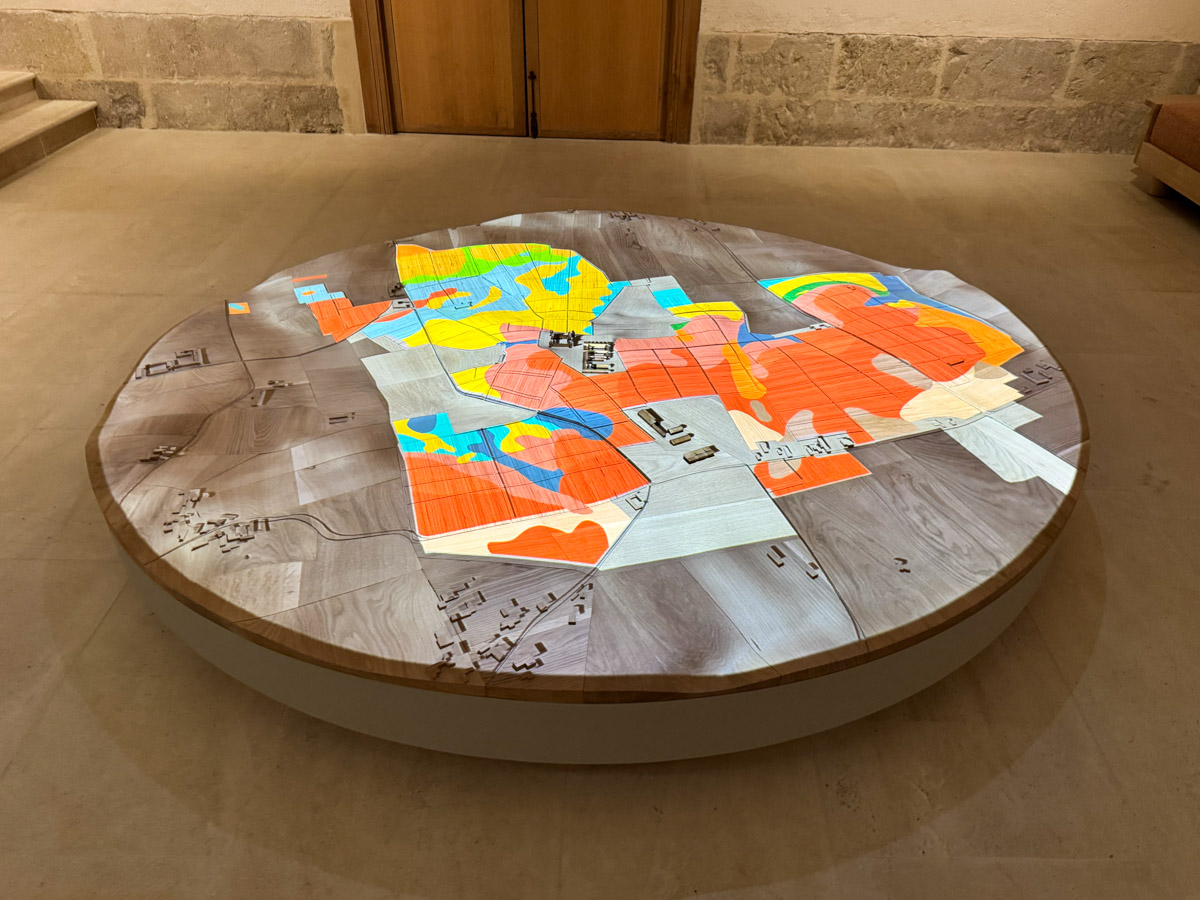
Yquem’s soil map, one of many projections on display in the stunning map room.
Historically, Yquem was planted to 80% Sémillon and 20% Sauvignon Blanc, one row of Sauvignon Blanc for every four rows of Sémillon within the same block. Today, the varietal blend is closer to 70% Sémillon and 30% Sauvignon Blanc, with younger vineyards planted by variety. Like all estates, Yquem is waging many battles on the viticultural front, most notably against disease. A recent development is the planting of rootstock first. This is a step taken to promote vine strength against disease, most notably Esca disease (especially a problem for Sauvignon Blanc), while also mitigating the possibility of contamination from diseased rootstock and reducing the need for water. Rootstock is also much less sensitive to mildew, which practically eliminates the need for treatments and therefore fosters healthier soils. Naturally, this process is labor-intensive, costly and time-consuming. It also delays production, as vines are grafted after two to three years, once the rootstock is firmly established and tested. Yquem transitioned to organic farming in 2020, introduced cover crops in 2021 and then, as a result, moved towards gentler working of the land.
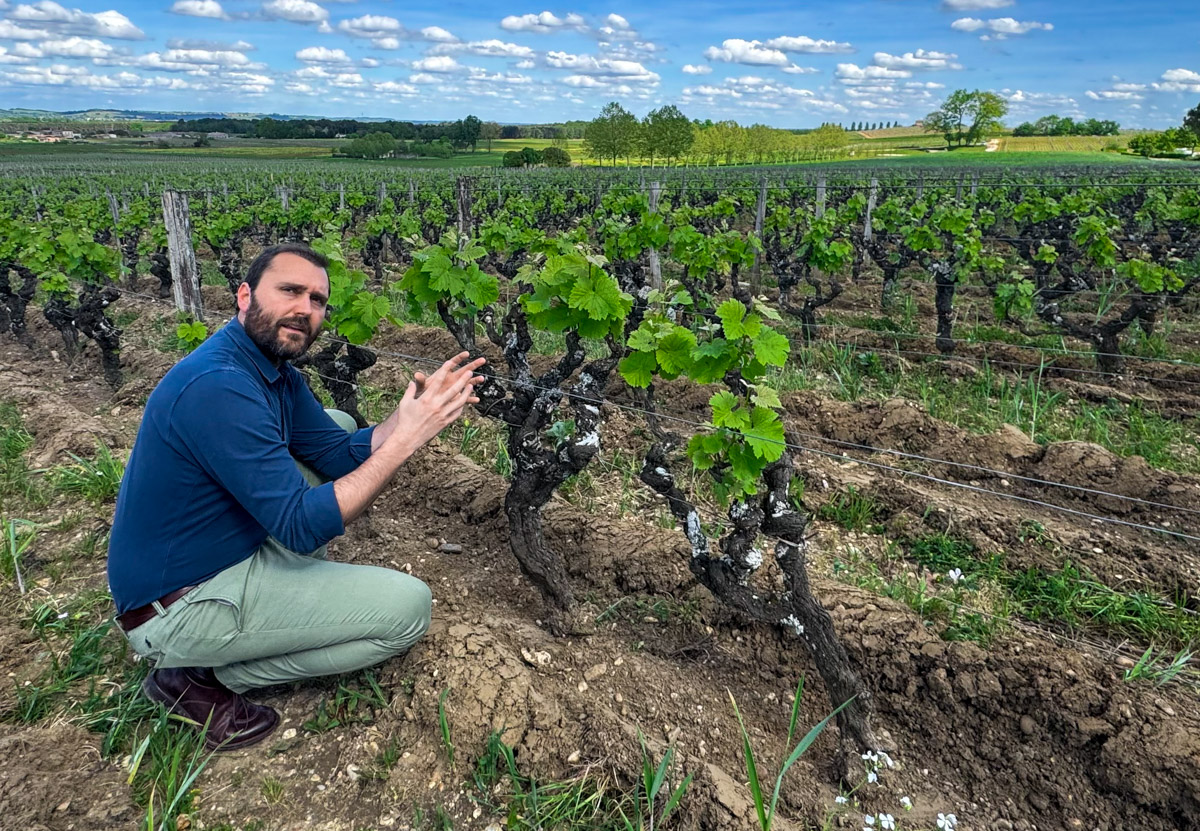
CEO Lorenzo Pasquini discusses pruning methods in a row of old-vine Sémillon.
Vines are pruned using the traditional Le Côté Sauternais (or La Palmette Sauternaise) method by which vines are trained vertically to allow maximum air circulation within the canopy and avoid excess humidity. Yquem is among the last properties in Bordeaux to remove secondary shoots, leaving eight shoots per vine with a maximum of two bunches each, although low vigor, especially in old-vine Sémillon, means that many shoots carry only one bunch. Leaves are removed only at the end of August and then mid- to late September so that grapes up to about 30 centimeters off the ground are totally exposed to sun and wind during harvest. Loss of volume through concentration and selection results in yields that are typically 10-13 hectoliters per hectare at harvest, about a third of typical production in a quality white or red wine estate.

Fog currents on the Yquem hill.
Fog, Wind & Water
Alternating fog and wind, essential for the development of noble rot, is another defining factor. The nearby Landes de Gascogne acts as a sort of funnel for cold air that becomes fog, while also providing ample sources of water, both through streams and a complex network of underground rivers. At a time in which water has become such a rare resource around the world, Yquem operates with a surplus. Work done in the nineteenth century to remove excess water was a major step in improving quality. Five springs on the estate’s grounds remain fully operational.
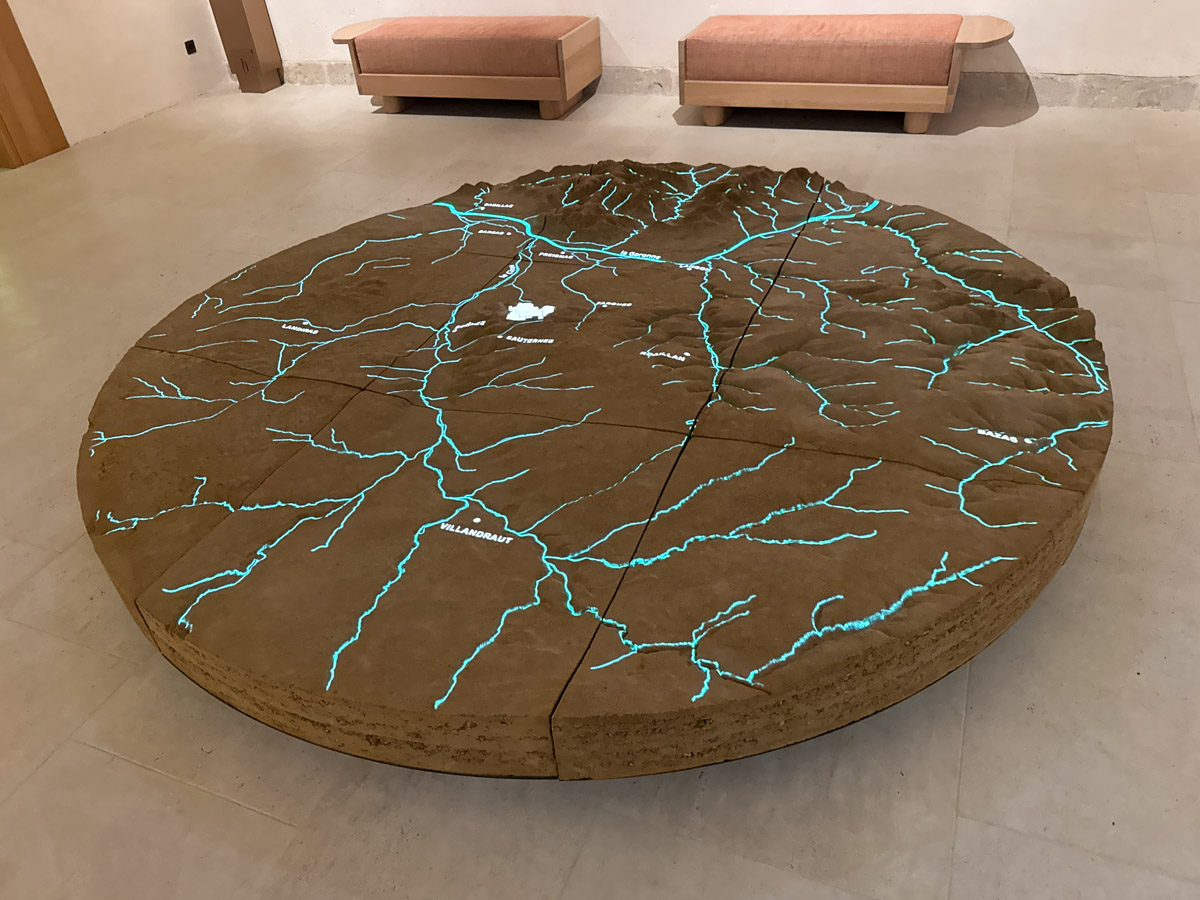
A complex network of streams and waterways is one of the most distinguishing aspects of Sauternes.
The Tasting: Ygrec in Three Acts
Lorenzo Pasquini, Yquem’s CEO, presented the wines in three flights, with Pierre Lurton, longtime Yquem President, adding his invaluable perspectives. I first met Pasquini around 2013 or 2014 when he was the Assistant Winemaker at Palmer, working under Thomas Duroux. A native of Tuscany, Pasquini was exposed to wine from a young age. Later, he pursued a degree in viticulture and oenology, first at the University of Pisa and then at the University of Bordeaux. Along the way, Pasquini spent time at several other wineries, including Cheval des Andes and Robert Mondavi Winery. Italy is a country with many attributes, but providing opportunities for career advancement is not one of them. Any young Italian professional who builds an important career for themselves has smashed through many glass ceilings to get there.
Pasquini moved to Giscours in 2018, which proved to be short-lived, as Pierre Lurton snapped him up to become CEO at Yquem in 2020. Rarely have I met a winemaker who has totally given his life in service of a property. Pasquini eats, lives and breathes Yquem. He lives on the property with his young family in order to be closer to the vineyards, so that he can observe the development of each day in the field rather than depend on reports from colleagues. That passion, that total commitment, is evident in the wines and in the spirit that permeates through Yquem today.
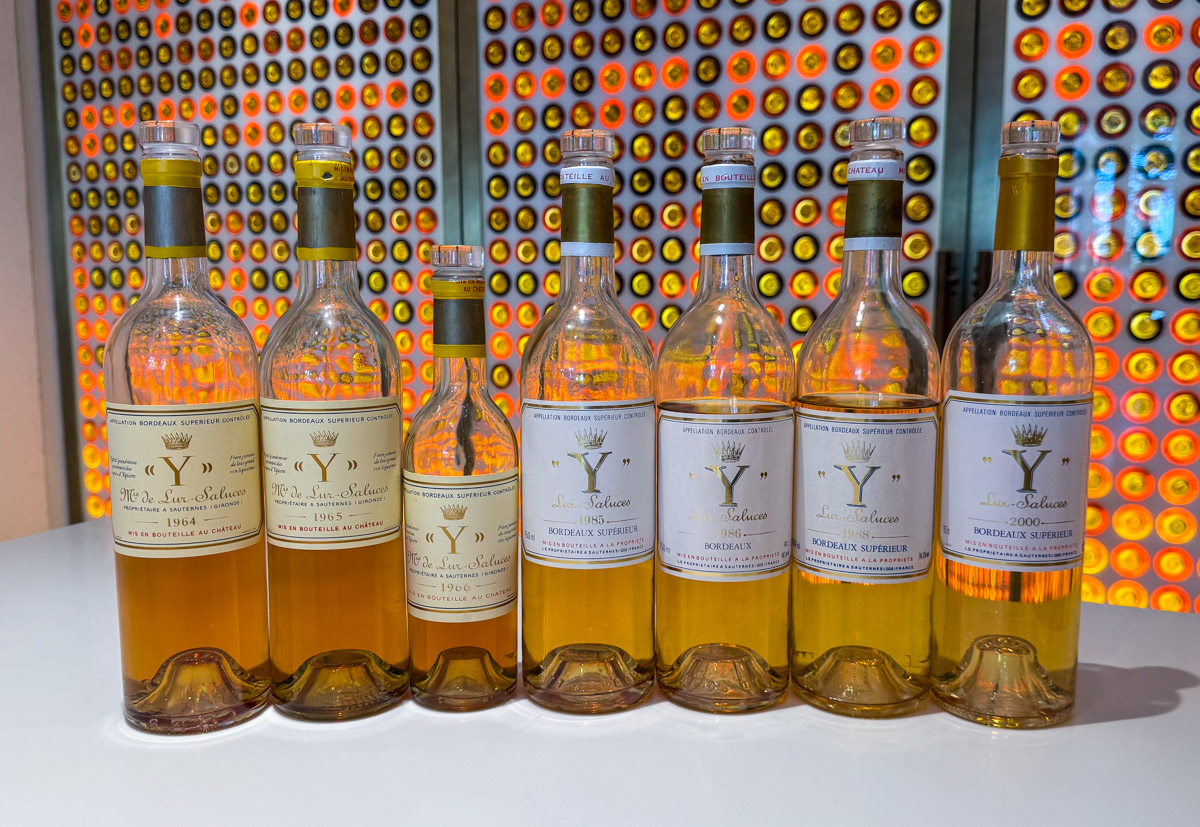
Flight One: 1964-2000
Our first flight is built around wines from the 1960s through the 1980s, finishing with the 2000. During this time, Ygrec was 80% Sémillon and 20% Sauvignon Blanc, bottled with about 15 grams per liter of residual sugar, which put it somewhere between dry and sweet wines. As readers will see in the accompanying notes, harvest times and the overall approach varied widely from year to year. I imagine some of these wines might have been hard to understand on release. Time, though, brings tremendous clarity. The 1965 and 1985 are especially profound wines, wines that have aged while retaining a palpable sense of youthfulness that is impossible to miss.
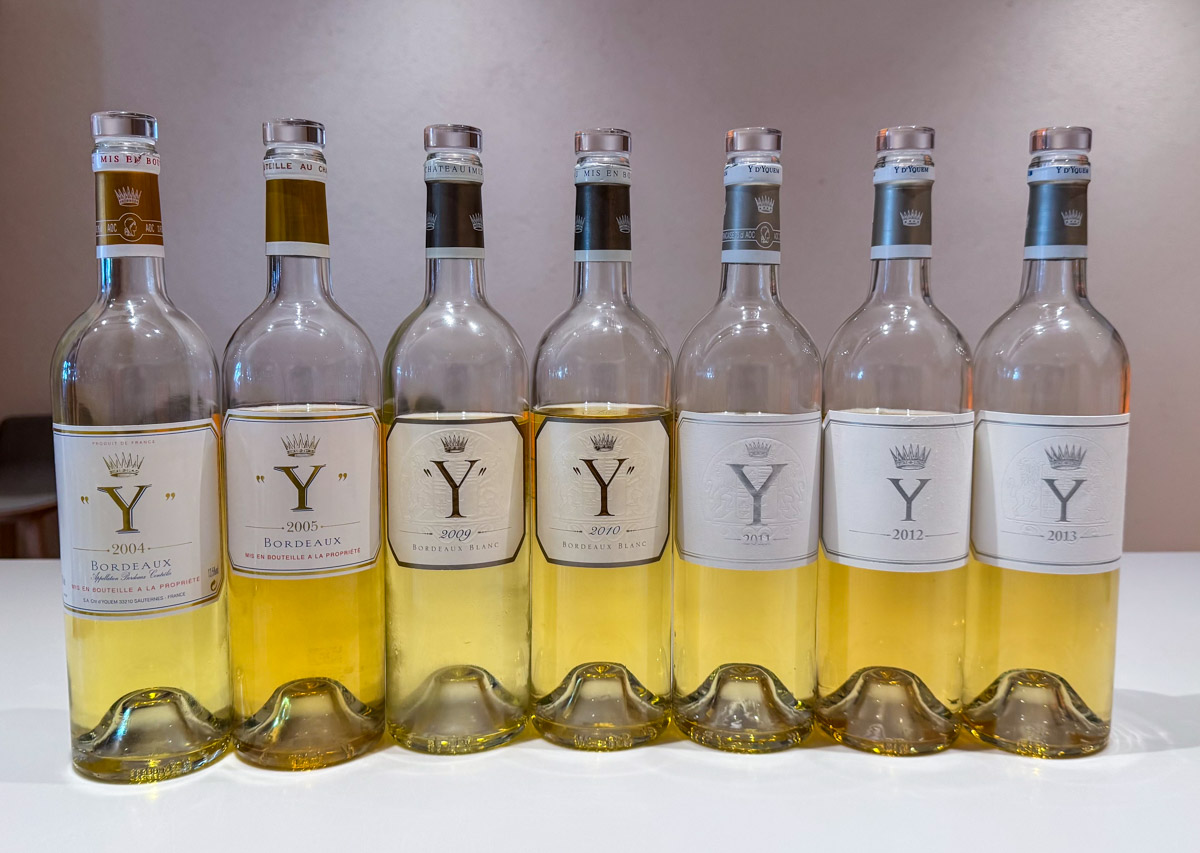
Flight Two: 2004-2013
Prior to 2004, Ygrec had been bottled only sporadically. The 2004 opened the door to a new chapter in which Ygrec was made every year. Sauvignon Blanc became the focus and comprised as much as 75% of the blend. Residual sugar dropped from 15 grams per liter to 7-8 grams per liter. At times, these wines suggest a desire to move away from a clear link to Sauternes. The 2009 and 2010 in this flight are remarkable.
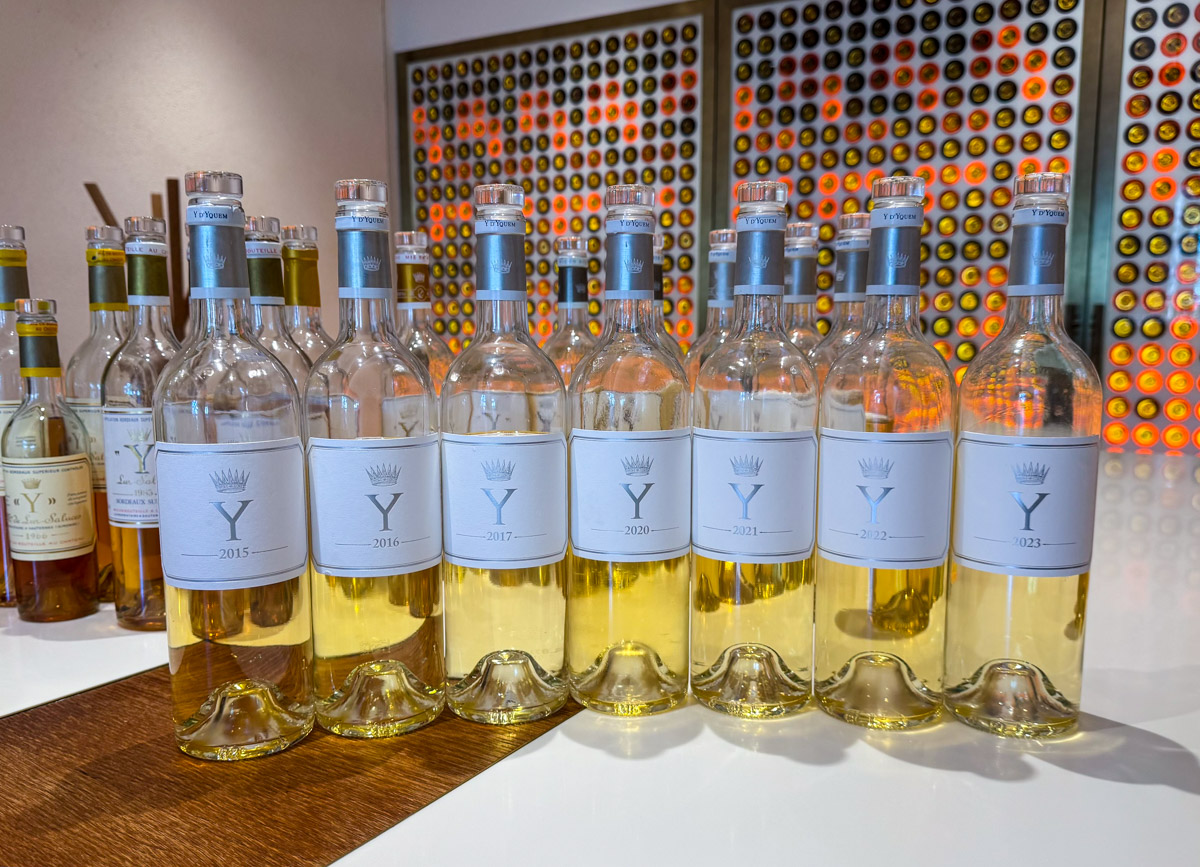
Flight Three: 2015-2023
The last flight comprises a third phase in the evolution of Ygrec. The proportion of Sauvignon Blanc came down beginning in 2021. By 2023, Sémillon and Sauvignon Blanc became equal partners in the blend. Residual sugar was lowered to 5-6 grams per liter, where it remains today. Pasquini’s goal was to re-establish the link with Sauternes while also crafting a wine with its own personality. He has succeeded. Much of the approach now centers on texture and flavor complexity. Aging is still about two years in Yquem barrels, with roughly 20% new wood. It will be fascinating to see how these wines age.
Coda: The 2024 & Final Conclusions
The 2024, the château’s latest release, is absolutely brilliant. It’s an exceptional effort in a vintage that was so challenging throughout Bordeaux. Another door opens. More than anything else, I was deeply impressed with how Ygrec ages. Ideally, it is a wine to start tasting at about age ten, but at any point in its life, Ygrec has something important to say and a lot of pleasure to offer. Readers with the cellar space and the patience to drink these wines after their 25th birthday will experience some of the greatest drinking wine has to offer.
I tasted all the wines in this report during a visit to Yquem in April 2026, except the 2024, which I tasted in my office a few months later.
© 2026, Vinous. No portion of this article may be copied, shared or redistributed without prior consent from Vinous. Doing so is not only a violation of our copyright but also threatens the survival of independent wine criticism.
You Might Also Enjoy
Cellar Favorite: 2023 Yquem & Y d'Yquem, Neal Martin, March 2026
The Innings Continues: 1948-1995 Yquem, Neal Martin, May 2025
Unrivalled, Unequalled: Yquem 1921-2019, Neal Martin, April 2022